
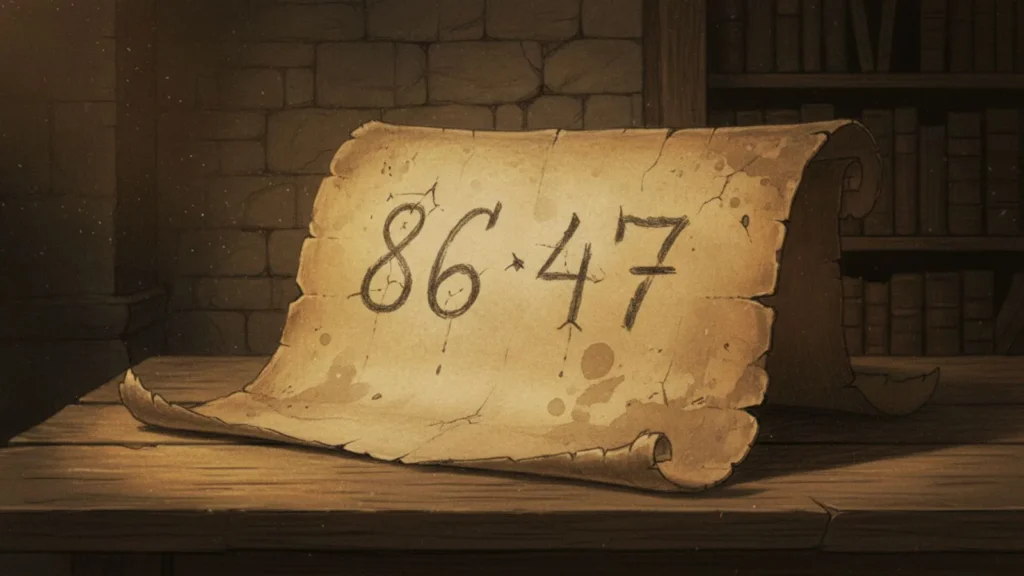
Have you ever stumbled upon a number combination like 86 47 and found yourself wondering what it actually means? Numbers are often more than just digits they can carry hidden messages, slang meanings, or codes used in various industries and social circles.
From text messages to restaurant lingo and even emergency services, these numeric codes can communicate a lot in just a few characters.
Understanding what 86 47 means can help you decode conversations, avoid confusion, and stay in the loop with popular slang and jargon.
You came across this combination online, in a conversation, or somewhere unexpected, knowing the context and the possible interpretations is key.
In this article, we’ll break down the origins and meanings of 86 and 47, explore their combined significance, and help you make sense of this intriguing number code.
Understanding Number Codes and Slang
Numbers have long been used as a form of shorthand or coded language in many cultures and communities. Whether it’s to communicate quickly, discreetly, or creatively, number codes and slang offer a way to convey messages without spelling everything out. This practice has roots in everything from secret societies and emergency services to modern texting and social media.
For example, many people recognize “420” as a code related to cannabis culture, while “911” immediately signals an emergency in the United States. Similarly, numbers like “86” have found their way into everyday language, especially in industries like hospitality and law enforcement, carrying specific meanings understood by those in the know.
Number codes can serve different purposes: they can be practical, like shorthand for common phrases or actions, or symbolic, carrying cultural or historical significance. In some cases, they help groups maintain privacy or exclusivity by using language outsiders might not understand.
In today’s digital age, numeric slang is even more widespread, appearing in texts, social media posts, and online communities. This evolution of language means it’s important to understand these codes to keep up with conversations and avoid misunderstandings.
With this in mind, let’s take a closer look at the first part of our number code: “86.” What’s behind this number’s meaning, and why has it become so popular as slang?
The Meaning of “86”
The number 86 has become a popular slang term, especially in the restaurant and hospitality industries. Originally, “86” was used as a shorthand to indicate that a particular item was no longer available or had been removed from the menu. For example, if a restaurant ran out of a dish, the kitchen staff might say it’s “86’d.” Over time, this term expanded beyond food and drink to mean “to get rid of,” “to cancel,” or even “to eject” someone from a place.
The exact origin of the term is a bit murky, with several theories explaining how “86” came to mean this. One popular explanation traces it back to the 1930s or ‘40s American bars and diners, where the number was part of coded language between staff. Another theory suggests it originated from old soda fountain codes or even from rhyming slang (“86” rhymes with “nix,” meaning “no” or “cancel”).
Today, “86” is commonly used in casual conversation to mean rejecting or removing something or someone. For example, someone might say, “Let’s 86 that plan,” meaning to scrap it. In law enforcement, “86” can mean to refuse service or remove someone from a location.
The widespread use of “86” in pop culture, TV shows, and movies has helped cement its place in everyday slang. It’s a versatile term that conveys a clear message of cancellation or removal in just two digits making it a perfect example of how numbers become powerful communicators.
The Meaning of “47”
Unlike the more widely recognized “86,” the number 47 has a more varied and sometimes mysterious set of meanings depending on the context. While not as universally known as “86,” 47 holds significance in various fields, cultures, and subcultures.
One interesting aspect is its symbolic meaning in science and popular culture. For example, the number 47 is a prime number, which has fascinated mathematicians and enthusiasts alike. It also appears frequently in conspiracy theories and pop culture references, sometimes regarded as a “special” or “meaningful” number. The number 47 famously shows up repeatedly in the Star Trek franchise as an inside joke among writers and fans.
In some communities, 47 is seen as a number representing balance or transformation, possibly due to its mathematical properties or cultural associations. However, outside these niche uses, 47 is often just treated as a regular number with no inherent slang meaning.
In other contexts, 47 might be part of specific code systems for instance, police or emergency codes vary by region, and 47 can mean different things depending on the local system. It can sometimes refer to a location code, incident type, or administrative shorthand.
Because of this diversity, the meaning of “47” is highly dependent on where and how it’s used. Unlike “86,” which carries a strong and consistent slang meaning, 47’s significance is usually contextual and less direct.
Next, we’ll explore what “86 47” could mean when these numbers come together, and how their combined usage might differ based on the setting.
The Combined Meaning of “86 47”
When the numbers 86 and 47 are combined as “86 47,” their meaning can vary widely depending on context, usage, and the community interpreting them. Since both numbers have distinct meanings on their own, putting them together creates possibilities that range from practical codes to symbolic messages.
One likely interpretation is that “86 47” functions as a code or shorthand phrase, where “86” retains its core meaning of “remove,” “cancel,” or “reject,” and “47” acts as a specific identifier or reference. For example, in a restaurant or hospitality setting, “86 47” could mean to cancel or remove item number 47 from the menu. Similarly, in a workplace or organizational context, it might refer to dismissing a task, order, or person associated with the number 47.
In some law enforcement or emergency services communication systems, “86 47” might be a combined code representing a specific situation, action, or location, though the exact meaning would depend on the department’s codebook.
Outside of professional use, on social media or in texting, “86 47” could be a creative or inside joke among certain groups, mixing the known slang of “86” with a meaningful or random “47.” The number 47 could also be symbolic or personal, giving the phrase unique significance for those involved.
Ultimately, the combined meaning of “86 47” hinges on its context whether it’s used in slang, professional codes, or personal messaging. Understanding where you encountered it is key to decoding its precise meaning.
Contextual Interpretations
The meaning of “86 47” can shift dramatically depending on the context in which it appears. Numbers often carry different connotations based on the environment, culture, or group using them, so understanding the setting is crucial to decoding the true message.
In the Restaurant and Hospitality Industry:
Here, “86” is a well-known term meaning to remove or cancel something, like an item being out of stock or a customer being asked to leave. When paired with “47,” it might refer to a specific menu item or order number. For example, a chef might say, “86 47,” signaling to the kitchen staff that item 47 is no longer available.
In Law Enforcement and Emergency Services:
Different police or emergency units use numeric codes to communicate quickly and clearly. In these systems, “86” and “47” might correspond to particular actions, locations, or incidents. However, these codes vary by region and department, so “86 47” could have very specific meanings understood only by the relevant personnel.
On Social Media and in Texting:
In online slang, “86” often means to get rid of or cancel something, but “47” might be more ambiguous sometimes it’s used symbolically, humorously, or as a personal reference. Together, “86 47” could be an inside joke, a code between friends, or a way to say “cancel 47” without further explanation.
Cultural and Regional Differences:
Numerical slang and codes can vary widely across cultures and languages. What “86 47” means in one place might be entirely different elsewhere.
By paying attention to where and how you see “86 47,” you can better understand what the sender intends to communicate.
Other Similar Number Combinations and Their Meanings
Numbers have long served as a form of coded communication, and combinations like “86 47” are just one example of how numeric codes infiltrate everyday language. Exploring other popular number combinations helps us understand the broader trend of numeric slang and its significance.
One of the most famous number codes is “420,” which is widely recognized as a reference to cannabis culture. Originating in the 1970s, it has since become a global symbol associated with marijuana use and related celebrations. Similarly, “911” is universally understood as an emergency number, instantly signaling the need for urgent help.
Another well-known code is “69,” often used with a playful or suggestive meaning. In contrast, numbers like “13” or “666” carry cultural or superstitious connotations, symbolizing bad luck or evil in various traditions.
Just like “86” in restaurant slang, some numbers hold specialized meanings in specific industries. For example, “10-4” is a common radio communication code meaning “message received” or “affirmative,” used in law enforcement and trucking.
Number combinations also appear as secret codes in online communities or among friends, providing a private language that outsiders might not immediately understand. These codes can strengthen group identity and add an element of fun or mystery to conversations.
Overall, the use of numbers as slang or code reflects a human tendency to innovate language for efficiency, creativity, or discretion. Understanding these numeric codes not only helps with communication but also offers insight into cultural trends and social dynamics.
Why Understanding Numeric Codes Matters
In today’s fast-paced and digitally connected world, understanding numeric codes like “86 47” is more important than ever. These codes often serve as shorthand, allowing people to communicate complex ideas quickly and efficiently. Whether you’re texting friends, working in customer service, or engaging with social media, recognizing these numbers can prevent misunderstandings and keep conversations flowing smoothly.
For professionals, especially in industries like hospitality, law enforcement, or emergency services, numeric codes are essential tools for clear and concise communication. Knowing what “86” means in a restaurant, for example, can help staff coordinate quickly, avoid errors, and maintain smooth operations. Similarly, law enforcement officers rely on codes to convey urgent information safely and effectively.
On a social level, being familiar with numeric slang helps you stay culturally relevant and connected. Numbers like “86” and “420” have become part of everyday language, and not understanding them can make you feel out of the loop or cause confusion. Plus, numeric codes can carry emotional weight or subtle messages, so recognizing them improves your ability to interpret tone and intent.
Moreover, numeric codes often reflect cultural trends and social dynamics. They evolve with time, influenced by technology, media, and community creativity. By learning these codes, you’re tapping into a living language that bridges generations and cultures.
In short, understanding numeric codes like “86 47” enhances communication, deepens cultural awareness, and helps you navigate both professional and social conversations with confidence.
FAQs:
Q1: What does “86” mean in slang?
“86” is a popular slang term that originally came from the restaurant industry, meaning to cancel, remove, or get rid of something. It’s often used to indicate that an item is no longer available or that someone should be ejected or refused service.
Q2: Is “47” a common slang number?
Unlike “86,” the number “47” does not have a widely recognized slang meaning. Its significance varies depending on context, including pop culture references, mathematical interest, or specific codes in police or emergency services.
Q3: What does “86 47” mean together?
The combined meaning of “86 47” depends on the context. Generally, “86” suggests canceling or removing something, while “47” might refer to a specific item, code, or identifier. Together, it could mean “remove item 47” or serve as a special code in certain industries or groups.
Q4: Where might I see “86 47” used?
You might encounter “86 47” in restaurant or hospitality settings, law enforcement communications, social media, texting, or niche communities that use numeric codes for inside jokes or shorthand.
Q5: Why do people use number codes instead of words?
Number codes are often used to communicate quickly, maintain privacy, or create a sense of belonging within groups. They help convey messages efficiently, especially in fast-paced or sensitive environments.
Conclusion
Numbers like “86 47” may seem like random digits at first glance, but they often carry much deeper meanings depending on the context in which they’re used. Whether it’s the well-known slang of “86” meaning to cancel or remove something, or the more variable significance of “47” across different cultures and communities, these numeric codes are powerful tools for communication.
Understanding the origins and meanings behind such codes not only helps you decode messages more accurately but also connects you with the evolving language trends found in industries, social groups, and online communities. As language continues to adapt in our fast-paced digital world, numeric slang and codes play a crucial role in enabling quick, discreet, and creative conversations.
By learning how “86 47” and similar number combinations function, you can avoid confusion, participate more confidently in conversations, and appreciate the cultural richness behind these codes. So next time you see “86 47” pop up in a text, social media post, or professional setting, you’ll be ready to understand its intended message.
Numbers may be simple on the surface, but their hidden meanings add layers of nuance to how we communicate. Stay curious, stay informed, and keep decoding the fascinating world of numeric slang.

“On You Wishes, I share the most heartfelt wishes for every moment — birthdays, love, or motivation. Each message is written with emotion to bring smiles and inspiration!”