
Have you ever wondered what a Certified Nursing Assistant (CNA) really does?
CNAs are the backbone of the healthcare system, providing essential care and support to patients every day.
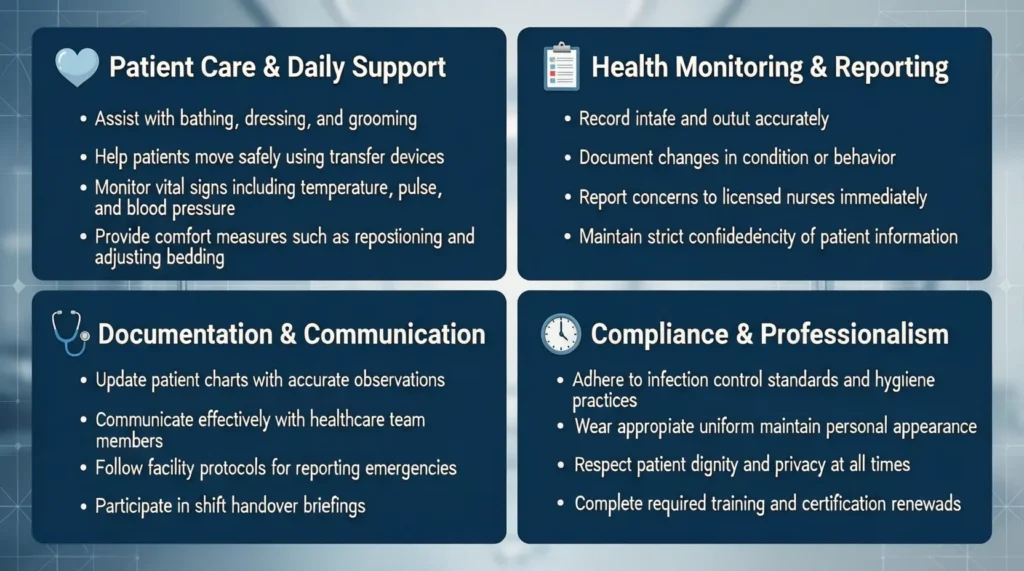
From helping with basic daily activities like bathing, dressing, and eating to monitoring vital signs and reporting changes to nurses, CNAs play a crucial role in ensuring patients’ comfort and safety.
Whether in hospitals, nursing homes, or home care settings, their work directly impacts the quality of patient care. For anyone considering a career in healthcare, understanding the role of a CNA is essential.
This guide will walk you through everything you need to know: the daily responsibilities, the skills required, the work environment, career growth opportunities, and why CNAs are highly valued in the medical field.
By the end, you’ll have a clear picture of what it means to be a CNA and whether it’s the right path for you.
Who Is a Certified Nursing Assistant ?
A Certified Nursing Assistant, commonly known as a CNA, is a vital member of the healthcare team. CNAs provide direct care to patients under the supervision of registered nurses (RNs) or licensed practical nurses (LPNs). They are trained to assist patients with everyday tasks that many people take for granted, such as eating, bathing, dressing, and moving safely around their environment. This hands-on care ensures that patients remain comfortable, safe, and healthy during their hospital stay or in long-term care facilities.
Unlike RNs or LPNs, CNAs do not diagnose or prescribe treatments, but their observations and reports are crucial for a patient’s overall care plan. CNAs often spend the most time with patients, building trust, offering emotional support, and noticing small changes in health that can make a big difference.
CNAs can work in various healthcare settings, including hospitals, nursing homes, assisted living facilities, home health care, and hospice care. Because of their direct patient interaction, CNAs are often called the “eyes and ears” of the nursing team. Becoming a CNA is an excellent starting point for anyone interested in a healthcare career, providing valuable experience and skills that can lead to advanced nursing roles.
Daily Duties and Responsibilities of a CNA
Certified Nursing Assistants (CNAs) have a wide range of daily duties that are essential for patient care. One of their primary responsibilities is assisting patients with Activities of Daily Living (ADLs), such as bathing, dressing, grooming, toileting, and eating. These tasks help patients maintain personal hygiene and independence, especially those who are elderly or recovering from illness.
CNAs also monitor patients’ vital signs, including temperature, blood pressure, heart rate, and respiration. They carefully observe patients for any changes in health and promptly report these observations to nurses, ensuring that medical staff can respond quickly to any concerns.
Another key responsibility is mobility assistance. CNAs help patients move safely, whether it’s getting out of bed, walking, or using a wheelchair. This not only prevents falls but also encourages physical activity and recovery.
In addition to physical care, CNAs provide emotional support. They spend significant time interacting with patients, offering comfort, reassurance, and companionship. Finally, CNAs maintain accurate records and documentation of patient care, which is crucial for the nursing team to track progress and plan treatment.
Through these responsibilities, CNAs play a critical role in ensuring patient well-being and supporting the overall healthcare team.
Skills Needed to Be a Successful CNA
Being a Certified Nursing Assistant requires more than just technical knowledge—it demands a unique set of skills that combine compassion, attention, and physical stamina. One of the most important skills is communication. CNAs must clearly communicate with patients, families, and the nursing team, ensuring that important information about patient care is understood and acted upon.
Empathy and patience are also essential. CNAs often work with patients who are sick, elderly, or recovering from surgery, and providing emotional support is as important as physical care. Being patient helps CNAs handle challenging situations calmly and maintain a positive environment for patients.
Physical stamina is another critical skill. CNAs frequently lift, move, and assist patients, which can be physically demanding. Good time management ensures that all patients receive timely care, especially in busy hospital or long-term care settings.
Attention to detail is vital for tasks like monitoring vital signs, observing changes in patient condition, and documenting care accurately. Finally, teamwork and adaptability allow CNAs to work effectively with nurses, doctors, and other staff members, ensuring smooth operations in any healthcare setting.
With these skills, a CNA can provide high-quality care, build trust with patients, and make a meaningful impact in the healthcare field.
Work Environment of a CNA
Certified Nursing Assistants work in a variety of healthcare settings, each with its own unique challenges and rewards. Hospitals are one of the most common workplaces, where CNAs assist patients recovering from surgery, illness, or injury. In hospitals, the pace can be fast, and CNAs often work in shifts, including nights, weekends, and holidays.
Nursing homes and long-term care facilities are another primary environment. Here, CNAs provide daily care to elderly residents or those with chronic conditions. This setting allows CNAs to form long-term relationships with patients, offering both physical and emotional support over time.
Assisted living facilities and home health care provide more personalized, one-on-one care. CNAs may help patients live independently while managing their daily needs in a comfortable, familiar environment. Hospice care is another setting where CNAs offer compassionate support to patients in their final stages of life, helping improve quality of life and providing comfort to families.
Regardless of the setting, CNAs must be adaptable, patient, and observant. They often work closely with nurses, doctors, and other healthcare professionals, making their role an essential part of the medical team. The work can be physically and emotionally demanding, but it is also highly rewarding for those who enjoy helping others.
CNA vs RN vs LPN
Understanding the differences between a Certified Nursing Assistant (CNA), a Registered Nurse (RN), and a Licensed Practical Nurse (LPN) is important for anyone considering a healthcare career. While all three roles are essential to patient care, they differ in education, responsibilities, and scope of practice.
A CNA provides basic patient care, including assisting with daily activities, monitoring vital signs, and offering emotional support. CNAs work under the supervision of nurses and do not diagnose or administer medications. This role is ideal for those starting in healthcare or looking for hands-on patient experience.
An LPN has more training than a CNA, usually completing a one-year practical nursing program. LPNs can administer certain medications, perform wound care, and assist with patient assessments, but they still work under the supervision of RNs.
A Registered Nurse (RN) has the highest level of training among the three, often requiring a bachelor’s degree or associate degree in nursing. RNs can create care plans, perform complex procedures, administer medications, and supervise CNAs and LPNs.
In summary, CNAs focus on daily patient care, LPNs provide intermediate medical support, and RNs oversee comprehensive patient management. Each role is crucial, but CNAs often spend the most time with patients, directly influencing comfort and recovery.
Pros and Cons of Being a CNA
Becoming a Certified Nursing Assistant (CNA) comes with both rewards and challenges. Understanding these can help you decide if this career is the right fit.
Pros: One of the biggest advantages of being a CNA is the opportunity to make a real difference in people’s lives. CNAs provide essential care and comfort, often forming strong bonds with patients. The role also offers entry into the healthcare field without extensive education, making it accessible for many. Additionally, CNAs are in high demand, which means good job stability and opportunities across hospitals, nursing homes, and home health care. Many CNAs also find flexible scheduling, with options for part-time or shift work.
Cons: The job can be physically demanding, requiring lifting, moving, and assisting patients throughout long shifts. It can also be emotionally challenging, especially when caring for critically ill or terminal patients. The pay is generally lower than other nursing roles, which may be a drawback for some. Finally, CNAs work long hours, nights, weekends, and holidays, which can affect personal life and work-life balance.
Despite the challenges, many CNAs find the role rewarding because of the impact they have on patient care and the healthcare system as a whole.
How to Become a CNA
Becoming a Certified Nursing Assistant (CNA) is a straightforward path into the healthcare field, but it requires dedication and proper training. The first step is completing a high school diploma or equivalent, which is a basic requirement for most CNA programs.
Next, aspiring CNAs must enroll in an approved CNA training program. These programs are typically offered by community colleges, vocational schools, or healthcare facilities and cover essential topics such as patient care, infection control, vital signs, and basic medical procedures. Training usually combines classroom instruction with hands-on clinical experience, allowing students to practice skills in a real healthcare setting.
After completing the program, candidates must pass a state certification exam, which includes a written or oral test and a practical skills evaluation. Certification ensures that the CNA is competent and ready to provide safe, effective care to patients.
Finally, CNAs must maintain certification through periodic renewal, which may include continuing education or refresher courses depending on state requirements. Some CNAs choose to gain experience in different healthcare settings or pursue further education to become LPNs or RNs, opening the door to advanced nursing roles.
By following these steps, anyone with dedication and compassion can become a certified and valued member of the healthcare team.
Frequently Asked Questions
1. What does a CNA do every day?
A CNA helps patients with daily activities like bathing, dressing, eating, and moving safely. They also take vital signs, provide emotional support, and report changes to nurses.
2. Do CNAs need a college degree?
No. CNAs need a high school diploma or equivalent and must complete a state-approved CNA training program, followed by certification.
3. How long does it take to become a CNA?
CNA training programs usually take 4–12 weeks, depending on the program and clinical hours required. After training, passing the state exam is necessary to become certified.
4. How much does a CNA make?
Salaries vary by location and experience, but the average CNA earns between $30,000 and $40,000 per year in the U.S. Some facilities offer higher pay or shift differentials.
5. Where can CNAs work?
CNAs work in hospitals, nursing homes, assisted living facilities, home healthcare, and hospice care.
6. Can CNAs advance their careers?
Yes. Many CNAs gain experience and pursue further education to become LPNs or RNs, opening up higher-paying and more advanced roles.
7. Is being a CNA physically demanding?
Yes. CNAs often lift and move patients, stand for long periods, and work shifts that may include nights or weekends.
8. What skills are most important for a CNA?
Communication, empathy, attention to detail, teamwork, patience, and physical stamina are key skills for success as a CNA.
If you want, I can write the final conclusion next and then compile the full article ready for publishing with SEO optimization, headings, and meta description.
Conclusion
Being a Certified Nursing Assistant (CNA) is a rewarding and essential role in the healthcare system. CNAs provide hands-on care, assist with daily activities, monitor patients’ health, and offer emotional support, making a meaningful difference in the lives of those they care for. While the job can be physically and emotionally demanding, it offers valuable experience, job stability, and opportunities for career growth.
For anyone interested in entering the healthcare field, becoming a CNA is an excellent first step. It provides a strong foundation in patient care and opens doors to advanced nursing roles such as LPN or RN. By developing key skills like empathy, communication, attention to detail, and teamwork, CNAs not only contribute to patient well-being but also build a fulfilling and impactful career.
If you’re compassionate, hardworking, and eager to help others, a career as a CNA could be the perfect path for you.

“On You Wishes, I share the most heartfelt wishes for every moment — birthdays, love, or motivation. Each message is written with emotion to bring smiles and inspiration!”