
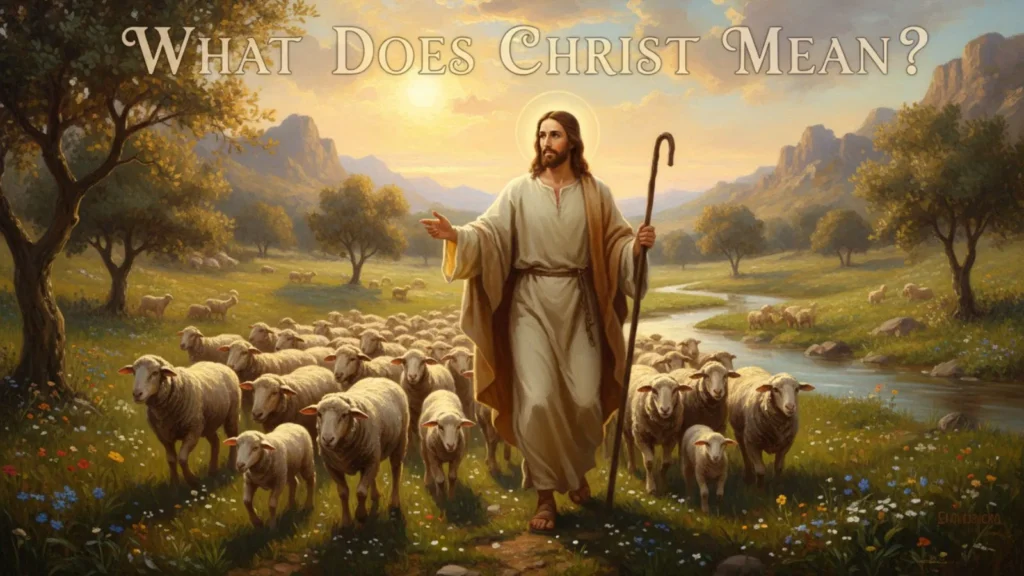
The word “Christ” is one of the most profound and widely recognized terms in religious history, yet many people don’t fully understand its meaning or significance.
Often heard in churches, seen in literature, or referenced in everyday conversations, “Christ” is much more than just a name it is a powerful title with deep historical and spiritual roots.
Derived from ancient languages and linked closely to the concept of being “anointed,” the term carries rich symbolism that has shaped faith, culture, and society for thousands of years.
Understanding what “Christ” truly means is key to grasping Christian beliefs and appreciating its impact on art, theology, and even everyday life.
In this article, we will explore the origin, biblical context, theological significance, and cultural influence of the term “Christ,” helping you uncover the full depth behind this important title.
Origin and Etymology of the Word “Christ”
The word “Christ” comes from the Greek word “Christos” (Χριστός), which means “anointed one.” In ancient times, anointing someone with oil was a symbolic act to designate a person for a special role, often for kings, priests, or prophets. This practice was a sign of divine approval and empowerment for their duties. The Greek term Christos is the equivalent of the Hebrew word “Messiah” (מָשִׁיחַ, Mashiach), which also means “anointed one.”
In the Jewish tradition, the title Messiah referred to the expected deliverer or savior who would restore Israel and bring about a new era of peace and justice. This expectation developed over centuries, rooted in prophecies found in the Old Testament. The Messiah was seen as a chosen figure who would be anointed by God to lead and save the people.
When the New Testament was written in Greek, early Christians used the term Christos to describe Jesus of Nazareth, claiming that He was the promised Messiah the anointed savior sent by God. Therefore, “Christ” is not originally a surname or last name but a title that highlights Jesus’s divine mission and role.
Understanding this origin is crucial because it connects the word “Christ” to ancient religious traditions and sets the foundation for its theological and cultural meanings explored in later sections.
Biblical Context of “Christ”
The term “Christ” holds deep significance throughout the Bible, both in the Old and New Testaments. In the Hebrew Scriptures, or Old Testament, the concept of the Messiah appears as a promised anointed one who would deliver God’s people. Prophets like Isaiah and Daniel spoke of a future leader who would bring salvation, justice, and peace. This expectation shaped the hopes of many Jews during the centuries leading up to the birth of Jesus.
In the New Testament, written primarily in Greek, the word Christos is used to affirm that Jesus of Nazareth is this long-awaited Messiah. The title “Jesus Christ” combines His given name, Jesus (meaning “Yahweh saves”), with “Christ,” identifying Him as the anointed Savior. Early Christians believed Jesus fulfilled the Old Testament prophecies by living a sinless life, performing miracles, dying on the cross, and rising from the dead.
The Gospel writers and apostles used “Christ” not just as a name but as a declaration of Jesus’s divine mission. For example, Peter’s confession in Matthew 16:16 “You are the Christ, the Son of the living God” highlights the central role of this title in Christian faith. It signifies Jesus’s identity as both human and divine, chosen by God to bring redemption.
Thus, the biblical context of “Christ” bridges ancient Jewish hopes with the Christian belief in Jesus as the fulfillment of those promises. This connection remains foundational for understanding Christian theology and the significance of Jesus’s role in salvation history
Theological Meaning
The title “Christ” carries profound theological significance within Christianity. At its core, it means “the Anointed One”, chosen and empowered by God for a unique mission. This mission centers on salvation rescuing humanity from sin and restoring the broken relationship between God and people.
In Christian doctrine, Jesus Christ is understood as both fully human and fully divine. This belief, known as the Incarnation, means that Christ is God’s Son who took on human flesh to live among people. The title “Christ” emphasizes His role as the Messiah foretold by the prophets, the one anointed by God to bring redemption.
Central to Christian theology is the idea of atonement Jesus Christ’s sacrificial death on the cross paid the price for human sin, offering forgiveness and reconciliation with God. His resurrection three days later confirms His victory over death and sin, affirming His divine authority and the promise of eternal life for believers.
Different Christian traditions interpret the meaning of Christ in nuanced ways. For example, Catholicism emphasizes Christ as the head of the Church and the source of grace through the sacraments. Protestant denominations often highlight personal faith in Christ as the path to salvation. Eastern Orthodoxy focuses on Christ’s role in the process of theosis, or becoming united with God.
Despite these differences, all agree that “Christ” is not just a title but a declaration of Jesus’s divine mission and identity as the Savior of the world. Understanding this theological meaning helps deepen faith and appreciation for the central figure of Christianity.
Christ in Religious and Spiritual Practices
The title “Christ” plays a central role in the religious and spiritual life of Christians worldwide. It is not only a theological term but also a symbol deeply woven into worship, prayer, and ritual. Calling Jesus “Christ” affirms faith in Him as the anointed Savior and reflects a personal and communal relationship with God.
In Christian worship services, the name of Christ is frequently invoked in prayers, hymns, and sacraments such as baptism and the Eucharist (Holy Communion). Baptism symbolizes a believer’s identification with Christ’s death and resurrection, marking the start of a new spiritual life. The Eucharist commemorates Christ’s sacrifice, serving as a powerful reminder of His presence and ongoing work in the lives of believers.
Christ is also central to Christian meditation and prayer. Believers often pray to Jesus Christ, seeking guidance, comfort, and strength. The figure of Christ represents divine love, mercy, and hope, making Him the ultimate example for moral and spiritual living.
Beyond formal worship, Christ is a model for personal transformation. Christians strive to emulate Christ’s compassion, humility, and forgiveness in daily life. This spiritual ideal shapes ethical behavior and encourages acts of kindness, justice, and reconciliation.
Christ’s significance extends into Christian festivals, especially Christmas, celebrating His birth, and Easter, commemorating His resurrection. These observances highlight Christ’s enduring influence on faith, culture, and community.
Thus, the title “Christ” is more than a name it is a living, active presence in religious practice and spiritual experience, guiding believers in their journey of faith.
Christ in Culture and Society
The influence of Christ extends far beyond religious circles and has shaped Western culture and society in profound ways. From art and literature to music and philosophy, the concept of Christ has inspired countless works that reflect His significance and ideals.
In visual arts, Christ has been a central figure for centuries, depicted in masterpieces ranging from Renaissance paintings like Leonardo da Vinci’s The Last Supper to modern interpretations in sculpture and film. These artistic portrayals not only tell biblical stories but also explore themes of sacrifice, redemption, and hope that resonate across cultures.
Literature and music similarly draw on the figure of Christ to explore spiritual and moral questions. Many classical and contemporary writers reference Christ’s teachings and life, using Him as a symbol of justice, love, and human struggle. Sacred music, including hymns and oratorios, celebrates His life and message, fostering communal worship and personal reflection.
Beyond the arts, the idea of Christ has influenced ethical systems and social movements. Concepts like compassion, forgiveness, and service to others rooted in Christ’s teachings have inspired efforts for social justice, charity, and peace-building worldwide.
In modern society, the term “Christ-like” is often used to describe someone exhibiting selflessness and kindness, showing how deeply ingrained the concept is in everyday language and values.
Even secular culture continues to reference Christ, sometimes metaphorically, highlighting His broad symbolic power.
In sum, Christ’s impact on culture and society is vast, shaping not only religious faith but also the moral and artistic landscape of the world.
Common Misconceptions about the Term “Christ”
Despite its widespread use, the term “Christ” is often misunderstood, leading to several common misconceptions. One of the most frequent errors is treating “Christ” as a last name rather than a title. Unlike surnames, “Christ” means “the Anointed One” and is a designation of Jesus’s divine role and mission, not part of His personal name. His full name was Jesus of Nazareth; “Christ” highlights His identity as the promised Messiah.
Another confusion arises from mixing up Jesus as a historical figure and the theological concept of Christ. While Jesus refers to the man who lived in 1st-century Palestine, “Christ” reflects His spiritual and divine role, emphasizing beliefs about His purpose and nature. This distinction is important in theological discussions.
Popular culture sometimes distorts the term by using “Christ” loosely or symbolically without understanding its religious depth. For example, calling someone “a Christ figure” in literature or film may capture themes of sacrifice or redemption but can oversimplify or misrepresent the original meaning.
There is also misunderstanding between “Messiah” and “Christ.” While both mean “anointed one,” “Messiah” is Hebrew, and “Christ” is the Greek equivalent used in the New Testament. Recognizing this linguistic connection helps clarify their synonymous nature.
By addressing these misconceptions, readers can better appreciate the significance of “Christ” and avoid superficial or inaccurate interpretations of this important title.
Why the Meaning of Christ Still Matters Today
The meaning of “Christ” remains deeply relevant in today’s world, touching the lives of billions and influencing global culture, ethics, and spirituality. For Christians, “Christ” is not just a historical or theological term; it embodies the foundation of their faith and identity. Recognizing Jesus as the Christ affirms belief in His role as Savior, Redeemer, and divine presence guiding their lives.
Beyond religious faith, the concept of Christ influences moral and ethical values worldwide. Teachings attributed to Christ, such as love, forgiveness, compassion, and justice, continue to inspire individuals and communities to strive for a better world. These principles resonate across cultures and religions, contributing to humanitarian efforts, peace-building, and social justice movements.
In an increasingly pluralistic society, understanding what “Christ” means fosters respectful interfaith dialogue. It allows for meaningful conversations between Christians and people of other beliefs, promoting tolerance and mutual respect while acknowledging different spiritual perspectives.
Moreover, the figure of Christ serves as a source of hope and comfort amid life’s challenges. Many find strength in His example and promises, helping them navigate personal struggles and uncertainties.
In a world facing complex moral and social issues, the meaning of Christ invites reflection on purpose, values, and human connection. Its enduring significance proves that this ancient title continues to shape hearts, minds, and societies today.
Conclusion
The word “Christ” carries a rich and multifaceted meaning that spans history, language, theology, and culture. Far from being just a name, “Christ” is a powerful title meaning “the Anointed One,” rooted in ancient Jewish traditions and fulfilled in the life and mission of Jesus of Nazareth. Understanding its origin helps us appreciate the deep connections between Old Testament prophecies and New Testament teachings.
The biblical and theological significance of Christ reveals why this title is central to Christian faith signifying Jesus as the promised Savior and divine Redeemer whose life, death, and resurrection transformed human history. Beyond religious doctrine, Christ shapes spiritual practices and personal faith journeys, offering a model of compassion, humility, and hope.
Moreover, the influence of Christ reaches into art, literature, culture, and ethical values worldwide, inspiring countless expressions of creativity and movements for justice and peace. Recognizing common misconceptions about the term also enriches our understanding and helps avoid superficial or mistaken interpretations.
Ultimately, the meaning of Christ remains relevant today as a source of spiritual guidance, moral inspiration, and cultural significance. Whether you approach it from a faith perspective or a historical and cultural one, exploring what “Christ” means invites deeper reflection on identity, purpose, and the enduring power of belief.:
FAQs:
1. What does the word “Christ” mean?
“Christ” means “the Anointed One.” It comes from the Greek word Christos, which is equivalent to the Hebrew term Messiah. Both refer to someone chosen and anointed by God for a special mission.
2. Is Christ Jesus’s last name?
No, “Christ” is not a last name. It is a title that signifies Jesus’s role as the promised Messiah and Savior in Christian belief. Jesus of Nazareth is His name; “Christ” describes His divine mission.
3. How is the term “Christ” used in the Bible?
In the New Testament, “Christ” identifies Jesus as the fulfillment of Old Testament prophecies about the Messiah. It highlights His divine role as the Savior who brings salvation through His life, death, and resurrection.
4. What is the difference between Christ and Messiah?
“Messiah” is the original Hebrew word meaning “anointed one,” while “Christ” is its Greek translation. Both terms mean the same thing and are used to describe the promised deliverer in Jewish and Christian traditions.
5. Why is understanding the meaning of Christ important?
Understanding “Christ” helps clarify key Christian beliefs about Jesus’s identity and mission. It also enriches appreciation for the historical, cultural, and spiritual impact of this title.
6. How does the title Christ influence Christian worship?
Christ is central to Christian worship, prayer, and sacraments. Believers honor Jesus as the anointed Savior who guides and transforms their lives.