
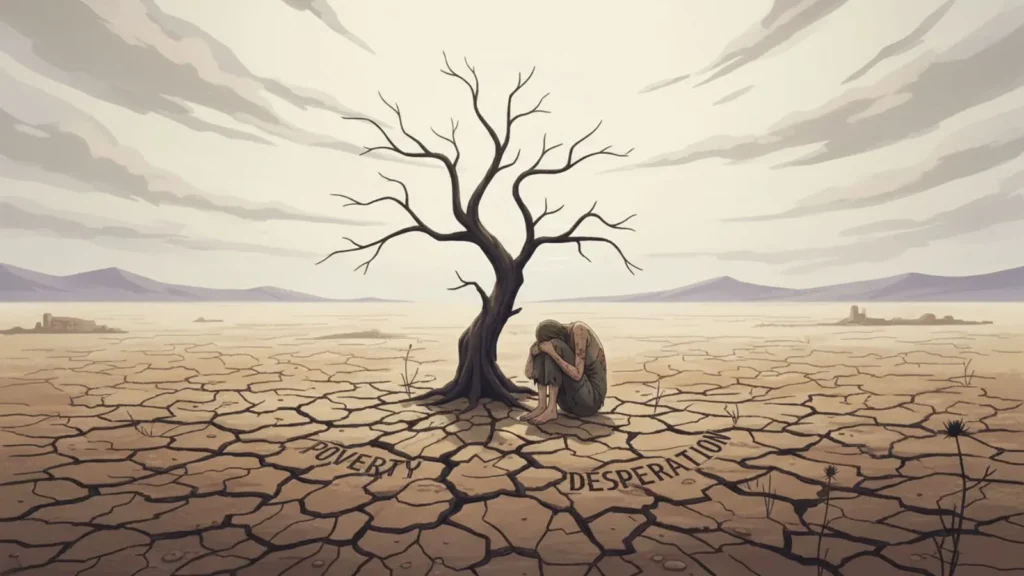
Poverty is a term we often hear, but what does poverty mean in simple words?
At its core, poverty refers to the lack of basic necessities that make life comfortable and secure, such as food, shelter, clothing, education, and healthcare.
It is not just about money it affects health, opportunities, and overall well-being. Understanding poverty is essential because it impacts millions of people worldwide, from children in rural villages to families in urban areas struggling to make ends meet.
In this article, we will explore the meaning of poverty, its types, causes, and effects on individuals and society. We’ll also look at global examples, the poverty line, and ways it can be reduced.
By the end, you will have a clear understanding of poverty and why addressing it is crucial for a fairer and more equitable world.
What Does Poverty Mean?
So, what does poverty mean exactly? In simple terms, poverty is the condition where individuals or communities lack the resources necessary to meet basic life needs. These needs include adequate food, clean water, safe shelter, clothing, healthcare, and access to education. Poverty is not only about financial shortages; it also affects people’s opportunities, choices, and quality of life.
Experts often define poverty in two main ways: absolute poverty and relative poverty. Absolute poverty refers to a situation where people cannot meet the minimum requirements for survival. This is common in many developing countries, where families struggle for basic necessities like food and clean water. Relative poverty, on the other hand, measures a person’s economic situation compared to the wider society. A family may have enough to survive but still live far below the average standard of living, making it hard to access education, healthcare, or other opportunities.
Understanding the meaning of poverty is crucial because it helps governments, NGOs, and communities identify who needs help and design solutions effectively. Poverty is also multidimensional—it goes beyond income and includes factors like education, health, social inclusion, and security. By knowing exactly what poverty means, we can better address its causes and reduce its effects on individuals and society.
Types of Poverty Explained in Detail
Poverty is not a single, uniform condition—it comes in several types, each affecting people differently. Understanding the types of poverty helps us see the full picture of this global issue.
1. Absolute Poverty
Absolute poverty occurs when people lack the basic necessities of life, such as food, clean water, shelter, and healthcare. It is measured by a fixed standard, like living on less than $2.15 per day, and is most common in developing countries. Families facing absolute poverty struggle to survive day to day.
2. Relative Poverty
Relative poverty measures a person’s economic position compared to others in society. Even if someone can meet basic needs, they may still live below the average standard of living. This type of poverty is common in developed countries and often leads to social exclusion and limited opportunities.
3. Extreme Poverty
Extreme poverty is a severe form of absolute poverty where people cannot meet even the most fundamental survival needs. Malnutrition, lack of clean water, and minimal access to healthcare are common challenges in this category.
4. Multidimensional Poverty
Multidimensional poverty goes beyond money. It considers health, education, living standards, and access to essential services. A family may earn enough income but still face deprivation in other areas, highlighting the complex nature of poverty.
5. Urban vs Rural Poverty
Poverty in cities often involves overcrowding, high living costs, and unemployment, while rural poverty usually includes limited access to schools, healthcare, and infrastructure.
By understanding these types of poverty, we can better design policies and solutions that address both income and social inequalities.
What Causes Poverty?
Understanding what causes poverty is essential to addressing it effectively. Poverty does not occur randomly; it is often the result of a combination of economic, social, and political factors.
One of the main causes is lack of education. Without access to quality education, people struggle to gain the skills needed for better-paying jobs, limiting their economic opportunities. Unemployment and low wages also play a major role. Even in families where people work, if wages are too low, they may not be able to cover basic needs like food, housing, and healthcare.
Economic inequality is another significant factor. When wealth and resources are concentrated among a small portion of society, many people are left with limited opportunities and struggle to improve their living conditions. Overpopulation can intensify poverty, especially in areas where resources are scarce, creating competition for jobs, land, and social services.
Political issues such as corruption, weak governance, and conflict also contribute to poverty by disrupting economic growth and reducing access to public services. Additionally, natural disasters and climate change can destroy homes, crops, and livelihoods, pushing vulnerable communities further into poverty.
In many cases, these factors overlap, creating a cycle of poverty that is hard to break. Families affected by poverty often face multiple challenges simultaneously, making it crucial to address the root causes rather than just the symptoms. By identifying the causes, governments, organizations, and communities can create targeted solutions to reduce poverty and improve quality of life.
How Poverty Is Measured
Measuring poverty helps governments, organizations, and researchers understand its scale and design effective solutions. One of the most common ways to measure poverty is through the poverty line. The poverty line is the minimum income a person or family needs to meet basic needs like food, shelter, and clothing. Those living below this threshold are considered .
There are two main approaches to measuring poverty: absolute poverty and relative poverty. Absolute poverty looks at whether individuals have enough resources to survive. For example, the World Bank defines extreme poverty as living on less than $2.15 per day. Relative poverty, on the other hand, compares a person’s income or resources to the rest of society. Even if someone has enough to survive, they may still be considered if they cannot participate fully in everyday social life.
Beyond income, poverty is also measured in other ways. Multidimensional Poverty Index (MPI) considers factors such as education, healthcare, living conditions, and access to essential services. This method recognizes that poverty is more than just a lack of money—it includes deprivation in many areas of life.
Measurement is important because it allows policymakers to track progress and identify who needs help the most. By understanding how poverty is measured, we can better grasp the challenges faced by those living in poverty and develop solutions that address both income shortages and social inequalities.
Effects of Poverty on Individuals and Society
Poverty affects more than just finances—it impacts every aspect of life, both for individuals and society as a whole. One of the most serious effects is on health. People living in poverty often cannot afford nutritious food, clean water, or proper medical care. This leads to malnutrition, higher disease rates, and shorter life expectancy. Children in families are especially vulnerable to stunted growth and preventable illnesses.
Education is another area heavily affected by poverty. Families struggling to meet basic needs may not afford school fees, uniforms, or transportation. Children may drop out early to work and help support the family, limiting future opportunities and perpetuating the cycle of poverty.
Poverty also has significant social and psychological effects. It can cause stress, anxiety, and feelings of social exclusion. Individuals may experience discrimination or stigma, which can reduce self-esteem and social participation.
On a larger scale, poverty impacts economies and communities. High poverty rates often result in lower productivity, higher crime rates, and increased pressure on government resources and social services. Societies with widespread poverty may face instability, as inequality and lack of opportunity can lead to tension and conflict.
In short, poverty affects health, education, mental well-being, and societal stability. Understanding these effects highlights why addressing poverty is critical not only for individual lives but for building stronger, healthier, and more equitable communities worldwide.
Poverty Around the World
Poverty exists in every country, but its form and severity vary widely. In developing countries, poverty is often more visible and severe. Many families struggle to meet basic needs like food, clean water, and shelter. Rural areas are particularly affected, where access to schools, hospitals, and jobs is limited. In some regions, children may face malnutrition and limited educational opportunities, making it difficult to break the cycle of poverty.
In developed countries, poverty still exists but usually in a different form. People may have enough income to survive, but their standard of living is much lower than the average. Relative poverty is common in cities, where high living costs make it hard for low-income families to afford decent housing, healthcare, or education. Social exclusion and lack of opportunities are major challenges in these settings.
Globally, children and women are often the most affected by poverty. Millions of children live in extreme poverty, lacking access to basic healthcare and education. Women, especially in rural areas, may face additional barriers such as limited employment opportunities and gender-based inequality.
Understanding poverty around the world highlights that it is not just about money—it is also about access to opportunities, education, and essential services. Recognizing these differences is crucial for designing solutions that address both the immediate needs and long-term development of affected communities.
Real-Life Examples of Poverty
Poverty is not just a concept it affects real people every day. Across the world, families struggle to meet basic needs, often facing difficult choices between food, education, and healthcare. In many rural villages, families rely on small-scale farming, but soil, lack of water, or natural disasters can leave them with little to eat or sell. Children may start working at a young age instead of going to school, limiting their future opportunities.
In urban areas, poverty often takes a different form. Families may live in overcrowded apartments or informal settlements with limited access to clean water and sanitation. Even when parents work, wages may be too low to cover rent, utilities, and school fees. This creates stress and instability, affecting children’s mental and physical development.
Children are often the most vulnerable. Many grow up without adequate nutrition, clean clothing, or healthcare. They may experience social exclusion at school or in their communities, reinforcing the cycle of poverty. Homelessness is another extreme example, where individuals or families lack safe shelter entirely, living on streets or in temporary shelters.
These examples show that poverty is not only about money—it affects health, education, safety, and dignity. By sharing real-life situations, we gain a better understanding of the struggles people face daily. Recognizing these experiences is essential for creating empathy and driving solutions that can improve the lives of those living in poverty worldwide.
Poverty vs Related Terms
Poverty is often confused with other social and economic issues. Understanding the differences helps clarify its meaning and impact.
Poverty vs Inequality
Poverty refers to a lack of basic resources needed for survival or a minimum standard of living. Inequality, on the other hand, measures the gap between the rich and the . A society can have low poverty but high inequality if a small group controls most of the wealth while others have limited access to opportunities.
Poverty vs Hunger
While poverty often causes hunger, the two are not the same. Hunger refers specifically to a lack of sufficient food. Poverty includes hunger but also other deprivations, such as inadequate housing, healthcare, and education. A person may have enough food but still live in poverty if other basic needs are unmet.
Poverty vs Homelessness
Homelessness is a visible form of poverty where people lack a permanent and safe place to live. However, not all people are homeless. Many live in overcrowded or substandard housing yet struggle to afford essentials like food, clothing, and healthcare.
Poverty vs Low Income
Low income is often a cause of poverty, but poverty is broader. Even with low income, a person might have access to free healthcare, education, or social support, reducing the impact of poverty.
Clarifying these differences is important because it helps policymakers and communities target interventions effectively. Poverty is multidimensional, and addressing it requires understanding its connection to—but distinction from—related social issues.
How Poverty Can Be Reduced or Eliminated
While poverty is a complex global issue, there are proven ways to reduce it and improve people’s lives. Education is one of the most effective tools. Providing access to quality education equips children and adults with skills to earn better incomes and break the cycle of poverty. Programs that focus on literacy, vocational training, and scholarships can create long-term opportunities.
Job creation and fair wages are also crucial. Governments and businesses can provide employment opportunities that offer sustainable incomes. Policies that support small businesses, entrepreneurship, and workforce training help people secure steady work and improve living standards.
Social programs and government policies play a significant role. Safety nets such as unemployment benefits, food assistance, and affordable healthcare ensure vulnerable populations can meet basic needs. Additionally, addressing economic inequality through progressive taxation and social investment helps reduce poverty at a systemic level.
Non-governmental organizations (NGOs) and charities contribute by providing food, education, healthcare, and emergency relief to those in need. Community-level solutions, such as local skill-building programs and cooperative businesses, empower people to improve their conditions sustainably.
Finally, individual actions matter too. Volunteering, donations, and advocacy can support those affected by poverty while raising awareness of systemic issues. Reducing poverty requires a combined effort from governments, organizations, communities, and individuals. By addressing both the causes and effects of poverty, we can create lasting change and provide opportunities for a better, fairer world.
Common Misconceptions About Poverty
Poverty is often misunderstood, and several myths can prevent people from fully grasping its causes and effects. One common misconception is that “ people are lazy.” In reality, most people living in poverty work hard but face structural barriers, such as low wages, limited job opportunities, and lack of education, that make it difficult to improve their situation.
Another misconception is that poverty exists only in developing countries. While extreme poverty is more visible in some regions, many developed countries also have individuals and families living in relative poverty. High living costs, unemployment, and economic inequality contribute to poverty even in wealthy nations.
Some believe that money alone can solve poverty. While financial support is important, poverty is multidimensional. Lack of access to education, healthcare, safe housing, and social services can keep people in poverty even if they have some income. Holistic solutions are needed to address these multiple factors.
A further misunderstanding is that poverty is a personal choice. Structural issues such as systemic inequality, discrimination, and limited opportunities mean that poverty often results from circumstances beyond an individual’s control.
Understanding and correcting these misconceptions is crucial for creating effective solutions. By seeing poverty as a complex social and economic issue, rather than blaming individuals, governments, organizations, and communities can implement policies and programs that truly help people escape poverty and improve their lives.
Why Understanding Poverty Matters
Understanding poverty is essential for individuals, communities, and governments. Poverty is more than just a lack of money—it affects health, education, social inclusion, and overall quality of life. By understanding what poverty means, we can recognize the challenges millions of people face daily and develop solutions that truly address their needs.
Awareness of poverty helps promote empathy and social responsibility. When people understand the struggles of those living in poverty, they are more likely to support policies, programs, and initiatives aimed at reducing inequality and improving living conditions. This understanding encourages community involvement, volunteering, and advocacy, all of which play a vital role in combating poverty.
For governments and organizations, understanding poverty is critical for policy-making and resource allocation. Knowing who is most affected, the types of poverty they experience, and the underlying causes allows for targeted interventions. Programs that focus on education, healthcare, job creation, and social safety nets are more effective when designed based on a clear understanding of poverty’s multidimensional nature.
Finally, understanding poverty helps break the cycle of poverty. When communities, educators, and policymakers recognize the social and economic barriers that keep people in poverty, they can implement solutions that create opportunities for the next generation. Addressing poverty benefits not only individuals but also society as a whole, leading to stronger, healthier, and more equitable communities.
By grasping the true meaning and impact of poverty, we can take meaningful steps to reduce its effects and improve lives worldwide.
FAQs About Poverty
1. What does poverty mean in simple words?
Poverty means not having enough resources to meet basic life needs such as food, clothing, shelter, healthcare, and education. It affects people’s opportunities and overall quality of life.
2. Is poverty only about money?
No. While income is a major factor, poverty is multidimensional. It includes lack of access to education, healthcare, clean water, and safe housing. Even people with some income may experience deprivation in these areas.
3. What are the main signs of poverty?
Signs of poverty include malnutrition, inadequate clothing, health, lack of education, limited employment opportunities, substandard housing, and social exclusion. Poverty can also affect mental health and self-esteem.
4. Can poverty be eliminated?
Poverty can be reduced but eliminating it completely is challenging due to social, economic, and political factors. Long-term solutions include education, job creation, fair wages, government policies, and access to basic services.
5. How does poverty affect children?
Children living in poverty often face malnutrition, limited education, unsafe living conditions, and healthcare. These challenges can affect their growth, learning, and future opportunities, making it harder to break the cycle of poverty.
6. What are the main causes of poverty?
The main causes include lack of education, unemployment, low wages, economic inequality, overpopulation, political instability, corruption, conflict, and natural disasters. These factors often overlap, creating a cycle of poverty.
7. How is poverty measured?
Poverty is measured using the poverty line, income comparisons, and multidimensional indices that consider health, education, and living standards. Absolute and relative poverty are the two main measurement methods.
Conclusion:
Poverty is a complex and multidimensional issue that affects millions of people worldwide. It is more than a lack of money; it impacts health, education, opportunities, and overall well-being. Understanding what poverty means helps us recognize the challenges faced by individuals and communities, from children in rural villages to families in urban areas struggling to make ends meet.
By exploring its types, causes, and effects, we see that poverty is not just an individual problem—it is a societal issue that requires collective solutions. Governments, organizations, communities, and individuals all play a role in reducing poverty through education, fair employment, social programs, and community support.
Raising awareness and addressing misconceptions about poverty is essential for creating a fairer and more equitable world. By understanding poverty and acting to reduce its effects, we can help break the cycle and provide opportunities for a better future for those affected.

“On You Wishes, I share the most heartfelt wishes for every moment — birthdays, love, or motivation. Each message is written with emotion to bring smiles and inspiration!”