
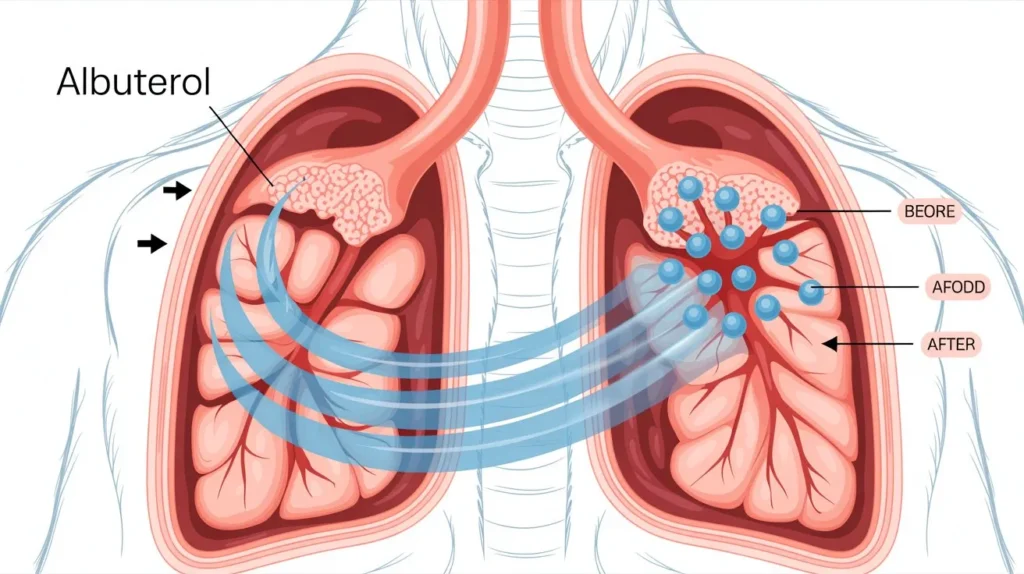
Albuterol is one of the most commonly prescribed medications for breathing problems, especially for people with asthma and other lung conditions.
If you’ve been given an albuterol inhaler or are caring for someone who uses one, you may wonder what albuterol actually does and why it’s so important.
Simply put, albuterol helps you breathe easier when your airways suddenly tighten or become narrow. It’s often called a “rescue medication” because it works quickly to relieve symptoms like wheezing, coughing, chest tightness, and shortness of breath.
Doctors frequently prescribe albuterol for asthma attacks, exercise-induced breathing problems, and chronic lung diseases such as COPD. Unlike daily maintenance medications, albuterol is designed for fast relief when symptoms flare up.
Understanding how albuterol works, when to use it, and what to expect after taking it can help you use the medication more safely and effectively.
In this article, we’ll break down exactly what albuterol does, how it works in your body, and why it plays a key role in managing breathing conditions.
What Is Albuterol?
Albuterol is a prescription medication used to treat breathing problems caused by narrowed airways. It belongs to a class of drugs called short-acting beta-agonists (SABAs), which are designed to work quickly to relax the muscles around the airways in the lungs. When these muscles tighten, airflow becomes restricted, making it difficult to breathe. Albuterol helps reverse this tightening so air can move in and out of the lungs more easily.
Albuterol is most commonly delivered through an inhaler, but it is also available as a nebulizer solution, and in rare cases, as tablets or syrup. Brand names you may recognize include Ventolin, ProAir, and Proventil, though generic albuterol works the same way. Because it acts fast, albuterol is often referred to as a rescue inhaler, meaning it’s used for quick relief rather than long-term control.
Doctors prescribe albuterol for conditions such as asthma, chronic obstructive pulmonary disease (COPD), and exercise-induced bronchospasm. It may also be used during respiratory infections or allergic reactions that cause wheezing or shortness of breath. While albuterol is highly effective for rapid symptom relief, it does not treat the underlying inflammation that causes chronic breathing conditions. For that reason, many patients use albuterol alongside other medications meant for daily control.
Understanding what albuterol is and how it fits into a treatment plan is essential. Using it correctly can provide fast relief during breathing emergencies while helping patients manage their symptoms safely and confidently.
What Does Albuterol Do in the Body?
Albuterol works by targeting specific receptors in the lungs called beta-2 adrenergic receptors. These receptors are located on the smooth muscles that surround the airways. When asthma, COPD, or another breathing condition causes these muscles to tighten, the airways become narrow, making it hard to breathe. Albuterol activates the beta-2 receptors, which signals the muscles to relax and open up the air passages.
As the airway muscles relax, the bronchial tubes widen in a process known as bronchodilation. This allows more air to flow freely into and out of the lungs. As a result, symptoms such as wheezing, chest tightness, coughing, and shortness of breath begin to ease. This is why many people feel relief within minutes of using an albuterol inhaler during an asthma attack or sudden breathing difficulty.
Albuterol’s effects are fast but temporary. It is designed to provide quick relief rather than long-term control. The medication typically starts working within 5 minutes, reaches its strongest effect within 30 minutes, and lasts about 4 to 6 hours. Because of this short duration, albuterol is not meant to replace daily controller medications that reduce airway inflammation over time.
In addition to improving airflow, albuterol can help prevent breathing problems before they start. Some people use it shortly before exercise to reduce the risk of exercise-induced bronchospasm. Overall, albuterol’s primary role in the body is to quickly restore easier breathing by relaxing airway muscles during sudden or anticipated breathing difficulties.
What Conditions Is Albuterol Used For?
Albuterol is prescribed to treat several conditions that cause airway narrowing and breathing difficulty. Its primary use is for asthma, where it provides fast relief during asthma attacks or flare-ups. When asthma triggers cause the airways to tighten and swell, albuterol helps quickly relax the airway muscles, making it easier to breathe. Many people with asthma carry an albuterol inhaler at all times for emergency symptom relief.
Another common use of albuterol is for chronic obstructive pulmonary disease (COPD), which includes conditions like chronic bronchitis and emphysema. In people with COPD, airflow obstruction can worsen suddenly due to infections, environmental irritants, or physical activity. Albuterol helps open the airways during these episodes, reducing shortness of breath and wheezing.
Albuterol is also widely used for exercise-induced bronchospasm. Some individuals experience breathing problems during or after physical activity, even if they don’t have daily asthma symptoms. Using albuterol 10 to 15 minutes before exercise can help prevent airway tightening and improve exercise tolerance.
In certain cases, doctors may prescribe albuterol for temporary breathing issues, such as wheezing caused by respiratory infections, allergies, or exposure to irritants like smoke. While it is not a cure for these conditions, it can provide short-term relief of symptoms.
Although albuterol is effective for relieving bronchospasm, it does not treat the underlying causes of chronic lung disease, such as inflammation or long-term airway damage. For this reason, it is often used alongside other medications as part of a broader treatment plan tailored to the patient’s condition and symptom severity.
How Fast Does Albuterol Work?
One of the main reasons albuterol is so widely used is because it works very quickly to relieve breathing symptoms. For most people, albuterol begins to take effect within 3 to 5 minutes after inhalation. As the medication relaxes the muscles around the airways, airflow improves, and symptoms like wheezing, coughing, chest tightness, and shortness of breath start to ease.
Albuterol usually reaches its peak effectiveness within 15 to 30 minutes. During this time, breathing becomes noticeably easier, and lung function improves. The relief provided by albuterol typically lasts between 4 and 6 hours, although this can vary depending on the severity of symptoms and the individual’s response to the medication.
Because albuterol acts so fast, it is classified as a rescue inhaler rather than a maintenance medication. It is meant to be used when symptoms suddenly appear or before a known trigger, such as exercise. However, if symptoms do not improve within a few minutes after using albuterol, or if they continue to worsen, this may be a sign of a more serious asthma or COPD flare-up that requires medical attention.
It’s also important to note that needing albuterol too frequently can indicate poor control of a breathing condition. Most doctors consider using a rescue inhaler more than two days per week (not counting pre-exercise use) a sign that additional or adjusted treatment may be needed. Understanding how fast albuterol works and how long its effects last helps patients use it appropriately and recognize when to seek further care.
Different Forms of Albuterol
Albuterol is available in several different forms, allowing doctors to choose the option that best fits a patient’s age, condition, and severity of symptoms. The most common form is the metered-dose inhaler (MDI). This handheld device delivers a measured amount of medication directly into the lungs, providing fast relief during sudden breathing problems. MDIs are portable, easy to use, and often prescribed for both adults and children.
Another widely used form is albuterol nebulizer solution. A nebulizer turns liquid medication into a fine mist that is inhaled through a mask or mouthpiece. This method is often used for young children, if possible patients, or individuals who have difficulty using an inhaler correctly. Nebulizers are commonly used at home or in medical settings during more severe breathing episodes.
Albuterol is also available in oral forms, such as tablets and syrups, though these are much less common today. Oral albuterol takes longer to work and is more likely to cause side effects because it affects the whole body rather than targeting the lungs directly. For this reason, inhaled albuterol is generally preferred.
Each form of albuterol delivers the same medication but differs in speed, convenience, and ease of use. Inhalers provide the fastest relief, while nebulizers may be more effective for people who need higher doses over a longer period. A healthcare provider can help determine which form is most appropriate based on the patient’s symptoms, lifestyle, and ability to use the device correctly.
How to Use an Albuterol Inhaler Correctly
Using an albuterol inhaler correctly is essential for getting the full benefit of the medication. When used properly, the medicine goes directly into the lungs where it can quickly relax the airway muscles. Incorrect technique, however, can prevent enough medication from reaching the airways, reducing its effectiveness.
To use a metered-dose inhaler, start by shaking the inhaler well and removing the cap. Breathe out fully to empty your lungs. Place the mouthpiece in your mouth, sealing your lips around it. As you begin to breathe in slowly, press down on the inhaler to release one puff of medication. Continue breathing in deeply, then hold your breath for about 10 seconds to allow the medicine to settle in your lungs. Slowly breathe out and wait about 30 to 60 seconds before taking a second puff if prescribed.
Many people, especially children, benefit from using a spacer. A spacer is an attachment that holds the medication after it is released, making it easier to inhale the full dose. Spacers reduce medication loss and help improve delivery to the lungs.
Common mistakes include inhaling too quickly, not shaking the inhaler, or failing to hold the breath after inhalation. These errors can reduce how well albuterol works. It’s also important to clean the inhaler regularly to prevent blockage. Learning proper inhaler technique and reviewing it periodically with a healthcare provider can greatly improve symptom control and overall breathing relief.
Albuterol Dosage and Frequency
Albuterol dosage and how often it should be used depend on a person’s age, condition, and severity of symptoms. For most adults and children over the age of four, the typical dose using a metered-dose inhaler is one to two puffs every 4 to 6 hours as needed for symptom relief. Doctors may also recommend using albuterol shortly before exercise to prevent exercise-induced bronchospasm.
For nebulizer treatments, the dosage is usually measured in milligrams of liquid solution and administered over several minutes. Nebulizer doses are often used for more severe symptoms or in patients who have difficulty using an inhaler. Children, especially infants and toddlers, may require lower doses and careful monitoring.
It is important not to exceed the prescribed dose. Using albuterol too frequently can lead to increased side effects such as rapid heartbeat, shakiness, nervousness, and headaches. More importantly, frequent reliance on albuterol may signal that a breathing condition like asthma is not well controlled and that additional or different medications may be needed.
Most healthcare providers consider using albuterol more than two to three times per week (outside of exercise use) a warning sign of poor symptom control. In these cases, a long-term controller medication, such as an inhaled corticosteroid, may be recommended.
Always follow your doctor’s instructions regarding dosage and frequency, even if symptoms improve. Never adjust your dose or stop other prescribed medications without medical guidance. Proper use helps ensure albuterol remains safe, effective, and reliable when you need fast breathing relief.
Common Side Effects of Albuterol
Like most medications, albuterol can cause side effects, though many people experience only mild or temporary ones. The most common side effects occur because albuterol stimulates beta-2 receptors, which can also affect other parts of the body besides the lungs. These effects are usually short-lived and lessen as the medication wears off.
One of the most frequently reported side effects is shakiness or trembling, especially in the hands. Many people also notice a fast or pounding heartbeat, mild nervousness, or feelings of restlessness shortly after using the inhaler. Headaches, dizziness, and throat irritation can also occur. These side effects are generally not dangerous and often improve as the body adjusts to the medication.
Some individuals may experience muscle cramps or slight changes in blood pressure. Using higher doses or using albuterol too often increases the likelihood of these effects. Oral forms of albuterol tend to cause more side effects than inhaled versions because the medication affects the entire body rather than just the lungs.
To reduce side effects, it’s important to use albuterol exactly as prescribed and avoid unnecessary doses. Using a spacer with an inhaler can also help limit how much medication stays in the mouth and throat. If mild side effects become bothersome or do not improve over time, it’s a good idea to discuss them with a healthcare provider.
Understanding the common side effects of albuterol helps patients recognize what is normal and when something may need medical attention, allowing for safer and more confident use of the medication.
Serious Side Effects and When to Seek Help
While albuterol is generally safe when used as prescribed, serious side effects can occur in rare cases. It’s important to recognize these warning signs so you can seek medical help promptly. One serious concern is a rapid or irregular heartbeat that does not settle within a short time after using the medication. Chest pain, severe dizziness, or fainting may also indicate a serious reaction and should not be ignored.
In some cases, albuterol can cause paradoxical bronchospasm, a rare but dangerous reaction where breathing symptoms actually worsen immediately after using the inhaler. If wheezing, chest tightness, or shortness of breath suddenly increase after a dose, stop using the medication and seek emergency care right away.
Severe allergic reactions are uncommon but possible. Symptoms may include swelling of the face, lips, tongue, or throat; hives; severe itching; or difficulty swallowing. These signs require immediate medical attention, as they can be life-threatening.
Another reason to seek help is if albuterol stops working as expected. Needing higher doses or more frequent use to control symptoms may indicate that your asthma or COPD is worsening. This situation increases the risk of severe breathing attacks and should be evaluated by a healthcare provider as soon as possible.
If breathing symptoms do not improve within minutes after using albuterol, or if they continue to worsen, call emergency services. Knowing when to seek medical care ensures that albuterol remains a helpful rescue medication rather than a substitute for necessary emergency or long-term treatment.
Is Albuterol Safe?
Albuterol is considered a safe and effective medication when used correctly and under medical guidance. It has been prescribed for decades and is approved for use in both adults and children. Because it acts quickly and targets the lungs directly, inhaled albuterol provides rapid relief with fewer systemic effects compared to many oral medications.
For most people, short-term and occasional use of albuterol poses very little risk. It is commonly used during asthma attacks or sudden breathing difficulties without long-term problems. Albuterol is also generally safe for children, though dosing and technique should always be supervised by a healthcare provider or caregiver.
Long-term safety depends largely on how often albuterol is used. Relying on it too frequently may increase side effects and can signal poor control of an underlying condition like asthma. Overuse does not mean addiction, but it may delay proper treatment if controller medications are needed.
Albuterol is often considered safe during pregnancy and breastfeeding when the benefits outweigh potential risks. Uncontrolled asthma can be more dangerous than the medication itself, so doctors usually recommend continuing albuterol if needed. However, pregnant or breastfeeding individuals should always consult their healthcare provider before using any medication.
Certain medical conditions, such as heart disease, high blood pressure, or thyroid disorders, may require extra caution. In these cases, a doctor may monitor use more closely. Overall, when used as prescribed and as part of a comprehensive treatment plan, albuterol remains a reliable and safe option for quick relief of breathing symptoms.
Albuterol vs Other Asthma Medications
Albuterol plays a unique role in asthma and respiratory treatment, but it is not the only medication used to manage these conditions. The key difference between albuterol and many other asthma medications lies in how quickly it works and what it treats. Albuterol is a rescue inhaler, meaning it provides fast relief during sudden breathing problems by relaxing airway muscles.
In contrast, inhaled corticosteroids are considered maintenance or controller medications. These drugs reduce inflammation inside the airways over time and help prevent asthma symptoms from occurring in the first place. Unlike albuterol, corticosteroids do not provide immediate relief and must be used daily to be effective.
Another group of medications includes long-acting beta-agonists (LABAs). These medications also relax airway muscles but work for much longer, often up to 12 hours. LABAs are not used alone for asthma because they do not address inflammation. Instead, they are typically combined with inhaled steroids for long-term symptom control.
Albuterol is also different from leukotriene modifiers and other oral asthma medications, which work by reducing inflammation or blocking chemical triggers in the body. These medications are used regularly rather than during emergencies.
Understanding these differences is important because albuterol should not replace daily controller medications. Using albuterol frequently without proper long-term treatment can lead to poorly controlled asthma and increased risk of severe attacks. When used correctly alongside other medications, albuterol serves as a critical tool for immediate relief while other therapies work to prevent future symptoms.
What Albuterol Does NOT Do
While albuterol is highly effective for relieving sudden breathing symptoms, it’s important to understand its limitations. One common misconception is that albuterol treats or cures asthma or COPD. In reality, albuterol does not address the underlying causes of these conditions. It provides temporary symptom relief by relaxing airway muscles but does not fix the long-term issues that cause breathing problems.
Albuterol does not reduce airway inflammation, which is a key factor in chronic respiratory conditions like asthma. Inflammation causes swelling and increased mucus production in the airways, making them more sensitive to triggers. This is why many patients also need daily controller medications, such as inhaled corticosteroids, to keep inflammation under control.
Another important limitation is that albuterol does not prevent future asthma attacks on its own. While it can relieve symptoms during an episode or before exercise, relying on albuterol alone can mask worsening disease. Frequent use may give the impression that symptoms are managed, while underlying inflammation continues to progress.
Albuterol also does not replace emergency medical care during severe breathing attacks. If symptoms do not improve after using a rescue inhaler or worsen quickly, immediate medical attention is required. Continuing to take repeated doses without improvement can be dangerous.
Understanding what albuterol does not do helps patients use it appropriately and avoid over-reliance. When combined with proper long-term treatment and medical guidance, albuterol remains a valuable tool but it should never be the only strategy for managing chronic breathing conditions.
When Should You Use Albuterol?
Albuterol should be used when breathing symptoms suddenly appear or when you anticipate a situation that may trigger airway tightening. The most common time to use albuterol is during an asthma attack or sudden episode of wheezing, coughing, chest tightness, or shortness of breath. Because it works quickly, albuterol helps open the airways and restore easier breathing within minutes.
Many people are also advised to use albuterol before exercise, especially if they have exercise-induced bronchospasm. Taking the medication about 10 to 15 minutes before physical activity can help prevent breathing problems during workouts, sports, or strenuous activities.
Albuterol may also be used during temporary breathing issues caused by respiratory infections, allergies, cold air, or exposure to irritants such as smoke or strong odors. In these situations, it can provide short-term relief until the trigger passes or additional treatment takes effect.
However, albuterol should not be used on a fixed daily schedule unless specifically instructed by a healthcare provider. Needing frequent doses throughout the day may indicate that a condition like asthma or COPD is not well controlled. In such cases, a doctor may recommend adjusting long-term medications rather than increasing albuterol use.
It’s also important to follow your personalized asthma or COPD action plan if you have one. This plan outlines exactly when and how to use albuterol and when to seek medical care. Using albuterol at the right time and not relying on it too often helps keep breathing symptoms under control while reducing the risk of complications.
What Does Albuterol Do
Albuterol is a medication commonly used to treat respiratory conditions by relaxing the muscles in the airways. It works as a bronchodilator, which means it helps open up narrowed air passages in the lungs, making it easier to breathe. People with asthma, chronic obstructive pulmonary disease (COPD), or other breathing difficulties often use albuterol to quickly relieve symptoms like wheezing, shortness of breath, and chest tightness. Albuterol can be administered through inhalers, nebulizers, or sometimes orally in tablet form. It starts working within minutes, providing fast relief from acute breathing issues. While it is effective for immediate symptom relief, it does not treat the underlying inflammation that can cause long-term lung problems. Patients are usually advised to use albuterol only as prescribed to avoid side effects like rapid heartbeat, jitteriness, or headaches. Understanding how albuterol works and when to use it can significantly improve breathing comfort for people with respiratory challenges. Always consult a healthcare provider for the correct dosage and usage instructions to ensure safe and effective treatment.
What Does Albuterol Do for Your Lungs
Albuterol primarily benefits the lungs by relaxing the airway muscles, which allows more air to flow into the lungs. This action is especially important for individuals with asthma or other obstructive lung diseases. When airways are inflamed or narrowed, it becomes difficult to breathe, and the lungs may not receive enough oxygen. Albuterol acts quickly to widen these air passages, helping the lungs function more efficiently and reducing symptoms like wheezing, coughing, and shortness of breath. The medication does not cure lung conditions but provides temporary relief during asthma attacks or breathing difficulties. Inhaled albuterol directly targets the lungs, making it more effective and faster-acting than oral forms. Proper use ensures that oxygen reaches the lungs efficiently, improving overall respiratory performance. Overuse can lead to side effects such as increased heart rate or shakiness, so it should be taken according to a healthcare provider’s guidance. Albuterol plays a key role in lung care, especially during sudden breathing episodes, offering immediate comfort and support.
What Does Albuterol Do for Cough
Albuterol is sometimes used to relieve coughs that are caused by airway constriction, such as those seen in asthma or bronchitis. The medication works by relaxing the muscles around the airways, which helps reduce irritation and improves airflow. By opening the air passages, albuterol can lessen coughing episodes caused by restricted airflow. While it is not a general cough suppressant and may not be effective for coughs caused by infections like the common cold or flu, it is highly effective for coughs related to asthma, COPD, or allergic reactions. Using albuterol can help patients breathe more easily and sleep better when nighttime coughing occurs due to airway tightening. Overusing the medication, however, can cause side effects like rapid heartbeat, tremors, or nervousness. Therefore, it is important to follow the prescribed dosage and seek medical advice if cough persists. In the right circumstances, albuterol can significantly reduce cough caused by airway constriction and improve overall respiratory comfort.
What Does Albuterol Do
Albuterol is a medication primarily used to help people with breathing difficulties. It is classified as a bronchodilator, which means it works by relaxing the muscles in the airways, making it easier to breathe. People who have conditions like asthma or chronic obstructive pulmonary disease (COPD) often use albuterol to manage sudden breathing problems or prevent them before activities that may trigger symptoms. By opening up the airways, albuterol allows more air to flow into the lungs, reducing symptoms such as shortness of breath, wheezing, and coughing. Doctors may prescribe it in the form of an inhaler, nebulizer solution, or oral tablets depending on the patient’s needs. Albuterol can be used both for immediate relief of symptoms and as a preventive measure before exercise. While it provides quick relief, it is not a substitute for long-term control medications, and users should follow their doctor’s instructions carefully to avoid side effects such as increased heart rate, shakiness, or headache. Overall, albuterol is an effective and commonly used medication that helps millions of people breathe easier during episodes of airway constriction.
What Does Albuterol Do?
Albuterol acts as a fast-acting treatment for airway constriction and respiratory distress. When inhaled, it works directly on the smooth muscles surrounding the bronchial tubes in the lungs, causing them to relax and widen. This relaxation allows air to flow more freely, which eases breathing and reduces the symptoms of asthma, bronchitis, or COPD. Albuterol is often referred to as a “rescue inhaler” because it provides rapid relief from sudden asthma attacks or episodes of shortness of breath. In addition to treatment during flare-ups, it can also be used preventively before physical activity that may trigger breathing problems. The effects of albuterol are typically felt within minutes, giving patients almost immediate comfort. It is important, however, to use it as prescribed because overuse can lead to side effects such as rapid heartbeat, nervousness, or dizziness. By effectively relaxing the airway muscles, albuterol provides critical support for people experiencing breathing difficulties and plays a key role in emergency management of asthma or other respiratory conditions.
How Does Albuterol Work
Albuterol works by targeting the beta-2 receptors located in the smooth muscles of the airways. When these receptors are stimulated, the muscles relax, which causes the bronchial tubes to open up and allows air to flow more freely into the lungs. This process helps alleviate the constriction that occurs during asthma attacks, allergic reactions, or chronic lung diseases such as COPD. By rapidly dilating the air passages, albuterol improves oxygen delivery to the lungs and reduces symptoms like wheezing, coughing, and shortness of breath. The medication is usually administered through an inhaler or nebulizer to ensure direct delivery to the lungs for faster action. The mechanism of albuterol is highly effective for quick relief, making it an essential part of emergency treatment plans for respiratory issues. Although it provides immediate symptom relief, it does not address the underlying inflammation in the lungs, so it is often used alongside long-term controller medications. Understanding how albuterol works can help patients use it safely and effectively during breathing emergencies.
What Does Albuterol Treat
Albuterol is mainly used to treat respiratory conditions that involve narrowing of the airways. The most common condition it treats is asthma, which can cause sudden episodes of wheezing, shortness of breath, and tightness in the chest. It is also prescribed for chronic obstructive pulmonary disease (COPD), including chronic bronchitis and emphysema, to help patients breathe more easily. Additionally, albuterol can prevent exercise-induced bronchospasms, which are sudden airway constrictions triggered by physical activity. By relaxing the muscles around the airways, albuterol allows patients to breathe more comfortably and reduces the severity of symptoms. Doctors may also recommend it for temporary relief of acute breathing problems during respiratory infections or allergic reactions. While albuterol is highly effective for immediate symptom relief, it is not a cure for these conditions and should be used according to medical guidance. Using it correctly ensures maximum benefit while minimizing potential side effects, making it a vital medication for managing and controlling airway constriction in various respiratory disorders.
How Quickly Does Albuterol Work
Albuterol is known for its rapid action and is often referred to as a “rescue” medication for quick relief of breathing problems. When inhaled, it typically begins to work within 5 to 15 minutes, opening up the airways and easing breathing. Peak effects are usually reached in about 30 minutes, providing fast and noticeable relief from symptoms like wheezing, shortness of breath, and chest tightness. The medication can last for 4 to 6 hours, depending on the dose and method of administration. Because of its quick onset, albuterol is commonly used during asthma attacks or sudden episodes of bronchospasm. However, its fast action does not replace long-term asthma or COPD management, and frequent or excessive use can lead to side effects such as increased heart rate, tremors, or nervousness. Understanding how quickly albuterol works helps patients manage acute respiratory episodes effectively and plan their use in consultation with a healthcare professional to ensure both safety and maximum benefit.
What Does Albuterol Do to Your Lungs
Albuterol affects the lungs by relaxing the smooth muscles surrounding the bronchial tubes, which widens the airways and allows air to move more freely. This effect is particularly important during asthma attacks, allergic reactions, or COPD flare-ups, when the airways become narrowed and breathing becomes difficult. By opening the air passages, albuterol increases oxygen intake and improves overall lung function. It also helps reduce wheezing, shortness of breath, and chest tightness. The medication is fast-acting and often delivered through inhalers or nebulizers for direct effect on the lungs. While albuterol provides immediate relief, it does not treat underlying inflammation or prevent future lung problems. Proper use according to a healthcare provider’s instructions ensures maximum benefit and minimizes risks like elevated heart rate, shakiness, or headaches. For people with respiratory conditions, albuterol is a critical tool in managing lung function and maintaining easier, more comfortable breathing.
What Does Albuterol Do?
Albuterol is a bronchodilator, a medication designed to help open up the airways in the lungs. It works by relaxing the smooth muscles that surround the bronchial tubes, which can become tight during asthma attacks or other respiratory problems. This relaxation allows air to flow more easily, relieving symptoms such as shortness of breath, wheezing, and chest tightness. Albuterol is commonly used for conditions like asthma, COPD, and bronchitis, and it is available in inhalers, nebulizers, and oral forms. The medication works quickly, often within minutes, providing immediate relief from sudden breathing difficulties. While albuterol is effective at improving airflow and easing breathing, it does not cure the underlying cause of respiratory conditions. Side effects may include an increased heart rate, tremors, headaches, or nervousness if overused. Using albuterol as prescribed ensures it delivers maximum benefit safely, making it a vital part of managing lung health for individuals with breathing challenges.
What Does Albuterol Do for Bronchitis
Albuterol can be helpful for bronchitis, particularly when it causes narrowing of the airways and breathing difficulties. Bronchitis involves inflammation of the bronchial tubes, leading to symptoms like coughing, wheezing, and shortness of breath. By relaxing the muscles around the airways, albuterol opens up these passages, making it easier to breathe. This relief can reduce coughing intensity and improve airflow in the lungs. While albuterol does not treat the infection or inflammation that causes bronchitis, it can provide symptomatic relief and prevent worsening of breathing difficulties. It is often used alongside other medications such as antibiotics or anti-inflammatories, depending on the underlying cause of bronchitis. Side effects may include rapid heartbeat, shakiness, or mild headaches, so it is important to use it under medical supervision. For patients with respiratory distress due to bronchitis, albuterol is a fast-acting solution to ease symptoms and improve lung function temporarily.
What Does Albuterol Do for You
Albuterol provides relief to people experiencing breathing difficulties caused by asthma, COPD, or other respiratory conditions. It relaxes the airway muscles, which widens the bronchial tubes and makes airflow easier. This action reduces symptoms like shortness of breath, wheezing, and chest tightness. Albuterol works quickly, often within minutes, making it useful for sudden asthma attacks or flare-ups of chronic lung diseases. While it improves breathing and oxygen intake, albuterol does not cure underlying conditions or prevent future attacks. The medication can be administered via inhalers, nebulizers, or oral forms, depending on the severity and medical guidance. Side effects may include increased heart rate, tremors, nervousness, or headaches if overused. By following the prescribed dosage and usage instructions, albuterol can significantly improve quality of life for individuals with respiratory challenges. It is a crucial tool for managing symptoms and maintaining comfort during breathing difficulties.
What Does Albuterol Do for Pneumonia
Albuterol is sometimes used in pneumonia cases when patients experience airway constriction or wheezing alongside lung infection. While it does not treat the infection itself, albuterol can relax the bronchial muscles, opening airways and making breathing easier. This is especially helpful if pneumonia leads to inflammation that restricts airflow. By improving lung function, albuterol helps patients breathe more comfortably and reduces shortness of breath. It is usually administered through inhalers or nebulizers to deliver the medication directly to the lungs. Albuterol is not a substitute for antibiotics or other treatments needed to fight the infection but acts as a supportive therapy to ease respiratory symptoms. Patients should follow healthcare provider instructions carefully to avoid side effects like rapid heartbeat, tremors, or headaches. In cases of pneumonia with airway obstruction, albuterol can be an effective aid in managing breathing difficulties and improving overall oxygen intake.
What Can Too Much Albuterol Do
Using too much albuterol can cause serious side effects due to overstimulation of the body. Common symptoms of overuse include rapid heartbeat, palpitations, high blood pressure, tremors, anxiety, headaches, and dizziness. In severe cases, excessive albuterol can lead to arrhythmias, chest pain, or dangerously low potassium levels. Overusing the medication does not improve breathing more quickly; instead, it increases the risk of complications. Patients should always follow the prescribed dosage and use the inhaler or nebulizer only as directed. If symptoms persist despite regular use, it is important to contact a healthcare provider rather than increasing the dose on your own. Understanding the proper use of albuterol and monitoring for signs of overuse ensures safe and effective management of respiratory conditions while minimizing risks associated with excessive intake.
What Does Albuterol Do in a Nebulizer
When used in a nebulizer, albuterol turns into a fine mist that can be inhaled deeply into the lungs. This method allows the medication to reach the airways directly, providing fast relief from symptoms like wheezing, shortness of breath, and chest tightness. Nebulizers are particularly useful for children, elderly patients, or anyone who has difficulty using an inhaler. Albuterol in a nebulizer relaxes the smooth muscles around the bronchial tubes, widening the air passages and improving airflow. The effect is rapid, often within minutes, and helps patients breathe more comfortably. While it is highly effective for temporary symptom relief, albuterol does not treat underlying inflammation or infections. Side effects such as increased heart rate, shakiness, or mild headaches can occur if overused, so following prescribed dosages is essential. Nebulized albuterol provides an accessible and powerful tool for managing acute respiratory distress and maintaining proper lung function.
What Does Too Much Albuterol Do
Taking too much albuterol can lead to dangerous health effects because it overstimulates the heart and nervous system. Symptoms include rapid heartbeat, palpitations, tremors, nervousness, dizziness, headache, and sometimes chest pain. Severe overuse may cause heart rhythm disturbances, high blood pressure, or dangerously low potassium levels. Overusing albuterol does not enhance breathing relief and can instead worsen health outcomes. Patients should never exceed the recommended dosage and must consult a healthcare provider if symptoms do not improve. Monitoring usage carefully prevents complications and ensures the medication remains a safe and effective treatment for asthma, COPD, or other respiratory conditions. Proper administration and awareness of side effects are key to benefiting from albuterol without risking harm.
FAQs:
What does albuterol do immediately?
Albuterol works quickly to relax the muscles around the airways, allowing them to open up. This helps relieve symptoms such as wheezing, shortness of breath, chest tightness, and coughing within a few minutes of use.
Can albuterol be used every day?
Albuterol can be used daily if prescribed, but frequent daily use is often a sign that asthma or another breathing condition is not well controlled. Most healthcare providers recommend reviewing treatment if albuterol is needed more than a few times per week outside of exercise use.
How many puffs of albuterol are safe?
The typical dose is one to two puffs every 4 to 6 hours as needed. Taking more than the prescribed amount can increase side effects and should be avoided unless directed by a doctor.
Is albuterol a steroid?
No, albuterol is not a steroid. It is a bronchodilator that relaxes airway muscles. Steroids work differently by reducing inflammation and are usually taken daily for long-term control.
Does albuterol help with coughing?
Albuterol can help relieve coughing if it is caused by airway tightening or bronchospasm. However, it may not be effective for coughs caused by infections, postnasal drip, or other non-airway-related issues.
Can children use albuterol?
Yes, albuterol is commonly prescribed for children with asthma or wheezing. Proper dosing and technique are important, and younger children may need a spacer or nebulizer.
These common questions highlight how albuterol works, when it should be used, and why following medical guidance is essential for safe and effective treatment.
Final Thoughts
Albuterol is a fast-acting and widely trusted medication that plays a critical role in relieving sudden breathing problems. By relaxing the muscles around the airways, it helps open the lungs and restore normal airflow during asthma attacks, exercise-induced bronchospasm, and other episodes of airway narrowing. Its quick onset makes it an essential rescue medication for millions of people worldwide.
However, albuterol is most effective when used correctly and as part of a broader treatment plan. While it provides rapid symptom relief, it does not cure asthma, COPD, or other chronic respiratory conditions, nor does it reduce long-term airway inflammation. Relying too heavily on albuterol may signal that additional or adjusted medications are needed to better control the underlying condition.
Understanding when to use albuterol, how often it should be taken, and what side effects to watch for empowers patients to manage their breathing more confidently and safely.
Regular follow-ups with a healthcare provider are important to ensure that symptoms remain under control and that the treatment plan continues to meet individual needs.
When used responsibly and according to medical advice, albuterol remains a reliable and life-improving medication. It offers fast relief when breathing becomes difficult and helps people stay active, safe, and in control of their respiratory health.

“On You Wishes, I share the most heartfelt wishes for every moment — birthdays, love, or motivation. Each message is written with emotion to bring smiles and inspiration!”