
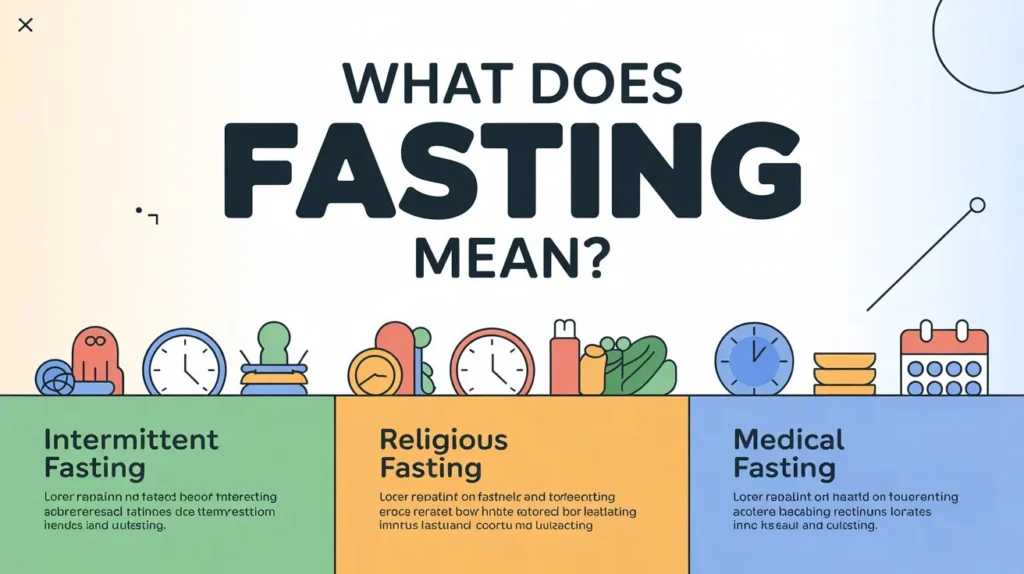

Fasting is a practice that has been followed for centuries across different cultures, religions, and health traditions.
At its core, fasting means voluntarily abstaining from food, drinks, or certain types of nourishment for a specific period of time.
While many people associate fasting with religion or weight loss, its meaning goes far beyond that. Today, fasting is widely discussed in health and wellness communities for its potential effects on metabolism, mental clarity, and overall well-being.
The meaning of fasting can change depending on the context. In religious traditions, fasting is often an act of spiritual discipline and self-reflection.
In health and science, fasting refers to structured periods without eating that may help the body rest, repair, and rebalance.
With growing interest in intermittent fasting and mindful eating, more people are asking what fasting really means and how it works.
This guide explains the true meaning of fasting, its types, purposes, benefits, and risks in a clear and balanced way.
What Does Fasting Mean?
Fasting means intentionally choosing not to eat food, or limiting food and drink, for a set period of time. Unlike skipping meals by accident, fasting is a planned and purposeful practice. The duration of a fast can range from a few hours to an entire day or even longer, depending on personal, cultural, or medical reasons. At its simplest level, fasting allows the body to take a break from constant digestion and energy intake.
From a scientific perspective, fasting is defined as a metabolic state in which the body does not receive calories for an extended period. During this time, the body begins to use stored energy, such as glucose and fat, instead of energy from food. Hormonal changes occur, including lower insulin levels, which help the body access stored fat more efficiently. These changes explain why fasting is often linked to metabolic health and weight management.
It is important to understand that fasting is not the same as starvation. Starvation happens when the body lacks food involuntarily for long periods and leads to serious health damage. Fasting, on the other hand, is usually controlled, time-limited, and followed by proper nourishment. Many people practice fasting safely as part of religious observance, cultural tradition, or health routines.
In everyday life, fasting can look different for different people. Some fast for spiritual reflection, others for medical tests, and many for health goals. Regardless of the reason, the core meaning of fasting remains the same: a deliberate pause from eating that serves a specific purpose.
The History of Fasting
Fasting is not a modern trend; it is an ancient practice that dates back thousands of years. Early civilizations recognized fasting as a natural part of life, often connected to survival, healing, and spiritual awareness. In many hunter-gatherer societies, periods without food were common, and the human body adapted to function efficiently during these times. This historical context helps explain why fasting still plays a role in human health today.
In ancient medicine, fasting was often recommended as a method of healing. Greek physicians, including Hippocrates, believed that abstaining from food could help the body restore balance and remove illness. Similar ideas appeared in traditional Chinese medicine and Ayurvedic practices, where controlled fasting was used to support digestion and overall wellness.
Religious fasting also developed early in human history. Major world religions such as Islam, Christianity, Judaism, Hinduism, and Buddhism include fasting as a form of spiritual discipline. These traditions use fasting to encourage self-control, gratitude, and reflection, rather than focusing solely on physical benefits.
In modern times, fasting has re-emerged through scientific research and wellness movements. Intermittent fasting, time-restricted eating, and therapeutic fasting have become popular as studies explore their potential effects on metabolism and cellular repair. While the methods have evolved, the core idea remains the same: fasting is a deliberate pause from eating that serves a physical, mental, or spiritual purpose. Understanding the history of fasting helps place today’s practices into a broader human context.
Types of Fasting Explained
Fasting can take many forms, and the meaning of fasting often depends on how it is practiced. One of the most popular modern approaches is intermittent fasting, which involves cycling between periods of eating and not eating. Common methods include the 16:8 method, where eating is limited to an eight-hour window, the 5:2 method, which restricts calories on two days of the week, and OMAD (one meal a day). These approaches focus on timing rather than completely eliminating food.
Religious fasting is another widely practiced form. In Islam, fasting during Ramadan involves abstaining from food and drink from dawn to sunset. Christianity includes fasting during Lent or on specific holy days, while Judaism observes fasting on days such as Yom Kippur. Hinduism and Buddhism also incorporate fasting as a spiritual practice aimed at self-discipline and mindfulness.
Medical and therapeutic fasting is often short-term and supervised by healthcare professionals. It may be required before surgeries, blood tests, or medical procedures to ensure accurate results and patient safety.
Some people practice water fasting or juice fasting, where only water or juices are consumed for a set period. While these methods are sometimes promoted for detox purposes, they can carry risks if done without proper guidance.
Cultural and traditional fasting exists worldwide, often tied to festivals, mourning periods, or seasonal changes. Despite the differences, all types of fasting share a common meaning: a deliberate and purposeful break from normal eating patterns for health, spiritual, or practical reasons.
Why Do People Fast?
People fast for many reasons, and the meaning of fasting often depends on personal goals and beliefs. One of the most common reasons is health and wellness. Many individuals use fasting to manage weight, improve digestion, or support metabolic health. By limiting eating times, the body may regulate blood sugar levels more effectively and rely on stored energy, which some people find beneficial.
Another major reason people fast is for religious and spiritual purposes. In many faiths, fasting is seen as a way to strengthen self-discipline, express devotion, and focus on spiritual growth. By temporarily giving up food or drink, individuals create space for reflection, prayer, and gratitude. This form of fasting emphasizes mental and emotional benefits rather than physical outcomes.
Mental clarity and emotional discipline also motivate people to fast. Some individuals report improved focus and awareness during fasting periods, as reduced digestion allows the body to redirect energy toward cognitive functions. Fasting can also help people break unhealthy eating habits and develop greater control over cravings.
In medical settings, fasting may be required for practical reasons, such as preparing for surgery or diagnostic tests. This type of fasting ensures accurate results and reduces health risks.
Cultural traditions also play a role, with fasting used to mark important events, express solidarity, or honor customs passed down through generations. Whether practiced for health, faith, or tradition, fasting serves as a purposeful pause that allows individuals to reset physically, mentally, or spiritually.
What Happens to Your Body During Fasting
When you fast, your body goes through several natural changes as it adapts to the absence of food. In the first few hours, the body uses glucose from recently eaten meals as its primary source of energy. As this supply is depleted, insulin levels begin to drop, allowing stored energy to be released more easily.
After about 12 to 24 hours, the body starts shifting toward fat burning. Stored fat is broken down into fatty acids and ketones, which provide energy for the brain and muscles. This process, known as ketosis, is one reason fasting is often associated with weight management. At the same time, the body becomes more efficient at conserving energy and using internal fuel sources.
Hormonal changes also occur during fasting. Levels of growth hormone may increase, helping preserve muscle mass and support fat metabolism. Insulin sensitivity improves, which can benefit blood sugar regulation. These changes explain why fasting is sometimes recommended for metabolic health under proper guidance.
Another important process linked to fasting is autophagy, a cellular cleanup mechanism. During autophagy, the body removes damaged cells and recycles their components, supporting cellular repair and renewal. While research is ongoing, this process is considered one of the potential long-term benefits of fasting.
Energy levels during fasting vary from person to person. Some people feel tired or irritable at first, while others experience improved focus and mental clarity. These responses depend on fasting duration, hydration, and individual health conditions.
Health Benefits of Fasting
Fasting is often discussed for its potential health benefits, although results can vary from person to person. One commonly reported benefit is weight management. By limiting eating periods, fasting may help reduce overall calorie intake and encourage the body to use stored fat for energy. This can support gradual and sustainable weight loss when combined with healthy food choices.
Another potential benefit of fasting is improved metabolic health. Lower insulin levels during fasting periods may enhance insulin sensitivity, helping the body regulate blood sugar more effectively. This can be especially helpful for individuals at risk of metabolic disorders, although medical guidance is important.
Fasting may also support heart health. Some studies suggest that fasting can help improve cholesterol levels, reduce inflammation, and lower blood pressure. These factors contribute to better cardiovascular function over time.
Brain health is another area of interest. Fasting may promote mental clarity, focus, and cognitive resilience by encouraging the production of brain-supporting compounds. Some people report feeling more alert during fasting periods, though experiences differ.
At the cellular level, fasting is linked to cell repair and renewal through autophagy. This process allows the body to remove damaged cells and recycle materials, which may support long-term health and aging. However, research in this area is still evolving.
It is important to note that fasting is not a guaranteed solution for everyone. Benefits depend on fasting type, duration, lifestyle, and individual health. When practiced responsibly, fasting can be a useful tool, but it should always be approached with balance and awareness.
Risks and Side Effects of Fasting
While fasting can offer potential benefits, it also comes with risks if practiced incorrectly or without proper consideration. One of the most common short-term side effects is hunger, especially during the first few days. This may be accompanied by fatigue, headaches, dizziness, or irritability as the body adjusts to changes in eating patterns.
Fasting can also lead to low energy levels and difficulty concentrating, particularly during extended fasting periods. Dehydration is another risk, especially if fluid intake is reduced. This can cause weakness, dry mouth, and lightheadedness. Maintaining proper hydration is essential during any form of fasting.
In some cases, fasting may contribute to nutrient deficiencies. Skipping meals regularly without proper meal planning can result in insufficient intake of vitamins, minerals, and protein. Over time, this can negatively affect immune function, muscle health, and overall well-being.
For individuals with underlying health conditions, fasting may pose more serious risks. People with diabetes, low blood pressure, or blood sugar disorders may experience dangerous fluctuations in glucose levels. Fasting can also interfere with medications that require food for proper absorption.
Another concern is the potential impact on mental health. For some individuals, fasting may trigger disordered eating patterns or unhealthy relationships with food. This risk is especially important to consider for those with a history of eating disorders.
Because of these factors, fasting should be approached carefully. Consulting a healthcare professional before starting any fasting routine is strongly recommended, particularly for extended or restrictive fasts.
Who Should Avoid or Be Careful with Fasting
Although fasting can be safe for many people, it is not suitable for everyone. Certain individuals should avoid fasting entirely or only practice it under medical supervision. Pregnant and breastfeeding women should not fast, as their bodies require consistent nutrition to support both mother and child. Restricting food intake during this time can increase the risk of nutrient deficiencies.
People with diabetes or blood sugar disorders should be especially cautious. Fasting can cause sudden drops or spikes in blood glucose levels, which may lead to serious complications. Similarly, individuals with low blood pressure may experience dizziness or fainting while fasting.
Those with a history of eating disorders should generally avoid fasting. Restrictive eating patterns can trigger unhealthy behaviors and negatively affect mental and emotional health. In these cases, fasting may do more harm than good.
Children and teenagers also need regular nutrients to support growth and development. Fasting is not typically recommended for young people unless medically advised.
People who take prescription medications should consult a healthcare professional before fasting. Some medications must be taken with food, and fasting may reduce their effectiveness or increase side effects.
Older adults may also need to be careful, as fasting can contribute to muscle loss or weakness if protein intake is insufficient. Anyone experiencing persistent fatigue, dizziness, or other concerning symptoms during fasting should stop and seek medical advice.
Overall, fasting should be a personal and informed choice. Understanding individual health needs and limitations is essential before starting any fasting routine.
Common Myths About Fasting
There are many misconceptions about fasting that can confuse beginners and create unnecessary fear. One common myth is that fasting automatically slows down metabolism. In reality, short-term fasting does not shut down metabolism. The body adapts by using stored energy, and metabolism generally remains stable during controlled fasting periods.
Another widespread belief is that fasting causes muscle loss. While extreme or prolonged fasting without proper nutrition can lead to muscle breakdown, most short-term fasting methods help preserve muscle through hormonal changes such as increased growth hormone levels. Eating adequate protein during non-fasting periods is key.
Many people also think that fasting is the same as starvation. This is incorrect. Starvation is involuntary and harmful, while fasting is intentional, time-limited, and usually followed by proper nourishment. The two have very different effects on the body.
Another myth is that you cannot drink anything while fasting. In most fasting methods, water is allowed and encouraged. Some forms of fasting also permit black coffee or unsweetened tea, depending on the individual’s goals and definition of fasting.
Finally, some believe that fasting works the same for everyone. In reality, individual responses vary based on age, health, lifestyle, and fasting duration. What works well for one person may not be suitable for another.
Understanding these myths helps people approach fasting with realistic expectations. When practiced correctly and thoughtfully, fasting can be a structured and intentional practice rather than a harmful or extreme behavior.
How to Start Fasting Safely
Starting fasting safely requires planning, patience, and awareness of your body’s needs. For beginners, it is best to start with short fasting periods, such as 12 to 14 hours, before gradually increasing the duration. This allows the body to adjust without causing excessive stress or discomfort.
Choosing the right type of fasting is also important. Intermittent fasting methods, such as the 16:8 approach, are often easier to maintain than extended fasts. These methods focus on meal timing rather than extreme restriction, making them more sustainable for daily life.
Hydration plays a critical role during fasting. Drinking enough water helps prevent headaches, fatigue, and dehydration. In many cases, unsweetened tea or black coffee may be allowed, but sugary drinks should be avoided as they break the fast.
Listening to your body is essential. Feeling mild hunger is normal, but dizziness, weakness, or nausea are warning signs that fasting may not be suitable for you. If these symptoms occur, it is important to stop fasting and eat a balanced meal.
When breaking a fast, focus on nutrient-dense foods. Including protein, healthy fats, and fiber helps stabilize blood sugar levels and supports recovery. Overeating or consuming highly processed foods can undo potential benefits and cause discomfort.
Finally, consistency matters more than perfection. Fasting does not need to be extreme to be effective. A balanced approach that fits your lifestyle and health needs is the safest way to experience the benefits of fasting.
Fasting vs Dieting: What’s the Difference?
Fasting and dieting are often confused, but they are not the same. Dieting usually focuses on what you eat by restricting certain foods or calories over a long period. Many diets require constant tracking of portions, nutrients, or calories, which can feel restrictive and difficult to maintain.
Fasting, on the other hand, focuses on when you eat rather than what you eat. Instead of eliminating food groups, fasting creates structured periods without eating. During eating windows, people are generally encouraged to consume balanced meals rather than severely limiting calories. This time-based approach can feel simpler and more flexible for some individuals.
Another key difference is how the body responds. Dieting often leads to a continuous calorie deficit, which may slow metabolism over time if done aggressively. Fasting allows the body to alternate between fed and fasted states, helping regulate insulin levels and promote the use of stored energy. This metabolic shift is one reason fasting has gained popularity.
Psychologically, fasting may reduce decision fatigue. Fewer meals can mean less planning and fewer food-related decisions. However, some people find fasting mentally challenging, especially at the beginning.
Neither fasting nor dieting is universally better. The best approach depends on personal goals, lifestyle, and health conditions. Some people combine fasting with healthy eating patterns for balance. Understanding the differences helps individuals choose an approach that supports long-term well-being rather than short-term results.
Frequently Asked Questions
Many people new to fasting have common questions about how it works and whether it is safe. One frequent question is how long fasting lasts. The duration depends on the method being used. Some fast for 12 to 16 hours daily, while others observe longer fasts for religious or medical reasons.
Another common question is whether you can drink water while fasting. In most cases, drinking water is not only allowed but encouraged. Staying hydrated helps reduce headaches, fatigue, and dizziness. Some fasting approaches also allow black coffee or unsweetened tea.
People often ask if fasting is healthy. Fasting can be beneficial for some individuals when practiced responsibly, but it is not suitable for everyone. Health status, age, and lifestyle play an important role in determining whether fasting is a good choice.
Another popular question is what breaks fast. Generally, consuming calories breaks a fast, especially foods or drinks containing sugar, protein, or fat. The definition can vary depending on personal goals or religious guidelines.
Final Thoughts:
Fasting means more than simply not eating. It is a deliberate and purposeful practice that has been part of human history for health, spiritual, and cultural reasons. While fasting can offer benefits such as improved metabolic awareness and self-discipline, it also requires care and balance.
The true meaning of fasting lies in intention. If practiced for wellness, faith, or personal growth, fasting should support overall well-being rather than cause harm.
Understanding your body’s needs and making informed choices is the key to practicing fasting safely and effectively.