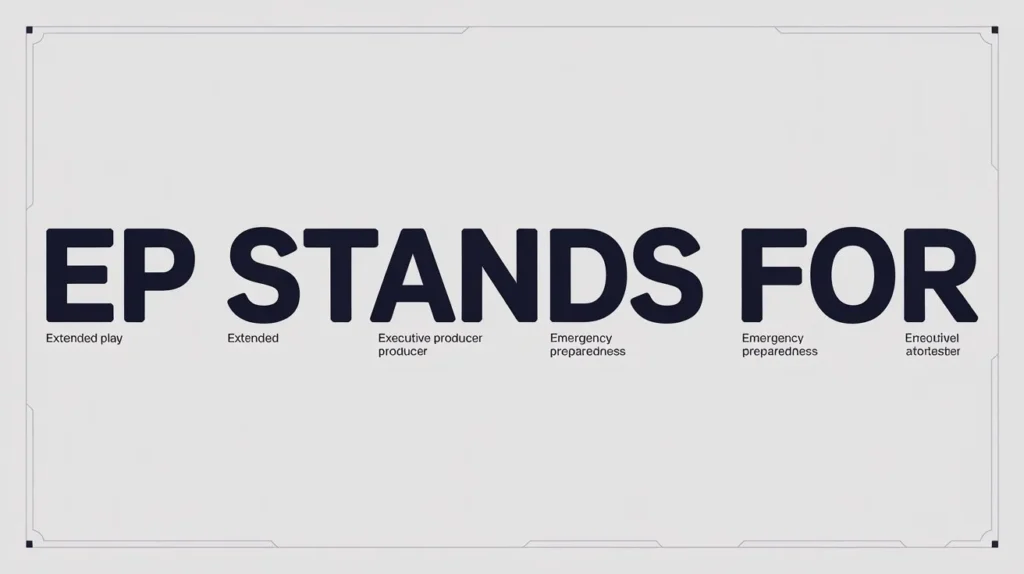
If you’ve ever come across the abbreviation EP and wondered what it means, you’re not alone. EP is a commonly used term across many industries, and its meaning can change depending on the context in which it appears.
From music and entertainment to healthcare, business, education, and technical fields, EP can stand for several different things, which often leads to confusion for readers and professionals alike.
Most people first encounter EP in the music world, where it refers to an Extended Play release that sits somewhere between a single and a full-length album.
However, EP is also widely used as an abbreviation for Executive Producer, Emergency Physician, Electrophysiology, and other professional terms. Understanding what EP stands for requires looking closely at how and where it is used.
What Is EP
An EP stands for “Extended Play.” It is a music release that is longer than a single but shorter than a full album. In simple terms, an EP usually contains around 3 to 6 songs and runs for about 15 to 30 minutes. Artists often release EPs to showcase their style, test new sounds, or keep their audience engaged between major album releases. EPs are very popular in the digital music era because they are quick to produce and easy for listeners to consume.
For new artists, an EP is a smart way to enter the music industry without the pressure of creating a full-length album. It helps build a fan base and gives listeners a taste of their talent. Established artists also use EPs to experiment with fresh ideas or surprise fans with new content. That’s why clear and simple explanations matter.
Overall, an EP plays an important role in the music world. It bridges the gap between singles and albums, making it a flexible and effective format for both artists and listeners.
EP
An EP is a short music project that gives artists a chance to share multiple songs without releasing a full album. Typically, an EP includes a small collection of songs that highlight an artist’s creativity and musical direction.
EPs are widely used in modern music marketing. Artists release EPs to stay active in the industry, connect with fans, and maintain online visibility. In today’s streaming era, shorter releases like EPs perform well because listeners prefer quick and engaging content. This makes EPs a powerful tool for growth and promotion.
From an SEO perspective, the keyword “EP” is highly searched, especially by music fans and beginners. Writing clear, informative content helps improve search rankings and user understanding. EPs are also useful for storytelling, as artists can focus on a theme without the pressure of a long album.
In short, an EP is a flexible and creative music format that benefits both artists and audiences. It delivers quality music in a compact form, making it an essential part of today’s music industry.
EP Meaning
In music, an EP represents a short collection of songs released by an artist. It serves as a middle ground between a single track and a full album. Many new artists use EPs to introduce themselves to audiences, while established artists may release EPs to experiment with new styles. Outside of music, EP can also have different meanings. For example, in business or office settings, EP might stand for “Executive Producer,” while in academic contexts, it could mean “Educational Psychology.” This flexibility makes EP a widely used abbreviation across multiple industries. When someone asks about the meaning of EP, it is important to consider the context to give the correct explanation. In casual use, especially among younger audiences, EP is most commonly linked to music platforms and streaming services. Overall, EP is a simple abbreviation with multiple meanings, but its core usage remains strongly tied to entertainment and media industries today.
What Does EP Stand For
In other fields, EP can stand for “Executive Producer,” especially in film and television production, where it refers to a person responsible for overseeing a project. In education, EP might stand for “Education Plan” or “Educational Program.”
Because EP is a short abbreviation, it is widely used in different industries and contexts. When trying to understand what EP stands for, you should always look at where it is being used.
In most online searches and casual conversations, the music-related meaning is the most common. Understanding these variations helps you use and interpret the term EP correctly in different situations.
What Does EP Mean
EP means different things depending on the context, but the most common meaning is “Extended Play.” In music, this refers to a short collection of songs released by an artist. It usually contains more tracks than a single but fewer than a full-length album. EPs are popular among musicians who want to share new content without committing to a complete album release. Besides music, EP can also mean other things. For instance, in film production, EP stands for “Executive Producer,” a role that involves managing and financing projects. In academic or professional settings, EP could represent terms like “Education Program” or “Engineering Process.” Because of these multiple meanings, understanding what EP means requires context. If you see EP on a music platform, it likely refers to a music release. If you see it in a workplace or academic document, the meaning might be entirely different. Overall, EP is a versatile abbreviation that is easy to use and widely understood, especially in entertainment-related discussions and digital platforms.
E P Meaning
The meaning of E P, written with spaces, is essentially the same as EP, but it may appear this way for stylistic or formatting reasons. Most commonly, E P stands for “Extended Play” in the music industry. This refers to a short collection of songs that is longer than a single but shorter than a full album. Artists often release E P projects to introduce new music, test creative ideas, or maintain engagement with their audience. In other contexts, E P can also represent different terms such as “Executive Producer” in film and media, or “Education Program” in academic settings. The spacing between the letters does not usually change the meaning, but it may be used to emphasize each word separately. When you come across E P, it is important to consider the context to understand its correct meaning. In most online and entertainment-related uses, it is strongly associated with music releases. Overall, E P is a flexible abbreviation that is simple yet meaningful across various industries.
EP Stands For
Apart from music, EP can also stand for “Executive Producer,” a key role in film, television, and media production.
In educational contexts, it may refer to “Education Program” or similar terms. Because EP is a short abbreviation, it is used across many fields, making it important to understand the context in which it appears.
For example, if you see EP on a streaming platform, it most likely refers to a music release.
If you see it in a professional document, the meaning could be different. Overall, EP stands for a variety of phrases, but its most common and popular usage remains in the entertainment industry.
What Is EP
EP is an abbreviation that is commonly used in different industries, but it is most widely known in the music world as “Extended Play.” An EP is a music release that contains a small number of songs, usually between three and six tracks. It is longer than a single but shorter than a full album. Artists often use EPs to introduce new music, experiment with styles, or stay connected with their audience. Outside of music, EP can also refer to other terms such as “Executive Producer” in film and television, or “Education Program” in academic settings. The meaning of EP depends on the context in which it is used, making it a versatile and widely applicable abbreviation. In most cases, especially online, EP is associated with music releases on platforms like streaming services. Understanding what EP is can help you better navigate different types of content and industries. Overall, EP is a simple yet important term that carries different meanings across various fields.
What Does EP Stand For?
EP is a short form that is used in many different fields, and its meaning can change depending on the context. One of the most common meanings of EP is “Extended Play” in music. It refers to a music release that is longer than a single but shorter than a full album. Usually, an EP contains 3 to 6 songs. Artists use EPs to share new music without releasing a full album. It is very popular in the music industry because it helps singers test new styles or promote upcoming albums.
In other fields, EP can also stand for “Electrical Potential” in science, or “End Point” in computing and networking. In business, it may refer to “Earnings Per” share in finance discussions. Because of these multiple meanings, the correct definition of EP depends on the situation where it is used.
In simple terms, EP is a flexible abbreviation. You will often see it in music platforms, business reports, and technical discussions. If someone says EP, always check the topic to understand the correct meaning. It is a small word but carries different meanings in different industries, making it very useful and widely used in modern communication.
EP Meaning
The meaning of EP depends on where and how it is used, but the most popular meaning comes from the music world. In music, EP stands for “Extended Play.” It is a type of audio release that is longer than a single song but shorter than a full album. Normally, an EP has a small collection of tracks, usually between 3 to 6 songs. Many new artists release EPs to introduce their music style to the audience before launching a full album.
Outside music, EP can also have several other meanings. In science, EP may refer to “Electrical Potential,” which is related to energy and voltage. In business and finance, EP can sometimes mean “Earnings Per Share,” a term used to measure a company’s profit. In technology, it can also mean “End Point,” which is used in programming and network systems.
Because EP has different meanings in different fields, it is important to understand the context before assuming its definition. In daily online searches or conversations, most people use EP to talk about music releases. It is a short but powerful abbreviation that helps simplify communication in many industries.
EP
EP is a very common abbreviation that appears in music, science, business, and technology. The most well-known meaning of EP is “Extended Play,” especially in the music industry. An EP is a short music collection that includes a few songs, usually more than a single but less than a full album. It is often used by singers and bands to release new music quickly and test audience reactions.
In addition to music, EP can also stand for different terms depending on the subject. In science, it may mean “Electrical Potential,” which relates to energy and electric force. In finance, EP can refer to “Earnings Per Share,” a key measure of a company’s profit performance. In computing or networking, EP can also mean “End Point,” which refers to a connection point in a system.
Because EP has multiple meanings, it is considered a context-based abbreviation. This means its definition changes depending on the topic being discussed. In everyday use, especially online, people mostly associate EP with music releases. It is a simple and widely used term that helps shorten communication while still carrying important meaning in different fields.
What is EP?
EP is a short abbreviation that has several meanings, but it is most commonly used in the music industry. In music, EP stands for “Extended Play.” It is a release that contains more songs than a single but fewer than a full album. Typically, an EP includes around 3 to 6 tracks. Artists use EPs to share new music with fans in a shorter format, often as a preview of a bigger album or to experiment with new sounds.
However, EP is not limited to music only. In science, EP can mean “Electrical Potential,” which relates to energy levels in physics. In finance, EP may refer to “Earnings Per Share,” an important business metric that shows a company’s profitability. In technology and networking, EP can also stand for “End Point,” which represents a device or location where data is sent or received.
Because EP has many meanings, its definition depends on context. This makes it a flexible and widely used abbreviation in different industries. When someone uses the term EP, it is important to understand the topic to know its exact meaning.
EP Full Form
An Extended Play release includes more songs than a single but fewer than a full-length album. It is a popular format for artists who want to share multiple tracks without creating a complete album. EPs are often used to introduce new artists, promote upcoming albums, or experiment with new sounds. However, EP can have different full forms depending on the context.
In the film industry, EP stands for “Executive Producer,” a role responsible for managing production aspects. In education, EP may stand for “Education Program” or similar terms.
Because EP is a widely used abbreviation, its full form can change based on the field in which it is used. When trying to determine the full form of EP, it is important to consider the surrounding context. Overall, “Extended Play” remains the most common and recognized full form, especially in entertainment and music-related discussions.
EP Definition
An EP is a collection of songs that is longer than a single but shorter than a full album. It typically contains a few tracks and serves as a way for artists to release music without producing a full-length project.
EPs are often used to showcase creativity, introduce new styles, or maintain audience engagement. In other fields, EP can have different definitions. For example, in media production, it can mean “Executive Producer,” while in education, it may refer to an “Education Program.”
Because of its multiple meanings, the definition of EP is flexible and context-dependent. In everyday use, especially online, EP is most strongly associated with music releases. Understanding the definition of EP can help you better interpret content across different platforms and industries. Overall, EP is a widely recognized term with simple yet important meanings in various fields.
What Does EP Stand For
EP stands for “Extended Play,” a term commonly used in music but also recognized more broadly. In general usage, EP refers to something that is longer than a single but shorter than a full-length album. The idea behind the term is to offer more content than just one track while still keeping it compact and easy to consume. Outside of music, EP could have different meanings depending on context, such as “Episode” in TV or “Executive Producer” in film credits.
It has become a widely searched keyword because many listeners want to understand the difference between various music formats. The simplicity of the term makes it appealing, yet its meaning can vary slightly based on industry usage. Understanding what EP stands for helps users better navigate streaming platforms, artist releases, and music libraries.
What Does EP Stand For in Music
In music, EP stands for “Extended Play,” which refers to a collection of songs that is longer than a single but shorter than a full album. Typically, an EP contains around three to six tracks and runs for about 10 to 30 minutes. Artists often release EPs as a way to showcase their style, experiment with new sounds, or maintain audience engagement between major album releases. EPs are especially popular among emerging artists because they require less production time and cost compared to full-length albums. This makes them a practical choice for building a fanbase while still delivering meaningful content. EPs can also serve as promotional tools, helping artists test audience reactions before committing to a full album. Overall, understanding what EP stands for in music helps listeners appreciate the structure of music releases and gives insight into how artists strategically share their work with the world.
What Does EP Stand For Music
In this context, EP stands for “Extended Play,” which represents a short collection of songs released together. Unlike singles, which usually feature one or two tracks, an EP provides a slightly broader listening experience without the commitment of a full album.
Artists can use EPs to introduce new themes, styles, or collaborations without the pressure of producing a full-length record.
From an SEO standpoint, this keyword variation helps capture users who phrase their searches differently but are looking for the same information. EPs are also valuable for marketing purposes, as they keep audiences engaged and generate buzz. Whether you are exploring new artists or diving deeper into music culture, understanding what EP stands for in music can enhance your listening experience and help you better navigate digital music platforms.
EP Stand for in Music
When people search “EP stand for in music,” they are usually trying to quickly understand a commonly used industry term. EP stands for “Extended Play,” which refers to a music release that includes more tracks than a single but fewer than an album. Typically, EPs feature a small group of songs that showcase an artist’s creativity without requiring the extensive production of a full album.
This format is especially useful for new artists who want to introduce their sound to the public. It allows them to build momentum and connect with listeners without investing heavily in a large project. EPs are also used by established artists to experiment with new styles or release bonus content. From an SEO perspective, this keyword variation captures users who may not use full sentences in their searches. Understanding the meaning of EP in music helps listeners make sense of different release types and improves their overall knowledge of the music industry. It also helps when browsing streaming services, where EPs are commonly labeled and categorized.
EP Stand For
The query “EP stand for” is a general search phrase that can have multiple meanings depending on context. However, in most cases, especially in entertainment and music discussions, EP stands for “Extended Play.”
This term is used to describe a collection of content that is longer than a single but shorter than a full-length release. While the most common usage is in music, EP can also mean “Episode” in television or “Executive Producer” in film and media production. Because of its versatility, the meaning of EP often depends on where and how it is used. In SEO-friendly content, it is important to clarify the context so users get accurate information quickly.
The popularity of this keyword shows that many people are curious about abbreviations and want simple explanations. By understanding what EP stands for, users can better interpret content across different platforms. Whether you are reading about music, watching shows, or exploring media credits, knowing the meaning of EP ensures you are not confused by this commonly used abbreviation.
What Does EP Stand For?
The question “What does EP stand for?” is one of the most frequently asked queries online, especially among music lovers and content consumers. EP stands for “Extended Play,” a term used primarily in the music industry to describe a short collection of songs. It offers more content than a single but is not as extensive as a full album.
This makes it an ideal format for artists who want to share new material without committing to a large project. EPs are also commonly used to introduce new artists or experiment with different musical styles. Beyond music, EP can have other meanings, such as “Episode” in television or “Executive Producer” in film. However, the music-related definition is the most widely recognized. From an SEO perspective, this query is highly valuable because it matches how users naturally ask questions online. Providing a clear and friendly answer helps improve user engagement and search rankings. Understanding what EP stands for allows users to better navigate digital platforms and appreciate how content is organized.
Whats EP Stand For
The search query “whats EP stand for” reflects a casual and conversational way people look for information online. In most cases, EP stands for “Extended Play,” particularly in the context of music. It refers to a short release that includes multiple tracks but is not as long as a full album. This format is widely used by artists to share new music, maintain audience interest, and experiment with creative ideas.
EPs are often seen as a bridge between singles and albums, offering a balanced listening experience. The informal nature of this query makes it important for SEO content to be clear, simple, and engaging. Users searching this phrase are usually looking for a quick and easy explanation without complicated terminology. By understanding what EP stands for, listeners can better explore music platforms and discover new artists. It also helps them understand how music is categorized and released. Overall, EP is a key term in the music world, and knowing its meaning enhances the overall user experience.
Whats EP Stand For in Music
When users search “whats EP stand for in music,” they are specifically looking for a music-related definition. In this context, EP stands for “Extended Play,” which is a type of music release that contains more songs than a single but fewer than an album. Typically, EPs include three to six tracks and are used by artists to share new material without producing a full-length project.
This format is especially popular in today’s digital music landscape, where frequent releases help maintain audience engagement. EPs allow artists to experiment with different styles, collaborate with others, and test new ideas. From an SEO perspective, this keyword targets users who want a straightforward explanation in simple language.
Providing a friendly and informative answer helps improve search visibility and user satisfaction. Understanding what EP stands for in music also helps listeners navigate streaming platforms more effectively. It gives them insight into how artists release content and why certain projects are labeled as EPs instead of albums.
What Does EP Stand For Album
The query “what does EP stand for album” highlights a common confusion between EPs and albums. EP stands for “Extended Play,” which is different from a full-length album. While albums usually contain a larger number of tracks and have a longer runtime, EPs are shorter and more focused. They typically include a handful of songs that showcase a specific theme or style. Artists often release EPs as a way to bridge the gap between albums or to introduce new music without the pressure of a major release.
This makes EPs an important part of an artist’s discography. From an SEO standpoint, this keyword helps address users who are trying to understand the difference between these two formats. By clarifying that an EP is not the same as an album, content becomes more helpful and informative. Understanding this distinction allows listeners to better appreciate how music is structured and released, making it easier to explore and enjoy different types of musical projects.
What Does LP and EP Stand For
The question “what does LP and EP stand for” is often asked by users trying to understand music formats. EP stands for “Extended Play,” while LP stands for “Long Play.” An LP refers to a full-length album with a larger number of tracks and a longer duration, while an EP is shorter and contains fewer songs. Historically, these terms originated from vinyl records, where LPs were full-sized albums and EPs were smaller releases.
Today, the terms are still widely used in digital music platforms. Understanding the difference between LP and EP helps listeners better navigate music libraries and appreciate how artists release their work. EPs are often used for experimentation or promotion, while LPs represent major projects. From an SEO perspective, this keyword is valuable because it targets users comparing two important music terms. Providing a clear explanation improves user experience and engagement. Knowing what LP and EP stand for gives listeners a deeper understanding of music formats and enhances their overall appreciation of the industry.
What Does a Music EP Stand For
The query “what does a music EP stand for” focuses specifically on the music industry. In this context, EP stands for “Extended Play,” a format that includes more tracks than a single but fewer than a full album. Music EPs are typically used by artists to release a small collection of songs that highlight their style or introduce new ideas.
They are an effective way to engage listeners without the time and cost required for a full album. EPs are also popular among independent artists who want to build their audience and gain exposure. From an SEO perspective, this keyword is important because it targets users looking for a clear and specific explanation. Providing detailed yet easy-to-understand content helps improve search rankings and user satisfaction. Understanding what a music EP stands for allows listeners to better explore streaming platforms and appreciate the structure of music releases. It also gives insight into how artists strategically share their work with fans.
Define EP
To define EP, it is important to look at the context in which it is used. Most commonly, EP is defined as “Extended Play,” a term used in the music industry to describe a short collection of songs. An EP usually contains more tracks than a single but fewer than a full album, making it a convenient format for artists to release music.
It allows musicians to experiment with new sounds or share creative projects without committing to a full album. In other contexts, EP can also be defined as “Executive Producer,” a role in film and television responsible for overseeing production. In academic settings, EP might refer to an “Education Program.” Because EP is a short abbreviation, it has multiple definitions across different industries. When defining EP, it is always important to consider where and how it is being used. Overall, EP is a simple but versatile term that plays an important role in music, media, and education.
What Does EP Stand For?
The abbreviation EP does not have just one meaning. Instead, EP stands for different terms depending on the context, industry, or situation in which it is used. This is why many people feel confused when they see EP written in articles, documents, job titles, or online discussions.
Most commonly, EP stands for “Extended Play” in the music industry. An EP is a music release that contains more tracks than a single but is shorter than a full-length album. Artists often use EPs to introduce new music, experiment with sounds, or stay connected with fans between album releases.
Outside of music, EP can also stand for Executive Producer, a senior role in film, television, and media production. In healthcare, EP may refer to Emergency Physician or Electrophysiology, both widely used medical terms. In education, EP can mean Educational Psychology or an Education Program, while in business and legal settings, EP may stand for Equity Partner.
Here are some of the most common meanings of EP:
- Extended Play (Music)
- Executive Producer (Film & Media)
- Emergency Physician (Healthcare)
- Electrophysiology (Medical Science)
- Educational Psychology (Education)
- Equity Partner (Business & Law)
Because EP has multiple meanings, the surrounding words and topic are essential for identifying the correct definition. Understanding the context ensures you interpret EP accurately, whether you’re reading about music releases, medical procedures, academic programs, or professional roles.
EP Meaning in Music
In the music industry, EP most commonly stands for “Extended Play.” An EP is a type of music release that is longer than a single but shorter than a full-length album. Typically, an EP contains three to six tracks and has a total runtime of around 15 to 30 minutes, although this can vary depending on the artist and genre.
The concept of the EP dates back to the mid-20th century, when vinyl records were limited by physical space. Record labels used EPs to release more content than a single without the cost of producing a full album. Today, EPs are just as relevant in the digital streaming era. Artists often release EPs to showcase new sounds, experiment with different styles, or maintain audience interest between major album releases.
For emerging artists, EPs are especially popular because they are less expensive and time-consuming to produce than albums. They allow musicians to demonstrate their creativity and range without the pressure of filling an entire album. Established artists also use EPs to release bonus tracks, collaborations, or themed projects.
EPs are commonly labeled as such on streaming platforms like Spotify and Apple Music, helping listeners understand that the release is shorter than an album. Because of this clear distinction, EPs have become a strategic tool in modern music marketing.
Overall, when people ask “what does EP stand for?”, the music-related meaning Extended Play is often the first and most widely recognized definition.
EP vs LP vs Single: What’s the Difference?
Understanding the difference between an EP, LP, and single can help clarify what artists mean when they label a music release. While all three formats are common in the music industry, they differ in length, purpose, and how they are marketed to listeners.
A single is the shortest type of release. It usually contains one song, sometimes accompanied by a bonus track or remix. Singles are often released to promote an upcoming project or to test how audiences respond to a new sound. Because of their short length, singles are designed for quick consumption and radio or streaming popularity.
An EP (Extended Play) sits between a single and an album. EPs generally include three to six tracks and offer more depth than a single without requiring a full album’s worth of material. Artists frequently use EPs to introduce themselves, experiment with new styles, or stay active between major releases. EPs are also popular for collaborations or themed projects.
An LP (Long Play), commonly referred to as an album, is the most comprehensive release format. LPs usually contain eight to fifteen tracks and represent a complete artistic body of work. Albums often tell a story, explore a central theme, or define an era of an artist’s career.
In short, the key difference lies in length and intent. Singles focus on one standout song, EPs provide a compact collection of music, and LPs deliver a full, immersive listening experience. Knowing these distinctions makes it easier to understand music releases and industry terminology.
EP Meaning in Business & Corporate Settings
In business and corporate environments, EP often stands for “Executive Producer,” particularly in industries related to media, entertainment, advertising, and digital content production. While the title may sound similar to a standard producer, an Executive Producer typically holds a senior-level position with broader responsibilities and decision-making authority.
An Executive Producer is usually responsible for overseeing a project from a high-level perspective. This can include securing funding, managing budgets, approving creative direction, and ensuring that the project aligns with organizational goals. Unlike producers who handle day-to-day operations, EPs focus more on strategy, leadership, and final approval. They may also act as a bridge between creative teams and executives or investors.
In some corporate contexts, EP can also refer to Equity Partner, especially in law firms, consulting agencies, and professional service businesses. An Equity Partner owns a share of the company and participates in profit distribution, strategic decisions, and long-term planning. When EP is used in this sense, it usually appears in formal documents, contracts, or organizational charts.
Because EP has multiple meanings in business, context is critical. In a film studio or media company, EP almost always means Executive Producer. In legal or financial discussions, EP is more likely to mean Equity Partner.
Understanding how EP is used in corporate communication helps prevent misunderstandings and ensures you interpret the term correctly in professional settings.
EP Meaning in Medical & Healthcare Contexts
In medical and healthcare settings, EP can have several important meanings, each tied to a specific specialty or role. One of the most common uses of EP in hospitals is Emergency Physician. An Emergency Physician is a medical doctor trained to provide immediate care for acute illnesses and injuries. You may see EP used in medical charts, hospital schedules, or emergency department documentation to identify the attending physician.
Another widely used medical meaning of EP is Electrophysiology. This term refers to a branch of cardiology that focuses on the electrical activity of the heart. Doctors who specialize in this field are often called electrophysiologists, and EP studies are commonly performed to diagnose and treat heart rhythm disorders such as arrhythmias. In this context, EP is frequently mentioned in test reports, treatment plans, and medical research.
In some healthcare systems, EP may also appear as an abbreviation for Exercise Physiology, a field that studies how the body responds to physical activity. Exercise physiologists work in rehabilitation centers, sports medicine, and chronic disease management programs.
Because medical abbreviations can vary between institutions, it’s essential to rely on context clues, such as department names or surrounding terminology, to identify the correct meaning. Whether it refers to Emergency Physicians, Electrophysiology, or Exercise Physiology, EP plays a significant role in medical communication and patient care.
EP Meaning in Education
In the field of education, EP can stand for several terms, depending on the academic or administrative context. One of the most common meanings is Educational Psychology. This discipline focuses on how people learn, develop, and retain knowledge in educational settings. When EP is used in this sense, it often appears in university courses, degree programs, research papers, and academic journals related to learning behavior and cognitive development.
Another common educational use of EP is Education Program or Education Plan. Schools, colleges, and training institutions may use EP to refer to structured programs designed to meet specific learning objectives. For example, EP may appear in curriculum documents, institutional reports, or student records to describe specialized academic initiatives or support plans.
In some regions, EP can also be linked to Educational Provision, especially in special education contexts. This refers to the support services, resources, and accommodations provided to students with additional learning needs. Teachers, administrators, and counselors may use EP in official documentation when discussing student progress and support strategies.
Because education systems vary by country and institution, the exact meaning of EP can change. Reading the surrounding text such as whether the discussion involves psychology, curriculum planning, or student services makes it easier to identify the correct definition.
Overall, in education, EP is a flexible abbreviation that commonly relates to learning, teaching strategies, and academic planning.
EP Meaning in Engineering & Technical Fields
In engineering and technical fields, EP can represent different terms depending on the industry and documentation being used. One common interpretation is Engineering Project. In this context, EP may be used internally to label a specific project, phase, or technical initiative within an organization. Engineers and project managers often rely on such abbreviations to simplify reports, drawings, and timelines.
Another technical usage of EP is Electrical Power or Electrical Protection, particularly in electrical engineering discussions. EP may appear in system diagrams, safety manuals, or technical specifications related to power distribution and protective equipment. In mechanical and civil engineering, EP can also refer to Engineering Procedures or Engineering Plans, which outline standardized methods for design, construction, and maintenance.
In manufacturing and industrial environments, EP may be shorthand for Equipment Performance. This usage is common in maintenance logs, quality assurance reports, and operational assessments where performance metrics are tracked and analyzed.
Because technical fields rely heavily on abbreviations, EP is usually defined early in official documents. Engineers and technicians are trained to interpret EP based on context, symbols, and accompanying terminology. Misunderstanding these abbreviations can lead to errors, which is why clarity is critical in technical communication.
Overall, in engineering and technical settings, EP is a practical abbreviation used to streamline complex information, making documentation more efficient while still conveying precise meaning.
EP Meaning in Gaming, Entertainment & Media
In gaming, entertainment, and media, EP is most commonly used as an abbreviation for “Episode.” This usage is especially popular in television series, web shows, streaming platforms, and episodic video games. When you see EP followed by a number such as EP 1 or EP 10 it usually refers to a specific installment within a series.
In television and streaming services, EP helps organize content and makes it easier for viewers to follow storylines. Production schedules, scripts, and promotional materials frequently use EP as shorthand for episode numbers. Fans also use EP in online discussions, reviews, and social media posts to reference particular moments or plot developments.
In gaming, EP can sometimes refer to Episode-based content, particularly in story-driven or downloadable games. Developers may release games in episodic formats, where each EP introduces new story chapters, characters, or missions. In community forums, players often use EP to discuss progress, updates, or future releases.
EP may also appear in media production credits, where it overlaps with the business meaning of Executive Producer. In these cases, EP identifies individuals responsible for overseeing the creative or financial aspects of a project rather than episode numbering.
Because entertainment and media industries use EP in multiple ways, context again plays a key role. Whether it refers to an episode number or a production role, EP is a widely recognized abbreviation that helps streamline communication across content creation and audience engagement platforms.
EP Meaning in Finance & Legal Contexts
In finance and legal environments, EP most commonly stands for “Equity Partner.” An Equity Partner is a senior professional often in law firms, accounting firms, or consulting agencies who owns a share of the business. Unlike salaried partners or associates, equity partners participate directly in profit distribution and typically have voting rights in major business decisions.
When EP is used in this context, it usually appears in contracts, partnership agreements, organizational charts, and financial reports. Becoming an equity partner is often seen as a significant career milestone, as it reflects long-term commitment, financial investment, and leadership within the firm.
In some financial documents, EP may also appear as Earnings Potential or Expected Profit, particularly in informal reports or internal projections. However, these meanings are less standardized and rely heavily on contextual clarification. In legal writing, abbreviations like EP are usually defined early in the document to avoid ambiguity.
Because financial and legal communication demands precision, professionals are trained to interpret abbreviations carefully. Misunderstanding EP in a contract or agreement could lead to serious consequences, which is why definitions and context are crucial.
Overall, in finance and law, EP is primarily associated with ownership, partnership, and financial responsibility. Recognizing how EP is used in these settings ensures accurate interpretation and clearer professional communication.
How to Identify the Correct Meaning of EP
Because EP has multiple meanings across different industries, identifying the correct definition depends entirely on context. One of the most effective ways to determine what EP stands for is to look at the surrounding words, topic, and setting in which it appears. For example, if EP is mentioned alongside songs, albums, or artists, it almost certainly refers to Extended Play. In contrast, if EP appears in a hospital record or medical discussion, it is more likely to mean Emergency Physician or Electrophysiology.
Another helpful approach is to consider the source of the information. Entertainment blogs, music platforms, and streaming services usually use EP in the musical sense. Corporate documents, film credits, or production notes may point to Executive Producer, while legal or financial paperwork often uses EP to mean Equity Partner.
Acronyms and abbreviations are frequently defined when they first appear in formal writing. If you’re reading a report, research paper, or contract, look for an initial explanation of EP before assuming its meaning. When no definition is provided, checking headings or related terminology can offer valuable clues.
It’s also important to remember that abbreviations can vary by region and profession. What EP means in one country or industry may differ slightly in another. When in doubt, seeking clarification or consulting a reliable source is always a good idea.
By paying attention to context and usage, you can confidently identify the correct meaning of EP and avoid misunderstandings in both casual and professional communication.
Common Misconceptions About EP
One of the most common misconceptions about EP is that it has only one universal meaning. Many people automatically assume EP always refers to Extended Play in music, which is understandable given how frequently the term is used on streaming platforms. However, as this article shows, EP has multiple meanings across industries, and assuming just one definition can lead to confusion.
Another frequent misunderstanding is that an EP is the same as an album. While EPs and albums are both music releases, they are not identical. EPs are shorter, usually contain fewer tracks, and are often used for experimentation or promotion, whereas albums are full-length projects intended to represent a complete body of work.
In professional settings, people sometimes confuse Executive Producer with a regular producer. An EP typically has higher-level responsibilities, such as securing funding or making final decisions, rather than handling daily production tasks. Similarly, in healthcare, EP is occasionally misinterpreted because it can refer to different specialties, such as Emergency Physician or Electrophysiology.
Another misconception is believing that EP means the same thing in every country or organization. In reality, abbreviations can vary based on regional practices, institutional standards, and industry norms. This is especially true in education, engineering, and technical documentation.
To avoid these misunderstandings, it’s important to always rely on context and clarification rather than assumptions. Recognizing that EP is a flexible abbreviation with multiple meanings helps ensure accurate interpretation and clearer communication in any field.
Examples of EP Used in Sentences
Seeing EP used in real sentences can make its meaning much clearer, especially because the abbreviation changes depending on context. Below are examples from different fields to show how EP is commonly used and how the surrounding words help define it.
music, EP almost always refers to Extended Play.
- The band released a new EP featuring five original tracks.
- Her debut EP gained popularity on streaming platforms.
In these cases, words like “released,” “tracks,” and “streaming” clearly indicate a music-related meaning.
business and entertainment, EP often stands for Executive Producer.
- He worked as an EP on the television series.
- The EP approved the final budget for the project.
Here, the production setting signals that EP refers to a leadership role.
Medical contexts, EP can have multiple meanings.
- The EP on duty handled several emergency cases that night.
- The patient was scheduled for an EP study to evaluate heart rhythm issues.
Mentions of hospitals or medical procedures clarify whether EP means Emergency Physician or Electrophysiology.
In education, EP is often linked to academic programs or psychology.
- She is pursuing a degree in EP at the university.
- The school introduced a new EP to support student learning.
FAQs:
What does EP usually stand for?
EP most commonly stands for Extended Play in music, but its meaning changes depending on context. In other fields, EP may refer to Executive Producer, Emergency Physician, Electrophysiology, Educational Psychology, or Equity Partner.
Is an EP the same as an album?
No, an EP is not the same as an album. An EP is shorter, usually containing three to six tracks, while an album (LP) is a full-length release with more songs and a longer runtime.
What does EP mean in medical terms?
In healthcare, EP can mean Emergency Physician, a doctor working in emergency departments, or Electrophysiology, a medical specialty focused on the heart’s electrical system.
What does EP mean in business?
In business and entertainment, EP often stands for Executive Producer, a senior role responsible for oversight and funding. In legal and financial settings, EP may also mean Equity Partner.
How many songs are typically in an EP?
Most EPs include three to six songs, though some may have slightly more or fewer depending on industry standards.
What does EP mean in TV shows?
In television and streaming content, EP can mean Episode, usually followed by a number to indicate a specific part of a series.
Summary:
The abbreviation EP is a clear example of how a single term can have multiple meanings across different industries. While many people immediately associate EP with Extended Play in music, that is only one of its many definitions. Depending on the context, EP can also stand for Executive Producer, Emergency Physician, Electrophysiology, Educational Psychology, Equity Partner, or even Episode in entertainment media.
Understanding what EP stands for requires paying close attention to context clues, such as the industry being discussed, the surrounding language, and the source of the information. Music platforms, for example, almost always use EP to describe a short-form music release. In contrast, hospitals, corporate offices, law firms, and educational institutions may use EP in entirely different ways.
Because abbreviations are designed to simplify communication, they can sometimes create confusion when used without explanation. This is why many professional documents define EP early on, and why readers should avoid assuming a single meaning applies everywhere.
By recognizing that EP is a flexible abbreviation and learning how it is used in various fields, you can confidently interpret its meaning in any situation. If you’re reading about a music release, a medical procedure, a business role, or a TV series, understanding what EP stands for helps ensure clear communication and accurate understanding.

“On You Wishes, I share the most heartfelt wishes for every moment — birthdays, love, or motivation. Each message is written with emotion to bring smiles and inspiration!”