
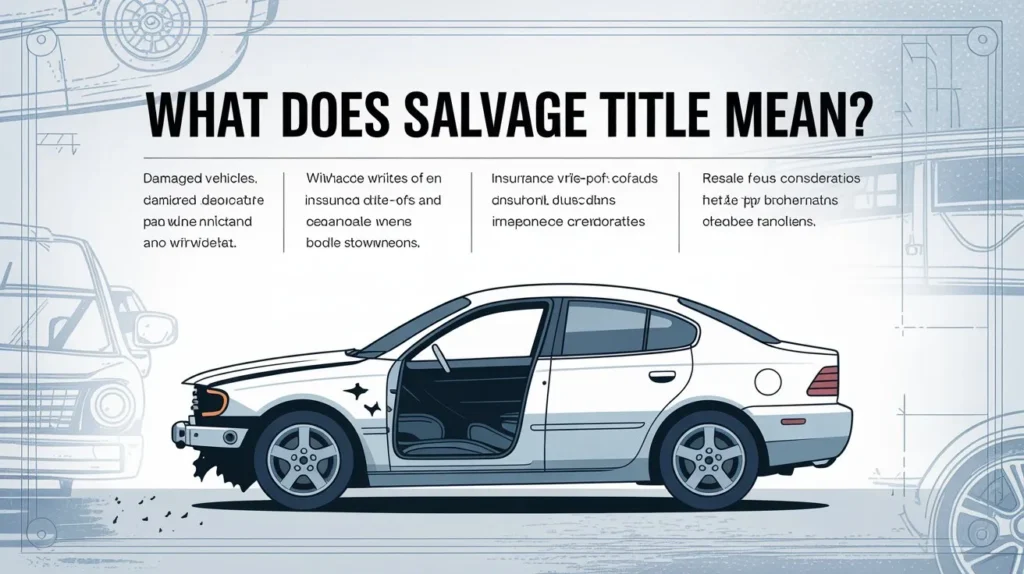
If you’ve ever shopped for a used car, you may have come across the term “salvage title” and wondered what it really means and whether it’s something to avoid.
A salvage title can dramatically change a vehicle’s value, safety, and ownership experience, yet many buyers don’t fully understand how or why a car receives this designation.
In some cases, a salvage title vehicle may seem like a great deal, while in others it can signal serious hidden risks and long-term costs.
Understanding what a salvage title means is essential before making any buying decision. These vehicles are often tied to major accidents, flood damage, or other events that caused an insurance company to declare them a total loss.
This guide breaks down everything you need to know about salvage titles, how they affect insurance and resale value, and whether buying one is ever worth it so you can make a confident, informed choice.
What Is a Salvage Title?
A salvage title is a special vehicle title issued when a car has been declared a total loss by an insurance company. This typically happens after the vehicle has been severely damaged and the cost to repair it exceeds a certain percentage of its pre-damage market value. That percentage varies by state but is commonly between 60% and 80%. Once this threshold is met, the insurer determines that repairing the car is not financially practical, even if it may still be physically repairable.
When a vehicle is labeled as salvage, the title status is changed through the state’s Department of Motor Vehicles (DMV) or a similar authority. From that point on, the car is legally recognized as a salvage vehicle, and this designation follows it permanently in vehicle history records. A salvage title is meant to warn future buyers that the car has experienced significant damage that could affect its safety, reliability, and value.
It’s important to understand that a salvage title does not automatically mean the car is unsafe or undrivable. Instead, it signals that the vehicle suffered serious damage at some point such as from a major accident, flood, fire, or theft recovery. In most states, a car with a salvage title cannot be legally driven or registered until it has been repaired and passes a state inspection. After that process, the title may be upgraded to a rebuilt or restored title, though it will never return to a clean title status.
Knowing what a salvage title represents is the foundation for evaluating the risks and rewards of owning one.
When and How a Salvage Title Is Issued
A salvage title is issued through a process that typically begins after an insurance claim is filed. When a vehicle is involved in a serious incident such as a major accident, flood, or fire the insurance company sends an adjuster to assess the damage. The adjuster compares the cost of repairs to the vehicle’s actual cash value (ACV) before the damage occurred. If repair costs meet or exceed the state’s total-loss threshold, the vehicle is declared a total loss.
Once the total loss decision is made, the insurance company pays the claim to the owner (or lienholder) and then reports the vehicle’s status to the state’s Department of Motor Vehicles (DMV). At this point, the original clean title is surrendered and replaced with a salvage title. In many cases, the insurance company takes ownership of the vehicle and sells it at a salvage auction, where rebuilders, dismantlers, or exporters purchase it.
The exact process and requirements vary by state, but the purpose is the same everywhere: to formally document that the vehicle has sustained significant damage. This prevents severely damaged cars from being quietly resold as normal used vehicles and helps protect consumers from unknowingly purchasing high-risk cars.
It’s also worth noting that a salvage title can be issued even if the damage is not visible. For example, flood damage or extensive hail damage may trigger a total loss despite the car still running. Once issued, the salvage title becomes part of the vehicle’s permanent record and will appear on history reports like Carfax or AutoCheck, regardless of how well the car is later repaired.
Understanding this process helps buyers see why salvage titles exist and why they should never be ignored.
Common Reasons a Vehicle Receives a Salvage Title
Vehicles receive salvage titles for a variety of reasons, but all share one common factor: the damage was severe enough for an insurance company to declare the car a total loss. One of the most common causes is collision damage. Major accidents can compromise a vehicle’s frame, structural components, or safety systems, making repairs costly and sometimes unreliable, even if the car appears drivable afterward.
Flood damage is another leading reason for salvage titles, especially after hurricanes or heavy storms. Water can infiltrate electrical systems, engines, and interiors, leading to corrosion, mold, and long-term mechanical failures. Even if the vehicle is cleaned and dried, hidden water damage can cause problems months or years later. For this reason, many insurers automatically total flood-damaged vehicles.
Fire damage can also result in a salvage title. Fires may affect the engine bay, interior, or wiring systems, weakening critical components through heat exposure. Similarly, vehicles that are stolen and later recovered may receive salvage titles if they are found with extensive damage, missing parts, or vandalism that makes repairs uneconomical.
Natural disasters such as hailstorms, tornadoes, and earthquakes can also trigger salvage designations. Severe hail damage, for example, may not affect drivability but can require expensive body repairs that exceed the car’s value. In each of these situations, the salvage title serves as a warning that the vehicle has experienced significant damage visible or hidden that could impact safety, reliability, and resale value.
Salvage Title vs. Other Vehicle Title Types
Understanding how a salvage title compares to other vehicle titles is essential for evaluating risk and legality. A clean title indicates that a vehicle has never been declared a total loss by an insurance company. These vehicles are typically easier to insure, finance, and resell, which is why they command higher market values. In contrast, a salvage title immediately signals that the car has suffered significant damage at some point in its history.
A rebuilt (or restored) title is often confused with a salvage title, but they are not the same. A rebuilt title is issued after a salvage vehicle has been repaired and inspected according to state requirements. While this allows the car to be legally driven again, the rebuilt title still discloses its salvage past. This means the vehicle will never regain clean title status, and buyers should still expect lower resale value and potential insurance limitations.
Another category is a junk or non-repairable title. Vehicles with this designation are considered permanently unsafe or impractical to repair and cannot be registered for road use under any circumstances. These cars are typically sold for parts or scrap only, making them very different from salvage vehicles that may still be rebuilt.
Each title type reflects a different level of damage and legal usability. Knowing these distinctions helps buyers avoid confusion, prevent costly mistakes, and better understand what they are actually purchasing. When reviewing a used vehicle, the title status alone can reveal critical information about its history, future costs, and potential risks.
Can You Drive a Salvage Title Car?
In most states, you cannot legally drive or register a car with a salvage title. Once a vehicle is designated as salvage, it is considered unroadworthy until it has been properly repaired and approved by the state. This restriction exists to protect drivers and the public from vehicles that may have serious structural, mechanical, or safety issues resulting from significant damage.
To make a salvage title car legal to drive, the owner must typically complete a rebuild process. This involves repairing the vehicle to meet safety and operational standards, keeping detailed records of parts and labor, and submitting the car for a state-mandated inspection. The inspection is designed to verify that the vehicle has been repaired correctly and is safe for road use, though it does not guarantee the quality or longevity of the repairs.
Once the vehicle passes inspection, the title status is usually changed from salvage to rebuilt or restored. Only after this step can the car be registered, insured (with limitations), and driven legally. However, inspection standards vary by state, and some are more rigorous than others, which means the level of scrutiny applied to rebuilt vehicles can differ significantly.
It’s important to note that even after a salvage car is rebuilt, there may still be restrictions. Some states require additional disclosures during resale, and many insurance companies will only offer liability coverage, not comprehensive or collision insurance. For buyers, this means a salvage title vehicle may be drivable eventually, but it comes with extra legal steps, ongoing limitations, and increased responsibility compared to a clean-title car.
How a Salvage Title Affects Vehicle Value
A salvage title has a significant impact on a vehicle’s market value, often reducing it far below that of a comparable clean-title car. In general, salvage title vehicles are priced 20% to 40% less, and in some cases even more, depending on the extent and type of damage. This reduced price can attract budget-conscious buyers, but it also reflects the higher risk associated with the vehicle.
The biggest reason for the lower value is buyer perception and uncertainty. Even if a salvage car has been professionally repaired, many buyers remain cautious due to concerns about hidden damage, long-term reliability, and safety. As a result, the pool of potential buyers is much smaller, which drives prices down further when it comes time to sell or trade in the vehicle.
A salvage title also affects value over the long term. While all vehicles depreciate, salvage title cars tend to depreciate faster and have limited resale opportunities. Many dealerships will not accept them as trade-ins, and lenders are often unwilling to finance them. This leaves private-party sales as the primary option, which typically results in lower offers.
Additionally, insurance limitations play a role in value. Since many insurers restrict coverage to liability only, buyers may factor in the financial risk of not having full protection. Altogether, while a salvage title vehicle may offer a lower upfront cost, its reduced value, resale challenges, and financial limitations should be carefully weighed against the initial savings before making a purchase decision.
Insurance Challenges with Salvage Title Vehicles
Insuring a salvage title vehicle can be one of the biggest challenges for owners and prospective buyers. Most insurance companies are hesitant to offer coverage because salvage vehicles have a higher risk of mechanical failure, hidden damage, and increased claim costs. As a result, many insurers will not provide full coverage such as comprehensive or collision insurance on a vehicle that still carries a salvage title.
In most cases, a car with a salvage title can only be insured for liability coverage, which is typically the minimum insurance required by law. Liability insurance covers damage or injuries you cause to others but does not pay for repairs to your own vehicle. This means if the salvage car is damaged again, the owner is often responsible for all repair costs out of pocket.
Once a salvage vehicle is repaired and passes the required state inspection, it may qualify for a rebuilt title, which can improve insurance options slightly. Some insurers will then offer limited comprehensive or collision coverage, but with restrictions. These policies often come with higher premiums, lower payout limits, or exclusions related to the vehicle’s prior damage. Additionally, insurers may cap claim payouts at a percentage of the vehicle’s reduced market value.
Another important factor is claim settlement value. Even if a rebuilt salvage vehicle is insured, insurers will calculate payouts based on its salvage or rebuilt status, not on the value of a clean-title equivalent. For buyers, this means insurance coverage may be available, but it is often more limited, more expensive, and less protective, an essential consideration when deciding whether a salvage title vehicle is truly worth the risk.
Financing a Salvage Title Vehicle
Financing a salvage title vehicle is often difficult, as most traditional lenders view these cars as high-risk investments. Banks, credit unions, and auto finance companies typically avoid lending on salvage vehicles because their value is lower, harder to verify, and more volatile than clean-title cars. If the borrower defaults, the lender may struggle to recover the loan amount through resale.
As a result, many salvage title vehicle purchases are cash-only transactions. Buyers who do not have the funds upfront may need to explore alternative financing options, which often come with drawbacks. Some specialty lenders or “buy here, pay here” dealerships may offer loans for salvage or rebuilt title vehicles, but these usually involve higher interest rates, shorter loan terms, and stricter repayment conditions.
Even when financing is available, lenders often require the vehicle to have a rebuilt title, not an active salvage title. This means the car must already be repaired, inspected, and legally drivable before a loan will be considered. In addition, lenders may limit the loan amount to a percentage of the vehicle’s already reduced value, leaving buyers to cover a larger down payment.
Another challenge is insurance requirements. Many lenders require full coverage insurance as a condition of financing, which may not be available or affordable for salvage or rebuilt title vehicles. Without meeting these insurance requirements, loan approval is unlikely.
Because of these barriers, buyers should carefully evaluate whether the lower purchase price of a salvage title vehicle truly offsets the financing limitations and higher costs. For many buyers, paying slightly more for a clean-title vehicle can result in easier financing and lower long-term financial risk.
Safety Concerns and Hidden Risks
Safety is one of the most important concerns when it comes to salvage title vehicles. While some cars are properly repaired and restored, others may still have hidden damage that is not immediately visible. Structural issues, such as a bent frame or compromised crumple zones, can reduce a vehicle’s ability to protect occupants in a future accident even if the car appears to drive normally.
Modern vehicles rely heavily on electronic safety systems, including airbags, sensors, and advanced driver-assistance features. After a serious accident or flood, these systems may not function as intended if repairs are incomplete or performed incorrectly. In some cases, airbags may be missing, improperly installed, or replaced with counterfeit components, creating serious safety risks.
Electrical problems are another common issue, particularly in vehicles that suffered water damage. Corrosion in wiring harnesses and control modules can lead to intermittent failures, warning lights, or sudden loss of critical systems such as braking or steering assistance. These issues may not appear immediately, making them difficult to detect during a short test drive.
Additionally, the quality of repairs can vary widely. Some salvage vehicles are restored by skilled professionals using proper parts and procedures, while others are repaired quickly and cheaply to maximize resale value. Without thorough inspections and documentation, buyers may never know the true condition of the vehicle.
Because of these risks, salvage title vehicles require extra caution, professional inspections, and realistic expectations. The potential savings can be appealing, but safety should always remain the top priority.
How to Check If a Car Has a Salvage Title
Before purchasing any used vehicle, it’s critical to confirm whether it has a salvage title. One of the most reliable ways to do this is by reviewing a vehicle history report from services like Carfax or AutoCheck. These reports compile data from insurance companies, DMVs, auctions, and repair facilities to reveal title status, accident history, flood damage, and total loss records. While helpful, history reports are not perfect and may miss damage that was never officially reported.
In addition to reports, buyers should perform a physical inspection of the vehicle. Signs such as uneven body panel gaps, mismatched paint, overspray, or visible weld marks can indicate past structural repairs. Inside the car, warning lights that remain illuminated, musty odors, or non-functioning electronics may suggest previous flood or fire damage.
A VIN (Vehicle Identification Number) check is another essential step. The VIN can be used to search state DMV databases or national systems that track title branding. This is especially important to prevent title washing, a practice where a salvage vehicle is retitled in another state with looser regulations to hide its history.
For the most thorough evaluation, buyers should have the car inspected by a qualified, independent mechanic preferably one experienced with salvage or rebuilt vehicles. A professional inspection can uncover hidden mechanical or structural issues that a casual inspection might miss.
Taking these steps helps ensure transparency and reduces the risk of unknowingly purchasing a vehicle with serious past damage.
State Laws and Regulations for Salvage Title Vehicles
Salvage title laws and regulations vary significantly from state to state, which makes it essential for buyers to understand the rules in their specific location. While the general concept of a salvage title is consistent nationwide, states differ in how they define a total loss, the repair standards required, and the inspections needed before a vehicle can return to the road.
One key difference is the total-loss threshold, the percentage of a vehicle’s value at which it is declared a salvage. Some states use a lower threshold, while others give insurance companies more discretion. States also vary in their inspection requirements for converting a salvage title into a rebuilt or restored title. Some inspections focus mainly on theft prevention and basic safety, while others involve more comprehensive evaluations.
Another important consideration is disclosure laws. Many states require sellers to clearly disclose salvage or rebuilt title status to potential buyers. Failing to do so can result in legal penalties, fines, or voided sales. Buyers should also be aware that some states restrict where salvage vehicles can be sold, registered, or insured.
Interstate title transfers introduce additional complexity. Differences between state laws can create opportunities for title washing, where a salvage vehicle’s branding is reduced or removed by retitling it in another state. Although federal databases have reduced this risk, it still occurs and highlights the importance of thorough VIN checks.
Because laws change and enforcement varies, buyers should always consult their state DMV or official resources before purchasing a salvage title vehicle to ensure full compliance and avoid costly surprises.
Pros and Cons of Buying a Salvage Title Car
Buying a salvage title car comes with both potential advantages and serious drawbacks, making it a decision that requires careful consideration. One of the biggest advantages is the lower purchase price. Salvage title vehicles are often significantly cheaper than comparable clean-title cars, allowing buyers to access newer models or higher trim levels at a reduced cost. For experienced mechanics or DIY enthusiasts, this can be an opportunity to repair a vehicle affordably and extend its usable life.
Another potential benefit is negotiating power. Because demand for salvage title cars is limited, sellers may be more flexible on price. In some cases, if the damage was cosmetic rather than structural and repairs were done correctly, a salvage vehicle can provide decent value for the right buyer.
However, the disadvantages are substantial. Safety is the primary concern, as hidden structural or mechanical damage may remain even after repairs. Insurance and financing challenges further complicate ownership, with many insurers offering limited coverage and most lenders refusing loans altogether. Resale value is also much lower, and finding a buyer later can be difficult.
There are also legal and logistical concerns, including state inspection requirements, disclosure rules, and the risk of title washing. Repair quality can vary widely, and buyers often have limited recourse if problems appear after purchase.
In summary, while salvage title cars can make sense for knowledgeable buyers with realistic expectations, they are generally a poor fit for those seeking long-term reliability, easy resale, or maximum safety.
Who Should and Shouldn’t Buy a Salvage Title Vehicle
Salvage title vehicles are not suitable for every buyer, but they can make sense in specific situations. Experienced mechanics, rebuilders, and automotive hobbyists are often the best candidates. These buyers have the skills to accurately assess damage, perform or verify quality repairs, and manage ongoing maintenance without relying heavily on dealerships or warranty coverage. For them, a salvage title car can be a cost-effective project or a practical short-term solution.
Salvage vehicles may also appeal to buyers who plan to use the car locally or temporarily, such as for commuting short distances or as a secondary vehicle. In these cases, the lower purchase price may outweigh concerns about long-term resale value. Parts resellers and exporters also commonly purchase salvage vehicles for dismantling or overseas markets where regulations differ.
On the other hand, many buyers should avoid salvage title vehicles altogether. First-time car buyers may lack the experience needed to evaluate repair quality or hidden risks. Families prioritizing safety, reliability, and long-term ownership are often better served by clean-title vehicles. Buyers who require financing or full insurance coverage may also face significant obstacles, making salvage cars impractical.
Additionally, anyone uncomfortable with uncertainty or unexpected repair costs should think twice. Salvage vehicles often require more maintenance, and problems may surface long after the purchase. While the upfront savings can be tempting, they can quickly disappear if major issues arise.
Ultimately, buying a salvage title vehicle requires a clear understanding of the risks, realistic expectations, and a willingness to take on additional responsibility. For many consumers, peace of mind is worth the higher price of a clean-title car.
Steps to Take Before Buying a Salvage Title Car
Before purchasing a salvage title car, it’s essential to take several careful steps to minimize risk and avoid costly surprises. The first step is to verify the title status through the seller and confirm it using the vehicle’s VIN with state DMV records or a trusted vehicle history report. Never rely solely on the seller’s description, as title branding can sometimes be misrepresented.
Next, request detailed documentation of all repairs. This should include receipts, photos taken before and after repairs, and information about where the work was performed. Quality rebuilds are usually well-documented, while a lack of records can be a red flag. Pay close attention to repairs involving the frame, airbags, and electrical systems.
A professional inspection is critical. Hire an independent mechanic preferably one experienced with salvage or rebuilt vehicles to examine the car thoroughly. They can identify structural issues, improper repairs, or safety concerns that may not be obvious during a test drive. In some cases, it may also be worth paying for a frame alignment check.
Buyers should also research state laws regarding salvage and rebuilt titles. Understanding inspection requirements, registration rules, and insurance limitations ahead of time can prevent legal or financial problems later. Additionally, calculate the true cost of ownership, including insurance limitations, future resale value, and potential repairs.
Finally, compare the salvage vehicle to similar clean-title options. If the price difference isn’t substantial enough to justify the added risk, walking away may be the smartest decision. A careful, informed approach is the key to making a salvage title purchase worthwhile.
How to Sell a Salvage Title Vehicle
Selling a salvage title vehicle requires transparency, realistic pricing, and an understanding of legal obligations. One of the most important steps is full disclosure. In most states, sellers are legally required to inform potential buyers that the vehicle has a salvage or rebuilt title. Failing to disclose this information can result in legal penalties, canceled sales, or future liability if the buyer takes legal action.
Pricing a salvage title vehicle correctly is also critical. Because these vehicles carry higher perceived risk and a smaller buyer pool, they must be priced significantly lower than comparable clean-title cars. Research similar salvage or rebuilt vehicles in your market to establish a competitive and fair asking price. Overpricing can cause the vehicle to sit unsold, while realistic pricing helps attract serious buyers.
When listing the vehicle, include detailed information and documentation. Providing repair records, inspection reports, and before-and-after photos builds trust and increases buyer confidence. Be upfront about the type of damage the car sustained and the repairs that were performed. Transparency can make the difference between a smooth sale and repeated buyer skepticism.
Sellers should also choose the right marketplace. Private-party sales, salvage auctions, and specialty dealerships are often more effective than traditional dealerships, many of which will not accept salvage vehicles. Be prepared for more questions, longer selling times, and tougher negotiations.
Ultimately, honesty and preparation are essential. A well-documented, fairly priced salvage title vehicle can be sold successfully but only to buyers who fully understand what they are purchasing.
Frequently Asked Questions About Salvage Titles
Many buyers have common questions when considering a salvage title vehicle, and understanding the answers can help clarify whether this type of car is the right choice. One frequent question is “Is a salvage title bad?” A salvage title is not automatically bad, but it does indicate that the vehicle suffered significant damage in the past. The risk depends on the type of damage, quality of repairs, and how thoroughly the car has been inspected.
Another common question is “Can a salvage title be cleared?” In most cases, the answer is no. A salvage title cannot return to clean status. However, after repairs and inspections, it can often be converted to a rebuilt or restored title, which allows the car to be legally driven again while still disclosing its history.
Buyers also ask, “Is a rebuilt salvage title safe?” A rebuilt vehicle can be safe if repairs were done correctly and all safety systems function properly. That said, inspections do not always guarantee long-term reliability, which is why professional evaluations are essential.
Questions about cost are also common, such as “How much cheaper should a salvage title car be?” Prices vary, but many salvage vehicles sell for 20% to 40% less than clean-title equivalents. Finally, people often wonder whether a salvage title ever expires. The answer is no once a vehicle is branded as salvage, that history remains permanently attached to the car.
Conclusion:
A salvage title vehicle can be either a smart financial decision or an expensive mistake, depending on the buyer’s knowledge, expectations, and willingness to accept risk. Understanding what a salvage title means is essential, as it signals that the car has experienced significant damage that affected its value, safety, or insurability. While some salvage vehicles are repaired properly and can offer short-term savings, others may hide costly problems that surface long after purchase.
For experienced buyers such as mechanics, rebuilders, or those seeking a temporary or secondary vehicle the lower purchase price may justify the added responsibility. However, for most everyday drivers, the challenges of limited insurance coverage, difficult financing, reduced resale value, and potential safety concerns often outweigh the initial savings. Peace of mind, reliability, and long-term value are important factors that should not be overlooked.
Ultimately, a salvage title is not inherently good or bad; it is a warning label that demands extra diligence. Thorough inspections, complete documentation, and a clear understanding of state laws are non-negotiable steps in the decision-making process. If the price discount is not substantial enough to compensate for the risks, choosing a clean-title vehicle is usually the safer and more practical option.
An informed buyer is the best defense against regret. By understanding salvage titles in depth, you can make a confident choice that aligns with your budget, safety priorities, and long-term goals.

Hey! Welcome to You Wishes — I write heartfelt wishes for every mood and moment. Let’s turn your emotions into words together, just tell me what you feel! ❤️