
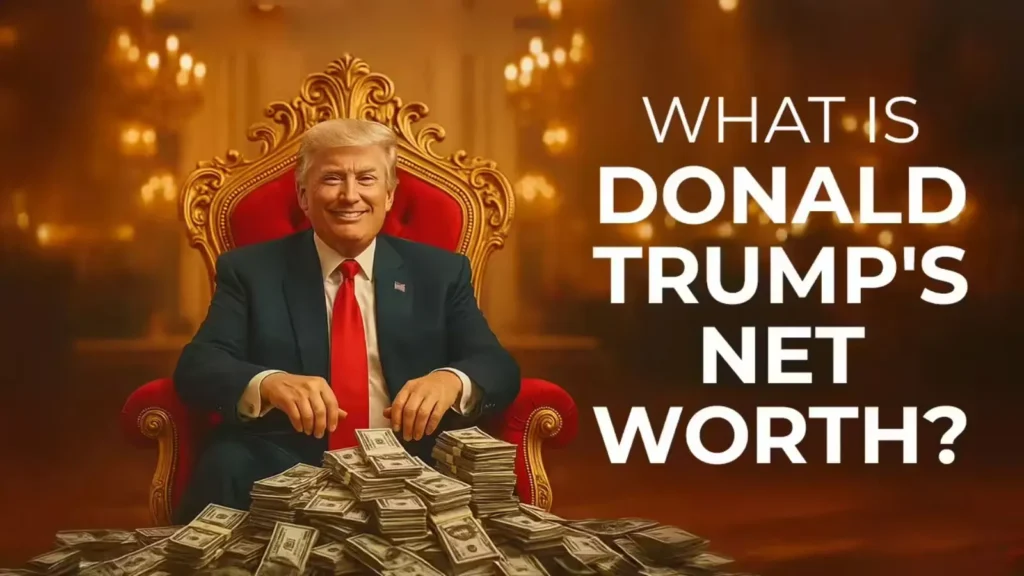
Donald Trump is one of the most talked about figures in business and politics. People are curious not just about his political career but also about how rich he really is.
From his luxury real estate projects to global branding deals, Trump has built a fortune that has fascinated the world for decades.
But estimating his net worth isn’t simple. Different sources, including Forbes, give varying figures, and Trump himself has made claims that spark debates.
Beyond skyscrapers and golf courses, his wealth also comes from media, licensing, and investments.
In this article, we will break down Donald Trump’s net worth in 2026, explore his assets, income sources, debts, and financial history, and answer the question: Is Trump really a billionaire?
You’ll get a clear, easy-to-understand view of his fortune.
Trump Net Worth in 2026 (Quick Overview)
As of 2026, Donald Trump’s net worth is estimated to be around $2.5 billion, according to Forbes. This makes him one of the richest former U.S. presidents and a well-known billionaire in the business world. However, his exact wealth is debated, as Trump himself has claimed numbers much higher than third-party estimates.
Trump’s fortune comes from multiple sources. His real estate empire remains the backbone of his wealth, including iconic properties like Trump Tower in New York City, luxury hotels, and office buildings. Additionally, his golf courses and resorts across the U.S. and overseas contribute significantly to his income. Beyond real estate, Trump earns money from licensing deals, branding, and media appearances, including revenue from his time on The Apprentice.
While $2.5 billion is the current estimate, it’s important to note that Trump has debts and ongoing financial obligations, which can affect his net worth over time. Overall, his wealth reflects a mix of active business ventures and passive income streams, making him a unique case in the world of billionaires.
Trump Net Worth Over Time
Donald Trump’s wealth has changed significantly over the decades, reflecting both his business successes and challenges. In the 1970s and 1980s, Trump began building his fortune with Manhattan real estate, including luxury apartments and office buildings. By the 1990s, his net worth had grown but faced setbacks due to expensive hotel projects and casino investments, which sometimes led to financial difficulties and bankruptcies.
In the 2000s, Trump’s wealth rebounded, thanks to high-profile properties, branding deals, and the success of his TV show, The Apprentice. During this time, Forbes estimated his net worth to be over $3 billion, though Trump often claimed higher figures.
The 2010s saw mixed results. Some real estate ventures and golf courses performed well, while other investments slowed growth. His presidency (2017–2021) had a notable impact: some business deals paused, but his brand visibility increased, boosting licensing and speaking income.
By 2026, Trump’s net worth stabilizes around $2.5 billion, reflecting a combination of real estate, branding, investments, and media earnings. Tracking his wealth over time shows how persistence, risk-taking, and global business ventures shaped his financial journey.
How Donald Trump Made His Money
Donald Trump built his fortune through a mix of real estate, media, branding, and investments. The foundation of his wealth comes from real estate, starting with Manhattan apartments and office buildings. Iconic properties like Trump Tower, luxury hotels, and commercial buildings generate significant income and have made his name synonymous with high-end real estate.
In addition to real estate, Trump expanded into hotels and resorts, including international ventures. These properties, along with his golf courses, create steady revenue through memberships, events, and hospitality services.
Trump also earned millions through media and television, most notably from The Apprentice. The show not only brought in personal income but also boosted his public image, increasing the value of his brand.
Another key factor is branding and licensing. Trump has licensed his name to products, buildings, and merchandise worldwide, earning passive income without direct ownership.
Finally, Trump’s portfolio includes investments and other business ventures, including stocks, bonds, and private deals. This diverse income strategy has helped him remain a billionaire despite business ups and downs, making him one of the most financially recognized figures in the world.
Donald Trump’s Major Assets
Donald Trump’s wealth is not just about cash—it is largely tied to his major assets, including real estate, golf courses, and his brand.
Real Estate Properties
Trump owns and controls numerous high-profile properties. Trump Tower in New York City is the centerpiece, alongside luxury apartments, office buildings, and hotels. These properties generate rental income and appreciation value over time.
Golf Courses and Resorts
Trump has invested heavily in golf, with famous courses like Trump National Golf Club and international resorts. These properties provide revenue from memberships, events, and tourism.
The Trump Organization
His family-run conglomerate, The Trump Organization, manages real estate, branding, and investments, acting as the backbone of his empire.
Cash, Investments, and Other Assets
Trump also holds liquid assets, including stocks, bonds, and private investments. Additionally, his brand licensing generates passive income worldwide, from merchandise to property deals.
These major assets together form the foundation of his $2.5 billion net worth. Understanding them helps explain why Trump remains financially significant despite business ups and downs, presidential controversies, and market changes.
Trump’s Income Sources
Donald Trump generates his wealth through a combination of active businesses and passive income streams. The largest portion comes from real estate. Rental income from skyscrapers, office buildings, and luxury apartments provides steady revenue, while property values increase over time, adding to his net worth.
Another major source is hotels and resorts. Trump-owned properties, both in the U.S. and internationally, earn money from room bookings, events, and memberships. Similarly, his golf courses attract high-paying members and host tournaments that generate significant profits.
Media and branding also contribute heavily. Trump earned millions from The Apprentice, speaking engagements, and personal appearances. These ventures not only pay directly but enhance the value of his name for licensing deals.
Licensing and branding allow Trump to earn money without owning properties directly. His name appears on real estate developments, merchandise, and hotels worldwide, producing passive income streams.
Finally, Trump holds investments in stocks, bonds, and private companies, which can yield dividends and capital gains. Combined, these income sources create a diverse financial portfolio, making him resilient to individual business losses and maintaining his billionaire status.
Forbes vs Trump: Why Net Worth Estimates Differ
Estimating Donald Trump’s net worth is tricky because different sources report different numbers. Forbes, one of the most respected wealth trackers, estimates his net worth at about $2.5 billion in 2026. This estimate is based on property values, business holdings, debts, and income streams. Forbes uses independent valuations to avoid relying on self-reported numbers.
Trump, however, has often claimed his fortune is much higher, sometimes exceeding $10 billion. The discrepancy arises because Trump includes brand value, future earnings, and private deals, which are difficult for outside analysts to verify.
Another factor is debts and liabilities. Trump has loans and obligations tied to his businesses, which reduce his net worth on paper. Forbes accounts for these, while Trump’s personal claims often do not.
Additionally, some of Trump’s assets are private or international, making them harder to evaluate accurately. Real estate markets fluctuate, licensing deals change, and valuations can differ depending on assumptions.
Understanding these differences helps readers see why Trump’s true wealth is debated, and why independent estimates like Forbes may differ from personal claims.
FAQ:
1. What is Donald Trump’s net worth in 2026?
As of 2026, Forbes estimates Trump’s net worth at around $2.5 billion, though Trump has claimed higher numbers.
2. How does Donald Trump make money?
Trump earns from real estate, hotels, golf courses, branding, licensing, media appearances, and investments, combining active and passive income streams.
3. Did Trump lose money after being president?
Some business deals paused or slowed during his presidency, but branding and media income helped maintain his wealth.
4. What are Trump’s biggest assets?
His major assets include Trump Tower, luxury real estate, golf courses, hotels, and the Trump Organization, along with investments and branding deals.
5. Why do net worth estimates differ?
Discrepancies arise because Trump often includes brand value and future income in personal claims, while Forbes accounts for verified assets and liabilities.
6. Is Trump really a billionaire?
Yes, based on Forbes’ independent calculations, Trump remains a billionaire, though the exact amount is debated due to private and international holdings.
7. How did Trump build his wealth?
He started in real estate, expanded into branding, media, and investments, and diversified his portfolio across multiple industries.
Conclusion
Donald Trump’s wealth reflects decades of risk-taking, smart investments, and brand-building. While Forbes estimates his net worth at around $2.5 billion in 2026, Trump’s claims often suggest higher figures. Most of his fortune comes from real estate, golf courses, hotels, and licensing deals, while media appearances and investments supplement his income.
Trump’s financial journey shows the ups and downs of high-profile business ventures. Early successes in Manhattan real estate and luxury developments built his reputation, but challenges like bankruptcies and market fluctuations affected his net worth. His presidency added complexity: some deals slowed, yet his public visibility boosted branding opportunities worldwide.
Understanding Trump’s assets, liabilities, and income sources helps clarify why his wealth is both impressive and debated. For readers curious about celebrity billionaires or presidential fortunes, Trump serves as a unique example of combining traditional business with modern branding.
Overall, whether you agree with his claims or rely on independent estimates, it’s clear that Trump remains a financially powerful and influential figure in business and culture.

“On You Wishes, I share the most heartfelt wishes for every moment — birthdays, love, or motivation. Each message is written with emotion to bring smiles and inspiration!”