
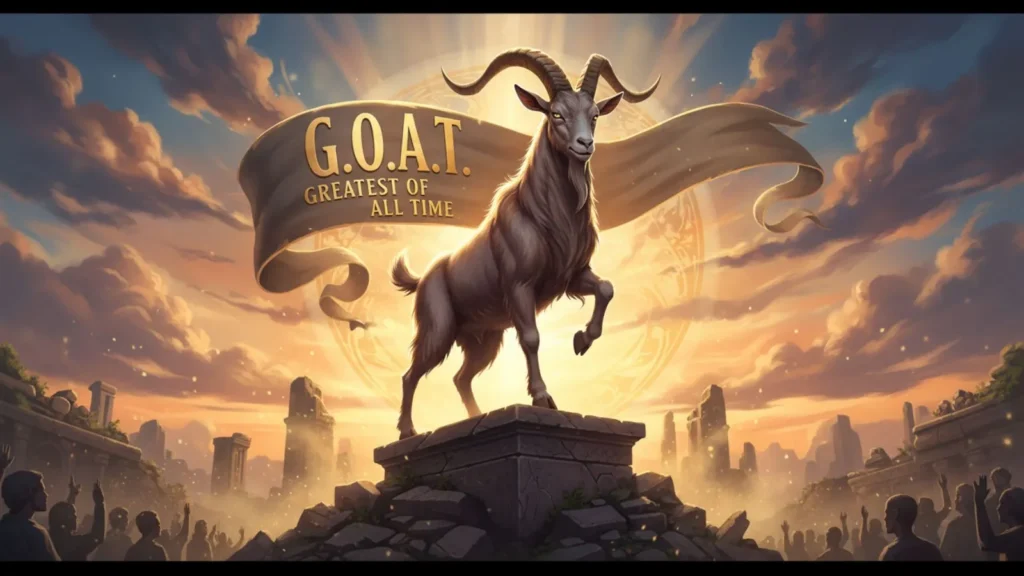
You’ve probably seen people calling athletes, musicians, or even friends the “GOAT,” and wondered, what does GOAT actually stand for?
In today’s fast-paced social media world, this term has taken over sports, music, gaming, and pop culture.
From Instagram captions to TikTok trends, everyone wants to know who or what qualifies as the Greatest Of All Time.
But while it sounds simple, many people confuse the literal meaning of “goat” with the slang usage, leaving them puzzled.
Understanding the meaning of GOAT isn’t just about knowing an acronym it’s about grasping why this term carries so much cultural weight.
In this article, we’ll break down the full form of GOAT, explore its history, explain how it’s used in modern language, and give you real-life examples.
By the end, you’ll confidently know when and how to use GOAT like a pro.
What Does GOAT Stand For?
The term GOAT stands for “Greatest Of All Time.” It’s an acronym used to describe someone who is considered the best in their field, surpassing everyone else in skill, talent, or influence. While it might sound like casual slang, calling someone the GOAT carries a lot of weight—it’s not just saying “good” or “great,” but recognizing a legacy of excellence.
GOAT is most commonly used in sports, where fans debate who deserves the title—think of Lionel Messi in football, Michael Jordan in basketball, or Serena Williams in tennis. But the term has expanded beyond sports and is now widely used in music, entertainment, gaming, and social media, highlighting anyone who has achieved extraordinary success in their field.
Interestingly, the word GOAT also plays on the literal meaning of a goat 🐐, but in slang, it has nothing to do with the animal. Instead, it’s a catchy, memorable way to recognize the pinnacle of achievement. Using GOAT correctly shows you’re in tune with modern culture, whether you’re discussing the latest sports debate, a trending song, or a viral internet personality.
Origin and History of the Term GOAT
The term GOAT didn’t become a household phrase overnight. Its origins trace back to the idea of calling someone the “greatest”, which has existed in sports and entertainment for decades. However, the acronym G.O.A.T. (Greatest Of All Time) gained widespread attention in the 1990s, largely due to hip-hop culture. Rapper LL Cool J popularized it with his 2000 album titled G.O.A.T., celebrating his success and legacy in music.
Before the acronym was formalized, the concept was often associated with legends like Muhammad Ali, who referred to himself as “The Greatest,” inspiring others to use language that recognized peak performance and unmatched talent. Sports fans soon adopted the term in debates about who was truly the best in their field, from basketball and football to tennis and boxing.
Over time, GOAT crossed into mainstream pop culture, becoming a widely understood slang term for anyone considered the ultimate in their profession or passion. Today, you’ll see it in social media captions, memes, and headlines, applied to athletes, musicians, actors, and even influencers. The evolution of GOAT from a niche term to a cultural phenomenon shows how language adapts, turning an acronym into a universal mark of excellence.
Who Coined the Term GOAT?
The acronym G.O.A.T., meaning Greatest Of All Time, is often linked to multiple figures, but its popularization is most credited to Muhammad Ali and LL Cool J. Muhammad Ali, the legendary boxer, famously called himself “The Greatest,” inspiring the idea that one could publicly claim the title of being unmatched in their field. While Ali didn’t use the acronym, his confidence and achievements laid the groundwork for the term we know today.
The actual acronym G.O.A.T. was popularized in the late 1990s and early 2000s by rapper LL Cool J, who released his album G.O.A.T. in 2000. In the album, he celebrated his status as one of the greatest rappers of all time, cementing the phrase into popular culture. After that, the term began appearing in interviews, media coverage, and fan discussions, particularly in sports.
Sports commentators and fans quickly adopted GOAT when debating who truly deserves the title of the best in basketball, football, or other competitive fields. Over time, the term expanded beyond sports to music, entertainment, and social media, where it now refers to anyone who has achieved extraordinary success. Today, while no single person invented the slang, Muhammad Ali and LL Cool J are widely recognized as key figures who shaped the GOAT phenomenon.
What Does GOAT Mean in Modern Slang?
In modern slang, GOAT has become more than just an acronym; it’s a cultural label that signifies the ultimate excellence in any field. While it originally gained popularity in sports, the term now applies to music, entertainment, gaming, and even everyday achievements. Calling someone the GOAT means they are not just skilled—they are unmatched, legendary, and often iconic in their domain.
For example, fans might debate who the GOAT of basketball is—Michael Jordan or LeBron James—highlighting both skill and lasting influence. In music, artists like Tupac, Jay-Z, or Beyoncé are frequently labeled GOATs by fans to honor their groundbreaking contributions and enduring impact. On social media platforms like Instagram, TikTok, and Twitter (X), the term is widely used in captions, hashtags, and comments to recognize someone’s achievements or talent.
GOAT has also entered casual conversations, where people might jokingly call their friends the GOAT for excelling in something small, like cooking the best pasta or winning a video game. The flexibility of the term shows how slang evolves: while it carries a sense of serious respect in professional contexts, it can also be playful and lighthearted in everyday speech. Using GOAT correctly demonstrates that you understand both the power of the word and its cultural significance.
How GOAT Is Used in Sports
In sports, the term GOAT has become a central part of debates, discussions, and fan culture. It’s used to recognize athletes who not only perform at the highest level but also leave a lasting impact on their sport. Calling someone the GOAT in sports goes beyond statistics; it reflects legacy, influence, and unmatched skill.
For example, basketball fans often debate whether Michael Jordan or LeBron James deserves the GOAT title, considering championships, records, and cultural impact. In football (soccer), the debate between Lionel Messi and Cristiano Ronaldo has sparked global conversations, with fans analyzing goals, trophies, and overall contribution to the game. Similar debates happen in tennis, boxing, cricket, and other sports, where the GOAT label sparks excitement, rivalry, and fan engagement.
The popularity of GOAT in sports is fueled by social media, sports commentary, and fan forums. Memes, highlights, and statistics are frequently shared alongside the GOAT label, reinforcing the athlete’s legendary status. By calling an athlete the GOAT, fans acknowledge excellence that transcends a single season or tournament, celebrating a career that has defined the sport. This usage has helped GOAT evolve from casual slang into a universally recognized term of ultimate respect and admiration in the sporting world.
What Does GOAT Mean in Music and Entertainment
In music and entertainment, GOAT is used to honor artists, performers, and creators who have achieved legendary status. It’s not just about talent—it’s about influence, impact, and a career that stands the test of time. Fans often call musicians the GOAT to recognize both their artistic achievements and the cultural mark they’ve left behind.
For instance, rappers like LL Cool J, Tupac, and Jay-Z are frequently referred to as GOATs because of their innovation, influence, and consistency over decades. In pop music, artists like Beyoncé or Taylor Swift receive the label for their record-breaking careers, iconic performances, and ability to shape the music industry. Similarly, actors or filmmakers can be called GOATs when their work becomes timeless and influential, transcending generations.
Social media has amplified the use of GOAT in entertainment. Hashtags, memes, and viral posts celebrate someone as the GOAT, making the term a shorthand for ultimate excellence. Whether discussing a new album, a classic movie, or a viral performance, calling someone the GOAT signals respect and admiration for their contribution. In this context, GOAT has become a universal marker of legendary status, connecting fans and creators across music, film, and pop culture worldwide.
What Does GOAT Mean on Social Media
On social media, GOAT has become a popular way to recognize talent, achievements, or simply something impressive. Platforms like Instagram, TikTok, Twitter (X), and YouTube have made the term a staple in captions, hashtags, and comments, allowing users to quickly show admiration or highlight excellence. For example, fans might post “Messi is the GOAT 🐐” or use #GOAT when celebrating a viral video, sports highlight, or trending performance.
The goat emoji 🐐 often accompanies the term to make it visually engaging and emphasize the meaning, creating a fun and shareable way to praise someone online. Social media has also expanded GOAT beyond serious recognition, using it humorously or playfully. Someone might call a friend the GOAT for winning a small competition, mastering a video game, or creating a clever meme.
GOAT’s popularity on social media highlights its flexibility—it can indicate ultimate respect in professional contexts or casual admiration in everyday online interactions. Its short, catchy nature makes it perfect for posts and comments where brevity matters. Over time, GOAT has evolved into a cultural shorthand for excellence, instantly recognizable to millions of social media users around the world.
FAQs About GOAT
Q1: What does GOAT stand for in slang?
GOAT stands for “Greatest Of All Time” and is used to describe someone who excels beyond all others in their field.
Q2: Who is considered the GOAT?
The GOAT depends on context. In sports, names like Michael Jordan, Serena Williams, or Lionel Messi are often mentioned. In music, legends like Beyoncé, Tupac, or Jay-Z are frequently called GOATs.
Q3: Is GOAT an acronym or just slang?
It’s both. GOAT is an acronym (G.O.A.T.) and also modern slang used widely on social media, in conversations, and pop culture.
Q4: Why do people use the goat emoji 🐐?
The emoji reinforces the slang meaning, visually representing “Greatest Of All Time,” and adds fun or emphasis to posts and comments.
Q5: Can anyone be called the GOAT?
Yes, but it’s usually reserved for individuals with exceptional achievements or legendary status. Casual use is common among friends, fans, and online communities to praise smaller accomplishments.
These FAQs clarify common doubts, helping readers understand GOAT in both serious and playful contexts.
Meta Description
Confused about what GOAT stands for? GOAT is the acronym for “Greatest Of All Time”, widely used in sports, music, entertainment, and social media to describe someone who is unmatched in skill, talent, or influence.
From basketball legends like Michael Jordan to music icons like Beyoncé, the term celebrates excellence and legacy. In modern slang, GOAT can also be used playfully among friends or online communities, often accompanied by the goat emoji 🐐. Learn the history, origin, and correct usage of GOAT, plus real-life examples and popular debates.
This guide explains everything—from its rise in pop culture to social media trends so you can confidently use GOAT in any context. Discover who coined the term, why it became so popular, and how to distinguish between “best” and “GOAT.” Perfect for fans, social media users, and anyone curious about modern slang.

“On You Wishes, I share the most heartfelt wishes for every moment — birthdays, love, or motivation. Each message is written with emotion to bring smiles and inspiration!”