
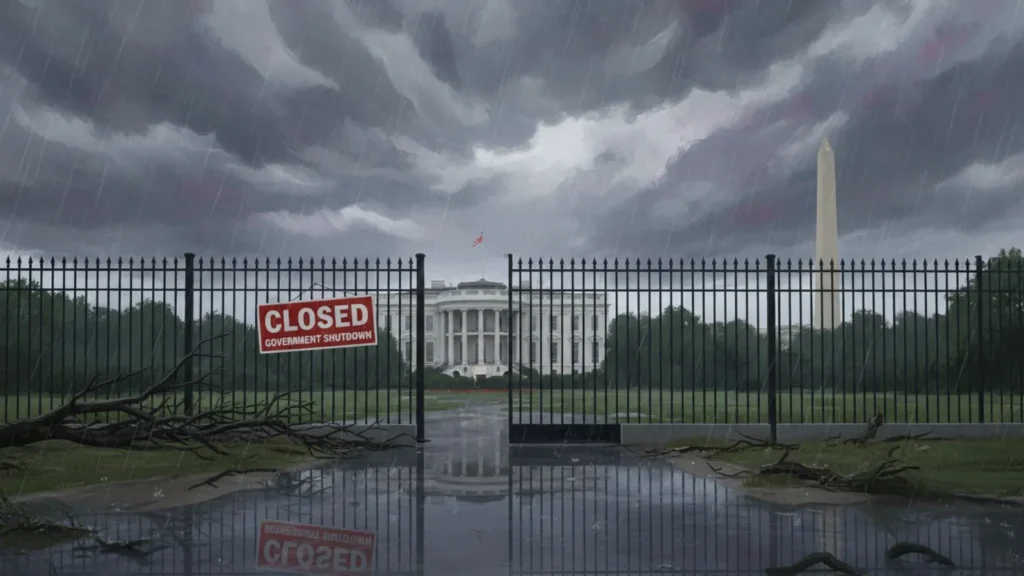
Hearing the term government shutdown in the news can be confusing and even alarming. But what does it really mean when the government shuts down?
In simple terms, a government shutdown occurs when Congress fails to pass the necessary funding bills to keep federal agencies running.
This funding gap forces certain government operations to halt until a budget agreement is reached. While the term may sound dramatic, not every government service stops essential operations, like national security and emergency services, continue to function.
However, non-essential programs, federal employees, and public services can be temporarily affected, causing disruptions that ripple through the economy and everyday life.
Understanding what a shutdown means, why it happens, and how it impacts citizens and government workers can help demystify the process.
In this guide, we’ll break down the causes, consequences, and key facts about government shutdowns so you can stay informed and prepared.
What Is a Government Shutdown?
A government shutdown occurs when the federal government temporarily stops funding certain operations due to a lack of approved budget or funding bills. In the U.S., Congress must pass spending legislation each fiscal year to keep government agencies running. If lawmakers fail to agree on these appropriations or a temporary funding measure, the government enters a shutdown.
During a shutdown, “non-essential” services are paused, while “essential” services—like national security, law enforcement, and emergency medical services—continue to operate. Non-essential employees may be furloughed, meaning they are sent home without pay until funding resumes. However, even essential employees might work without immediate pay, receiving back pay once the shutdown ends.
Shutdowns can be partial or full. In a partial shutdown, only some departments or agencies stop functioning, while others remain operational. In a full shutdown, most non-essential operations across the federal government cease.
Many people misunderstand government shutdowns, thinking the entire government stops working. In reality, key functions continue, but disruptions to services, public programs, and federal employees’ work schedules make the effects widely felt. Understanding these details is the first step to grasping the broader consequences of a shutdown.
Who is affected by government shutdown
A government shutdown affects a wide range of people including federal employees contractors citizens and businesses. When the government stops funding operations many federal workers are furloughed meaning they are temporarily sent home without pay while essential workers such as military personnel border protection officers and air traffic controllers must continue working often without immediate pay. Citizens also feel the impact through delayed services like passport processing tax refunds and social security support. National parks may close or reduce services affecting tourism and local economies. Contractors who depend on federal projects often lose income during shutdown periods. Small businesses near federal facilities can also experience reduced customer flow. In addition to workers and businesses the general public may face slower administrative processes and limited access to government services. Overall a shutdown creates a ripple effect across the entire economy disrupting stability and financial security for many groups who rely on government operations for income services and daily functioning. Recovery depends on how quickly Congress restores funding and reopens all federal agencies to normal operations which can take several days afterward recovery.
Who is affected by government shutdown 2026
A government shutdown in 2026 would affect similar groups as past shutdowns but with potentially greater impact due to increased reliance on digital federal services and a larger federal workforce. Federal employees would still be the first to experience furloughs or delayed paychecks depending on their status. Essential workers would continue working without immediate compensation. Contractors working with government agencies may experience delayed or canceled contracts affecting revenue streams. Citizens depending on services like immigration processing social security benefits and tax services may face delays or reduced access. In 2026 increased automation means system outages or service pauses could affect online portals more broadly. Businesses tied to federal regulations or permits may experience operational slowdowns. State governments might also feel indirect pressure if federal funding transfers are delayed. Overall the 2026 shutdown scenario would likely intensify financial uncertainty and disrupt both public services and private sector operations relying on federal infrastructure and funding continuity across multiple sectors nationwide. Recovery timelines depend on congressional negotiations and the ability to pass emergency funding bills quickly to reopen agencies fully without prolonged disruption nationwide.
What does it mean when the government shuts down for citizens
When the government shuts down for citizens it means that many public services slow down or temporarily stop because federal funding has not been approved. Citizens may experience delays in essential services such as passport applications visa processing tax refunds and social security inquiries. Some offices remain open if they are considered essential but many administrative functions are paused or reduced. National parks and federal museums may close or operate with limited staff affecting travel and recreation plans. For everyday people this can also mean slower response times from government agencies and reduced access to online systems. Financial assistance programs may continue but could face delays in updates or new applications. Air travel and security remain operational but with unpaid or stressed staff in some cases. Overall it signals a temporary disruption in how government services are delivered which can create inconvenience uncertainty and financial stress for individuals who depend on timely federal support and administrative efficiency. Citizens often adapt by relying on private services and waiting for government operations to resume normal funding and staffing levels again soon eventually.
Why is the government shutting down tomorrow
A government shutdown scheduled for tomorrow usually happens when lawmakers fail to agree on a funding bill or continuing resolution before the deadline. The federal budget must be approved to keep agencies operating and if Congress and the President cannot reach an agreement parts of the government lose legal authority to spend money. This leads to a shutdown starting the next day. Political disagreements over spending priorities policy changes or budget limits are common reasons for this failure. Sometimes one party blocks a funding measure to negotiate policy demands. If no compromise is reached by midnight essential services continue but non essential agencies pause operations. The announcement of a possible shutdown often creates uncertainty among federal employees contractors and citizens who rely on government services. Markets and businesses may also react to the instability. Overall it reflects a breakdown in the budget approval process that forces a temporary halt in many government functions until political agreement is achieved. Resolution depends on negotiations between Congress and the administration to pass emergency funding measures and reopen agencies quickly without further delay immediately.
What happens if the government stays shut down
If the government stays shut down for an extended period the effects become more severe across the economy and public services. Federal employees may face prolonged furloughs and delayed pay even after work resumes creating financial strain. Essential services continue but may operate with reduced efficiency due to staffing shortages and budget uncertainty. Programs like food assistance housing support and healthcare related services can experience delays in distribution or approval processes. Contractors may lose entire project cycles leading to layoffs and business losses. Public facilities such as national parks museums and administrative offices could remain closed for weeks reducing tourism revenue and public access. The financial markets may also react negatively to prolonged instability increasing uncertainty for investors. State and local governments might need to step in temporarily to support certain services. Overall a long shutdown creates a ripple effect that grows over time affecting both government operations and the wider economy in increasingly disruptive ways. Recovery after reopening often takes time because agencies must process backlogs restore staffing levels and resume normal payment schedules across departments fully gradually carefully.
What does it mean when government shuts down reddit
On Reddit discussions a government shutdown is often explained in simpler terms by users sharing real experiences opinions and breakdowns of news reports. Many Reddit users describe it as a situation where federal funding stops and non essential government workers are sent home without pay. The platform often highlights confusion frustration and political debate surrounding the issue. Some users compare past shutdowns and share personal stories from federal employees or contractors affected by delays. Others explain the impact on services like travel permits tax processing and national parks in everyday language. Reddit discussions can also include misinformation or speculation so readers are advised to verify facts from official sources. Overall when people on Reddit talk about a government shutdown they are usually trying to simplify a complex political and economic event into more understandable terms while also expressing public reaction and personal viewpoints. It becomes a mix of education opinion sharing and real time reaction during unfolding events in the United States. However information should always be checked with official government sources for accuracy and updated details in real time.
Government shutdown history chart
The history of government shutdowns in the United States shows that they are relatively rare but can vary widely in duration and impact. Since the modern budget process began in the late 20th century several shutdowns have occurred due to disagreements between Congress and the President over spending bills. Some shutdowns lasted only a few days while others extended for weeks causing significant disruption to federal services and employees. One of the most notable examples occurred in 2018 and 2019 when a shutdown lasted over a month making it one of the longest in history. Earlier shutdowns in the 1990s also set important precedents for how government operations are managed during funding gaps. Over time policymakers have developed strategies such as continuing resolutions to temporarily fund the government and avoid shutdowns. A chart of shutdown history helps visualize the frequency duration and severity of these events showing patterns of political conflict and resolution over time in the United States federal system. This historical perspective helps citizens understand how political negotiations directly influence government stability and public service continuity over time.
Government shutdown update today
A government shutdown update today refers to the latest information about whether the federal government is currently operating normally partially shut down or fully funded. These updates typically include statements from Congress the White House and federal agencies about ongoing negotiations and service status. If a shutdown is active updates may explain which departments are closed which employees are furloughed and which services remain operational. News sources also provide timelines for possible resolution and any emergency funding measures being considered. For citizens these updates are important because they affect travel benefits tax processing and other essential services. Social media and news platforms often spread real time updates but official government websites remain the most reliable source. The situation can change quickly depending on political negotiations so updates are frequently revised throughout the day. Overall a shutdown update provides a snapshot of government functionality helping people understand current disruptions and expected developments in federal operations.
How the Government Is Funded
To understand why a government shutdown happens, it’s important to know how the government gets its funding. In the United States, the federal government operates on a fiscal year that runs from October 1 to September 30. Each year, Congress is responsible for approving a budget that allocates money to various federal departments, programs, and agencies. These appropriations bills determine how much funding each area of government receives.
If Congress cannot agree on these bills by the start of the fiscal year, or if negotiations stall, there is a funding gap, which can trigger a government shutdown. To prevent this, lawmakers sometimes pass a continuing resolution (CR)—a temporary measure that keeps the government funded at current levels while negotiations continue.
The President must also sign these funding bills into law. If the President vetoes a bill and no compromise is reached, the government may face a shutdown.
The process involves multiple layers of checks and balances, which can sometimes lead to delays. Political disagreements, policy disputes, or even partisan gridlock can all prevent timely budget approval. Understanding this funding process is key to grasping why shutdowns occur and why they are often tied to political conflicts rather than administrative failure.
Why Do Government Shutdowns Happen
Government shutdowns usually happen due to political disagreements over funding. In the U.S., Congress must approve a budget to keep federal agencies running. If lawmakers cannot agree on how money should be allocated, a funding gap occurs, which can trigger a shutdown. These disagreements often arise from partisan conflicts, where political parties have opposing priorities for spending.
Some common reasons include disputes over defense spending, social programs, healthcare, or immigration policies. For example, one party may want to increase funding for a certain program, while the other opposes it, creating a stalemate. Shutdowns can also result from debates over the national debt ceiling or long-term fiscal policies.
In some cases, shutdowns are used as a political strategy, where lawmakers intentionally withhold budget approval to gain leverage or force concessions on specific issues. This can prolong the shutdown until a compromise is reached.
It’s important to note that shutdowns are not caused by administrative mistakes or sudden emergencies—they are the result of a structured legislative process failing to reach agreement on time. Understanding these underlying causes helps explain why shutdowns happen repeatedly in U.S. history and why they are often tied to political dynamics rather than purely financial issues.
What Happens During a Government Shutdown
When a government shutdown occurs, the effects are immediately visible across federal agencies and services. The shutdown primarily affects non-essential operations, while essential services—such as national security, law enforcement, and emergency medical care continue to function. Non-essential federal employees are typically furloughed, meaning they are temporarily sent home without pay, while essential employees may continue working but often without immediate pay.
Government programs and public services are also disrupted. For example, national parks, museums, and federal offices may close, visa and passport processing can be delayed, and research projects funded by the federal government may be put on hold. Social services may continue in limited capacity, but some benefit programs may face slowdowns or interruptions.
Businesses that rely on federal contracts or services can also be impacted, as delayed payments or halted operations create financial uncertainty. Citizens may notice delays in loan approvals, permits, and government communications, which can affect daily life.
Although the term “shutdown” sounds dramatic, it does not mean that the entire government stops working. The disruption is significant, but key functions continue, and most services resume once funding is restored. Understanding these effects helps citizens and employees prepare and respond appropriately.
Impact on Government Employees
One of the most immediate and visible effects of a government shutdown is on federal employees. During a shutdown, many workers are classified as either essential or non-essential. Non-essential employees are placed on furlough, meaning they are temporarily sent home and do not receive pay until the government reopens. Essential employees, such as those in law enforcement, the military, or emergency services, are required to continue working, but often without immediate compensation.
Even though most employees eventually receive back pay once the shutdown ends, the delay can cause significant financial strain, especially for those living paycheck to paycheck. Contractors working for the federal government may also experience delayed payments or halted work, further impacting their income.
The stress of uncertainty, combined with the inability to plan financially, can affect employee morale and mental health. Some may face difficult choices, like taking on temporary jobs or loans to cover living expenses.
Overall, shutdowns highlight the vulnerability of government employees to political stalemates. While pay is typically restored afterward, the short-term disruption can have lasting effects on workers’ finances, productivity, and well-being.
Impact on Public Services
Government shutdowns have a direct impact on public services, affecting millions of citizens who rely on federal programs and operations. Services deemed non-essential are often paused, leading to closures of national parks, museums, and public landmarks, which can disrupt tourism and local economies. Agencies responsible for administrative functions, like passport and visa processing, may face significant delays, leaving travelers and applicants frustrated.
Some social programs may also be affected. While essential benefits like Social Security and Medicare generally continue, other assistance programs may experience slowdowns or interruptions, creating uncertainty for vulnerable populations. Federal research projects, education grants, and scientific studies can be temporarily halted, delaying important work and innovation.
Transportation services are not immune. Agencies like the Federal Aviation Administration (FAA) may operate with limited staff, potentially affecting flight safety inspections or administrative tasks. Additionally, local businesses and contractors that rely on government payments may face financial disruption, impacting broader economic activity.
Although critical functions continue, the public feels the effects in delays, closures, and reduced services. Understanding these impacts helps citizens plan ahead during a shutdown and highlights how political decisions can ripple through everyday life.
FAQs
1. Does the military still get paid during a shutdown?
Yes, active-duty military personnel are considered essential employees, so they continue working and eventually receive back pay after the shutdown ends.
2. Are all federal employees furloughed?
No. Only non-essential federal employees are furloughed. Essential employees, such as law enforcement and emergency workers, continue working but may experience delayed pay.
3. Do government shutdowns affect Social Security and Medicare?
Generally, Social Security and Medicare payments continue during a shutdown. However, some administrative services may be delayed.
4. How long does a government shutdown last?
Shutdowns can last from a few hours to several weeks. The duration depends on how quickly Congress passes a funding bill and the President signs it.
5. Are government services completely stopped?
No. Essential services continue, including national security, law enforcement, and emergency medical services. Non-essential services may be delayed or paused.
6. Can a government shutdown affect taxes?
Tax collection usually continues, but processing of refunds or other administrative services may be delayed.
7. Do citizens need to prepare for a shutdown?
Yes. Staying informed, planning finances, and anticipating service delays can help minimize disruptions.
conclusion
A government shutdown occurs when Congress fails to pass a budget or funding bill, temporarily halting non-essential federal operations.
While essential services like national security, law enforcement, and emergency medical care continue, many federal employees face furloughs, and public services such as passport processing, national parks, and research programs may be delayed.
Shutdowns can affect the economy, small businesses, and citizens relying on government programs. Understanding why shutdowns happen often due to political disagreements, budget disputes, or debt ceiling conflicts helps explain their causes and impacts.
This article breaks down what a government shutdown means, how it affects employees and the public, and what citizens can expect during these periods. It also covers historical examples, the process of government funding, and tips for staying informed and prepared.
Learn everything you need to know about government shutdowns and their wide-ranging consequences.
Discover More Post
- Semper Fi Meaning Explained for Beginners Full Guide
- Chromakopia Meaning What Does It Really Mean in Text?
- What Is Pegging Meaning? Full Guide in 2026