
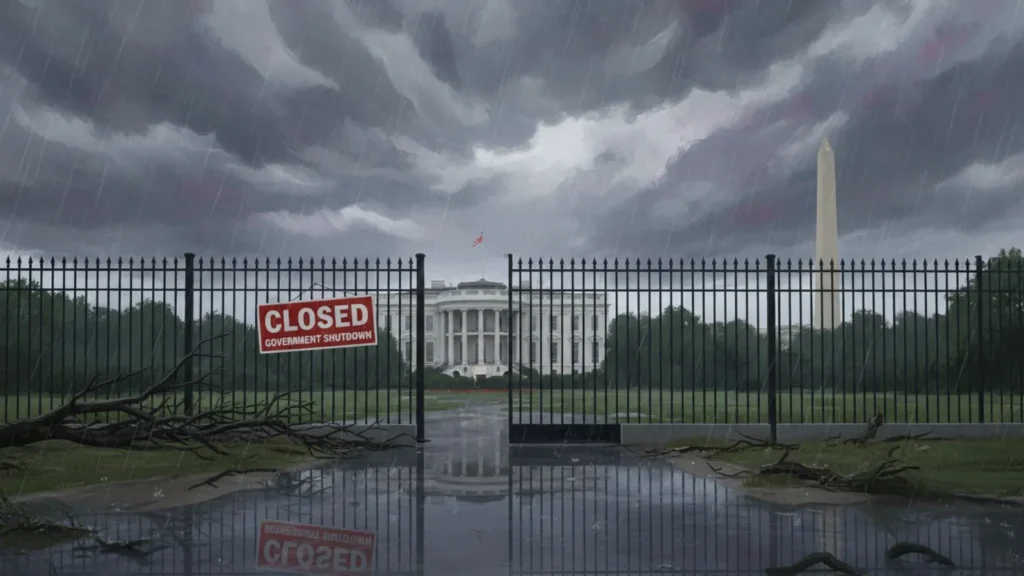
Hearing the term “government shutdown” in the news can be confusing and even alarming. But what does it really mean when the government shuts down?
In simple terms, a government shutdown occurs when Congress fails to pass the necessary funding bills to keep federal agencies running.
This funding gap forces certain government operations to halt until a budget agreement is reached. While the term may sound dramatic, not every government service stops essential operations, like national security and emergency services, continue to function.
However, non-essential programs, federal employees, and public services can be temporarily affected, causing disruptions that ripple through the economy and everyday life.
Understanding what a shutdown means, why it happens, and how it impacts citizens and government workers can help demystify the process.
In this guide, we’ll break down the causes, consequences, and key facts about government shutdowns so you can stay informed and prepared.
What Is a Government Shutdown?
A government shutdown occurs when the federal government temporarily stops funding certain operations due to a lack of approved budget or funding bills. In the U.S., Congress must pass spending legislation each fiscal year to keep government agencies running. If lawmakers fail to agree on these appropriations or a temporary funding measure, the government enters a shutdown.
During a shutdown, “non-essential” services are paused, while “essential” services—like national security, law enforcement, and emergency medical services—continue to operate. Non-essential employees may be furloughed, meaning they are sent home without pay until funding resumes. However, even essential employees might work without immediate pay, receiving back pay once the shutdown ends.
Shutdowns can be partial or full. In a partial shutdown, only some departments or agencies stop functioning, while others remain operational. In a full shutdown, most non-essential operations across the federal government cease.
Many people misunderstand government shutdowns, thinking the entire government stops working. In reality, key functions continue, but disruptions to services, public programs, and federal employees’ work schedules make the effects widely felt. Understanding these details is the first step to grasping the broader consequences of a shutdown.
How the Government Is Funded
To understand why a government shutdown happens, it’s important to know how the government gets its funding. In the United States, the federal government operates on a fiscal year that runs from October 1 to September 30. Each year, Congress is responsible for approving a budget that allocates money to various federal departments, programs, and agencies. These appropriations bills determine how much funding each area of government receives.
If Congress cannot agree on these bills by the start of the fiscal year, or if negotiations stall, there is a funding gap, which can trigger a government shutdown. To prevent this, lawmakers sometimes pass a continuing resolution (CR)—a temporary measure that keeps the government funded at current levels while negotiations continue.
The President must also sign these funding bills into law. If the President vetoes a bill and no compromise is reached, the government may face a shutdown.
The process involves multiple layers of checks and balances, which can sometimes lead to delays. Political disagreements, policy disputes, or even partisan gridlock can all prevent timely budget approval. Understanding this funding process is key to grasping why shutdowns occur and why they are often tied to political conflicts rather than administrative failure.
Why Do Government Shutdowns Happen
Government shutdowns usually happen due to political disagreements over funding. In the U.S., Congress must approve a budget to keep federal agencies running. If lawmakers cannot agree on how money should be allocated, a funding gap occurs, which can trigger a shutdown. These disagreements often arise from partisan conflicts, where political parties have opposing priorities for spending.
Some common reasons include disputes over defense spending, social programs, healthcare, or immigration policies. For example, one party may want to increase funding for a certain program, while the other opposes it, creating a stalemate. Shutdowns can also result from debates over the national debt ceiling or long-term fiscal policies.
In some cases, shutdowns are used as a political strategy, where lawmakers intentionally withhold budget approval to gain leverage or force concessions on specific issues. This can prolong the shutdown until a compromise is reached.
It’s important to note that shutdowns are not caused by administrative mistakes or sudden emergencies—they are the result of a structured legislative process failing to reach agreement on time. Understanding these underlying causes helps explain why shutdowns happen repeatedly in U.S. history and why they are often tied to political dynamics rather than purely financial issues.
What Happens During a Government Shutdown
When a government shutdown occurs, the effects are immediately visible across federal agencies and services. The shutdown primarily affects non-essential operations, while essential services—such as national security, law enforcement, and emergency medical care—continue to function. Non-essential federal employees are typically furloughed, meaning they are temporarily sent home without pay, while essential employees may continue working but often without immediate pay.
Government programs and public services are also disrupted. For example, national parks, museums, and federal offices may close, visa and passport processing can be delayed, and research projects funded by the federal government may be put on hold. Social services may continue in limited capacity, but some benefit programs may face slowdowns or interruptions.
Businesses that rely on federal contracts or services can also be impacted, as delayed payments or halted operations create financial uncertainty. Citizens may notice delays in loan approvals, permits, and government communications, which can affect daily life.
Although the term “shutdown” sounds dramatic, it does not mean that the entire government stops working. The disruption is significant, but key functions continue, and most services resume once funding is restored. Understanding these effects helps citizens and employees prepare and respond appropriately.
Impact on Government Employees
One of the most immediate and visible effects of a government shutdown is on federal employees. During a shutdown, many workers are classified as either essential or non-essential. Non-essential employees are placed on furlough, meaning they are temporarily sent home and do not receive pay until the government reopens. Essential employees, such as those in law enforcement, the military, or emergency services, are required to continue working, but often without immediate compensation.
Even though most employees eventually receive back pay once the shutdown ends, the delay can cause significant financial strain, especially for those living paycheck to paycheck. Contractors working for the federal government may also experience delayed payments or halted work, further impacting their income.
The stress of uncertainty, combined with the inability to plan financially, can affect employee morale and mental health. Some may face difficult choices, like taking on temporary jobs or loans to cover living expenses.
Overall, shutdowns highlight the vulnerability of government employees to political stalemates. While pay is typically restored afterward, the short-term disruption can have lasting effects on workers’ finances, productivity, and well-being.
Impact on Public Services
Government shutdowns have a direct impact on public services, affecting millions of citizens who rely on federal programs and operations. Services deemed non-essential are often paused, leading to closures of national parks, museums, and public landmarks, which can disrupt tourism and local economies. Agencies responsible for administrative functions, like passport and visa processing, may face significant delays, leaving travelers and applicants frustrated.
Some social programs may also be affected. While essential benefits like Social Security and Medicare generally continue, other assistance programs may experience slowdowns or interruptions, creating uncertainty for vulnerable populations. Federal research projects, education grants, and scientific studies can be temporarily halted, delaying important work and innovation.
Transportation services are not immune. Agencies like the Federal Aviation Administration (FAA) may operate with limited staff, potentially affecting flight safety inspections or administrative tasks. Additionally, local businesses and contractors that rely on government payments may face financial disruption, impacting broader economic activity.
Although critical functions continue, the public feels the effects in delays, closures, and reduced services. Understanding these impacts helps citizens plan ahead during a shutdown and highlights how political decisions can ripple through everyday life.
FAQs About Government Shutdowns
1. Does the military still get paid during a shutdown?
Yes, active-duty military personnel are considered essential employees, so they continue working and eventually receive back pay after the shutdown ends.
2. Are all federal employees furloughed?
No. Only non-essential federal employees are furloughed. Essential employees, such as law enforcement and emergency workers, continue working but may experience delayed pay.
3. Do government shutdowns affect Social Security and Medicare?
Generally, Social Security and Medicare payments continue during a shutdown. However, some administrative services may be delayed.
4. How long does a government shutdown last?
Shutdowns can last from a few hours to several weeks. The duration depends on how quickly Congress passes a funding bill and the President signs it.
5. Are government services completely stopped?
No. Essential services continue, including national security, law enforcement, and emergency medical services. Non-essential services may be delayed or paused.
6. Can a government shutdown affect taxes?
Tax collection usually continues, but processing of refunds or other administrative services may be delayed.
7. Do citizens need to prepare for a shutdown?
Yes. Staying informed, planning finances, and anticipating service delays can help minimize disruptions.
Meta Description
A government shutdown occurs when Congress fails to pass a budget or funding bill, temporarily halting non-essential federal operations.
While essential services like national security, law enforcement, and emergency medical care continue, many federal employees face furloughs, and public services such as passport processing, national parks, and research programs may be delayed.
Shutdowns can affect the economy, small businesses, and citizens relying on government programs. Understanding why shutdowns happen often due to political disagreements, budget disputes, or debt ceiling conflicts helps explain their causes and impacts.
This article breaks down what a government shutdown means, how it affects employees and the public, and what citizens can expect during these periods. It also covers historical examples, the process of government funding, and tips for staying informed and prepared.
Learn everything you need to know about government shutdowns and their wide-ranging consequences.