
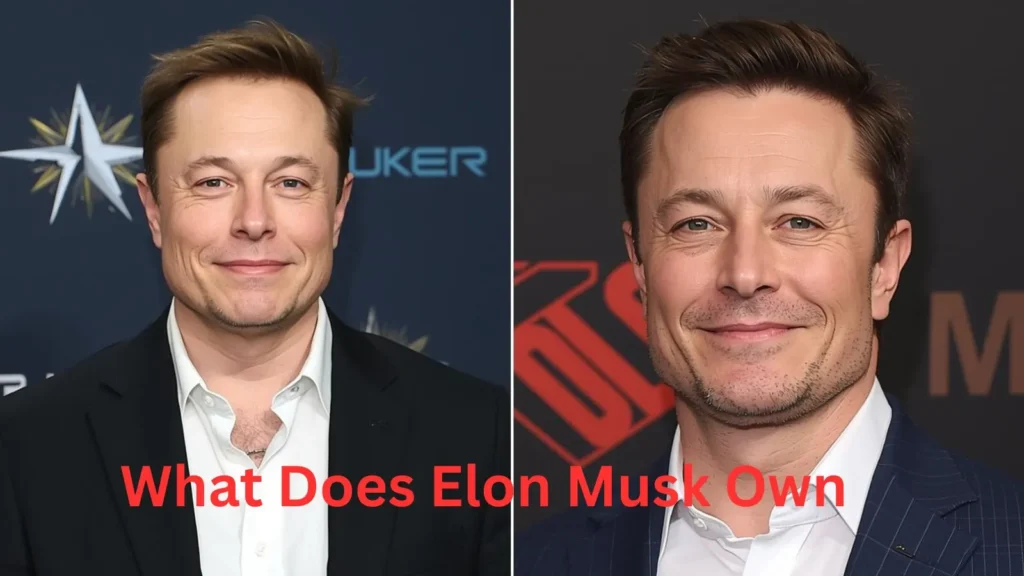
Elon Musk is one of the most influential and visionary entrepreneurs of the 21st century.
Known for pushing the boundaries of technology and innovation, Musk has built an impressive portfolio that spans multiple industries from electric vehicles and space exploration to brain-computer interfaces and social media. But what exactly does Elon Musk own?
Understanding the companies and assets he controls offers insight into how he shapes the future of transportation, energy, communication, and beyond.
From Tesla’s revolutionary electric cars to SpaceX’s ambitious Mars colonization plans, Musk’s ownership stakes reflect his relentless drive to solve some of the world’s biggest challenges.
In this article, we will explore the full scope of Elon Musk’s holdings, including his key companies, investments, and other assets.
If you’re a tech enthusiast or just curious about the man behind some of today’s most talked-about innovations, this guide will give you a clear picture of Elon Musk’s business empire.
Elon Musk’s Wealth and Influence: A Glimpse Into His Empire
Elon Musk’s name has become synonymous with innovation, risk-taking, and futuristic thinking. As of 2026, Musk ranks among the world’s richest individuals, with a net worth fluctuating around hundreds of billions of dollars. But Musk’s wealth is not just about numbers it represents his vast influence across multiple industries. Unlike traditional billionaires who inherit or accumulate wealth passively, Musk actively builds and leads companies that challenge the status quo and push humanity forward.
Musk’s ownership stakes in his ventures reflect a bold vision. He doesn’t just invest money; he invests time, leadership, and ideas. This hands-on approach has allowed him to steer companies like Tesla and SpaceX from startups to global leaders in their respective fields. His wealth is deeply tied to the success and growth of these companies, aligning his financial interests with their innovation and impact.
Moreover, Musk’s influence extends beyond business into cultural and technological spheres. His announcements, whether about launching rockets or developing brain-computer interfaces, often set trends and ignite widespread conversations. By understanding what Elon Musk owns, we get a window into the industries and technologies likely to shape the future from sustainable energy and space travel to artificial intelligence and social media.
Tesla, Inc.: Revolutionizing the Automotive and Energy Industries
Tesla is undoubtedly the most well-known company owned by Elon Musk and the cornerstone of his business empire. Musk joined Tesla in 2004, shortly after its founding, and quickly became its largest shareholder and CEO. Today, he owns roughly 20% of Tesla’s shares, making him the driving force behind the company’s vision and direction.
Tesla’s mission goes beyond just making electric cars; it’s about accelerating the world’s transition to sustainable energy. Under Musk’s leadership, Tesla has transformed the electric vehicle (EV) market by producing sleek, high-performance cars that challenge traditional gasoline-powered vehicles. Models like the Model S, Model 3, Model X, and Model Y have gained widespread popularity, setting new standards for range, safety, and technology integration.
In addition to EVs, Tesla has expanded into energy solutions. The company manufactures solar panels and energy storage products through Tesla Energy, aiming to create a fully integrated sustainable ecosystem. This includes the Powerwall, a home battery system, and large-scale energy projects that support renewable power grids.
Musk’s ownership and vision have also pushed Tesla to innovate rapidly, from developing the Autopilot driver-assistance system to pioneering battery technology improvements. Tesla’s aggressive growth strategy and Musk’s public presence have helped it become a trillion-dollar company, symbolizing the future of clean energy and transportation.
SpaceX: Pioneering the Future of Space Exploration
SpaceX, officially known as Space Exploration Technologies Corp., is another flagship company wholly shaped by Elon Musk’s ownership and vision. Founded in 2002, Musk remains the largest shareholder and CEO, steering SpaceX with a mission to reduce space transportation costs and enable the colonization of Mars.
Unlike traditional aerospace companies, SpaceX has disrupted the space industry by developing reusable rocket technology that drastically lowers launch expenses. Its Falcon 1, Falcon 9, and Falcon Heavy rockets have revolutionized how satellites and cargo reach orbit. The company’s success in launching and landing reusable rockets has made spaceflight more sustainable and cost-effective than ever before.
A major milestone for SpaceX is the Starship project, a fully reusable spacecraft designed to carry humans and cargo to the Moon, Mars, and beyond. Starship aims to be the vehicle that fulfills Musk’s ambitious dream of making humanity a multiplanetary species.
SpaceX also operates Starlink, a global satellite internet constellation designed to provide high-speed internet access to underserved areas worldwide. This project highlights Musk’s commitment to using space technology to solve real-world problems on Earth.
Elon Musk’s ownership of SpaceX underscores his long-term vision of expanding humanity’s reach beyond our planet while simultaneously developing profitable commercial space ventures. SpaceX’s achievements under Musk’s leadership have reshaped the space industry, opening new frontiers in exploration, communication, and technology.
Neuralink: Bridging the Human Brain and Technology
Neuralink is one of Elon Musk’s most futuristic and ambitious ventures, focused on developing advanced brain-machine interfaces (BMIs). Founded in 2016, Musk owns a significant stake and plays an active role in guiding the company’s mission: to merge human cognition with artificial intelligence and enhance brain functionality.
The core idea behind Neuralink is to create ultra-thin, implantable devices that can read and write neural signals directly from the brain. These devices aim to help treat neurological disorders such as Parkinson’s disease, epilepsy, and paralysis by restoring or enhancing brain functions. But Musk’s vision goes much further he envisions a future where humans can communicate seamlessly with computers and AI, effectively becoming a “hybrid” of biological and digital intelligence.
Neuralink has already demonstrated working prototypes in animal studies, showcasing the ability to monitor brain activity and control devices remotely. The company is pushing the boundaries of neuroscience, engineering, and computer science to make human-AI symbiosis a reality.
Elon Musk’s ownership and leadership in Neuralink reflect his passion for solving complex problems that extend beyond Earth and into the very essence of human existence. While still in early stages, Neuralink’s progress could revolutionize healthcare and human cognition in the decades to come.
The Boring Company: Tackling Urban Traffic with Innovative Tunneling
The Boring Company is Elon Musk’s ambitious infrastructure startup aimed at revolutionizing urban transportation by building underground tunnel networks. Founded in 2016, Musk owns a majority stake and actively drives the company’s vision to alleviate traffic congestion and transform how people move through cities.
Frustrated by surface traffic jams, Musk proposed a system of underground tunnels designed for high-speed transit using electric vehicles or autonomous pods. The goal is to create a scalable and efficient alternative to traditional roads and public transit, reducing commute times and environmental impact.
One of the company’s flagship projects is the Las Vegas Convention Center Loop, a working tunnel system that transports passengers quickly across the convention center campus. Musk envisions expanding such tunnels beneath major cities worldwide, potentially connecting urban centers with high-speed transit networks.
Beyond passenger transport, The Boring Company also explores cargo transit and utility tunnels, aiming to solve multiple infrastructure challenges simultaneously.
While still in early development stages compared to Musk’s other ventures, The Boring Company showcases his knack for identifying real-world problems and applying bold technological solutions.
Elon Musk’s ownership of The Boring Company fits his broader mission of improving humanity’s quality of life through innovative engineering, demonstrating his continued commitment to pushing boundaries beyond space and electric vehicles.
Twitter (X Corp.): Elon Musk’s Bold Move into Social Media
In 2022, Elon Musk made headlines worldwide by acquiring Twitter, one of the largest social media platforms, in a landmark deal valued at around $44 billion. This acquisition marked a significant expansion of Musk’s ownership portfolio into the realm of digital communication and online discourse.
Under Musk’s leadership, Twitter was rebranded as “X Corp.”, reflecting his vision to transform the platform beyond traditional social media. Musk envisions X as an “everything app,” integrating messaging, payments, social networking, and even financial services into a single, unified platform. This ambitious vision aligns with his broader goal of leveraging technology to create seamless, innovative user experiences.
Musk’s acquisition came with a promise to promote free speech while tackling challenges like misinformation, content moderation, and platform monetization. His hands-on management style led to rapid organizational changes, policy shifts, and new product launches, stirring both support and controversy among users and industry observers.
Twitter’s acquisition also fits Musk’s pattern of taking control of pivotal technologies and industries, allowing him to steer innovation directly. While Twitter differs from his tech and space ventures, it represents Musk’s belief in the power of communication platforms to influence culture, politics, and society at large.
As Elon Musk continues to shape Twitter’s evolution, it remains a critical piece of his diverse business empire, reflecting his desire to impact multiple facets of modern life.
Other Investments and Ventures: Expanding Musk’s Reach
Beyond his headline companies, Elon Musk has interests in several other ventures that complement his vision for technology and innovation. One of the notable early investments was SolarCity, a solar energy services company founded by Musk’s cousins, which Musk helped fund and later integrated into Tesla Energy. This acquisition strengthened Tesla’s position in sustainable energy by combining electric vehicles with solar power and battery storage solutions.
Musk also had an early involvement with OpenAI, an artificial intelligence research organization focused on developing safe and beneficial AI. Though he stepped back from active participation, his support helped establish one of the leading AI research groups shaping the future of machine intelligence.
Cryptocurrency is another area where Musk’s influence is notable. While not directly owning a company in this space, Musk’s public endorsements and criticisms of cryptocurrencies like Bitcoin and Dogecoin have had significant market impact. His companies, especially Tesla, have at times held Bitcoin as part of their treasury, reflecting his interest in digital assets.
Additionally, Musk has expressed interest in various futuristic technologies such as Hyperloop transportation concepts and AI advancements, though these remain outside his direct ownership for now.
Collectively, these investments and interests illustrate Musk’s strategy of supporting disruptive technologies that align with his vision of a sustainable, interconnected, and advanced future.
Elon Musk’s Real Estate and Personal Assets: A Look Beyond Business
While Elon Musk is primarily known for his business ventures, his personal assets and real estate holdings also reflect his unique lifestyle and philosophy. Over the years, Musk has owned several high-profile properties, mainly concentrated in California, including luxurious mansions in the Los Angeles area.
However, in recent years, Musk has publicly expressed a desire to simplify his life. In 2020, he announced plans to sell most of his real estate holdings, aiming to own “no house.” This minimalist approach aligns with his focus on directing resources toward his ambitious projects rather than accumulating personal wealth through property.
Musk’s known real estate has included impressive estates with state-of-the-art technology, expansive spaces, and eco-friendly features reflecting his passion for innovation and sustainability even in his living spaces. Beyond homes, Musk owns high-value personal assets like private jets and luxury cars, including some Tesla models customized for personal use.
His choices in personal assets demonstrate a blend of practicality and futurism, favoring technology-driven efficiency and reducing unnecessary burdens.
While Musk’s net worth is tied largely to his business holdings, his personal asset decisions underscore a broader philosophy: to minimize distractions and focus fully on transforming industries and advancing humanity’s future.
The Impact of Elon Musk’s Ownership on Various Industries
Elon Musk’s ownership across multiple groundbreaking companies has had a transformative effect on several major industries. Perhaps most notably, his leadership at Tesla revolutionized the automotive sector by accelerating the adoption of electric vehicles worldwide. Tesla’s success forced traditional automakers to pivot toward EVs, dramatically changing the future of transportation and pushing governments to enact stricter emissions regulations.
In the aerospace industry, Musk’s SpaceX broke decades of government monopoly on space launches by proving that reusable rockets are not only feasible but cost-effective. This innovation significantly lowered the cost of access to space, opening opportunities for commercial satellite deployment, space tourism, and plans for interplanetary colonization. SpaceX’s Starlink project further impacts global internet accessibility by providing broadband in remote and underserved areas.
Musk’s ventures into brain-computer interfaces with Neuralink and urban infrastructure with The Boring Company illustrate his commitment to solving complex, real-world problems with technology. These projects, though still emerging, could reshape how humans interact with machines and how cities manage transportation in the future.
His acquisition of Twitter (X Corp.) places him at the center of digital communication and social discourse, offering a platform to influence public conversation and information dissemination.
Overall, Musk’s ownership enables him to drive innovation by aligning financial incentives with visionary goals. His work challenges industries to evolve rapidly, blending entrepreneurship with technological breakthroughs that have wide-reaching social and economic impacts.
Criticisms and Controversies Surrounding Elon Musk’s Ownership Style
Despite Elon Musk’s undeniable success and visionary achievements, his ownership style and business practices have often sparked criticism and controversy. Musk’s hands-on, sometimes unorthodox approach to managing his companies can lead to rapid changes, internal upheavals, and public disputes.
One common criticism is Musk’s tendency for high-risk, aggressive deadlines. While this approach has fueled innovation, it has also caused stress among employees and raised concerns about workplace culture at companies like Tesla and SpaceX. Reports of long hours, intense pressure, and turnover highlight the human cost of Musk’s relentless drive.
Musk’s use of social media, particularly Twitter, has been a double-edged sword. His tweets have occasionally led to legal and financial repercussions, such as SEC investigations and stock price volatility. Some investors worry that his public statements can be unpredictable and impact company valuation negatively.
Additionally, Musk’s ownership of Twitter (X Corp.) has stirred debates over content moderation, free speech, and platform governance. His decisions have attracted both praise and backlash from users, regulators, and advertisers, reflecting the challenges of balancing openness with responsibility on social platforms.
Critics also point to Musk’s immense influence over multiple industries, raising concerns about market competition and concentration of power.
While Musk’s boldness drives progress, it also invites scrutiny and debate. Understanding these controversies provides a fuller picture of the complexities behind his ownership and leadership.
What the Future Holds for Elon Musk’s Business Empire
Elon Musk’s business empire continues to evolve rapidly, with ambitious plans that promise to push technological and societal boundaries even further. As Musk looks to the future, his focus remains on advancing sustainable energy, space exploration, artificial intelligence, and digital communication.
Tesla aims to expand its electric vehicle lineup with new models like the highly anticipated Cybertruck and plans to ramp up production globally. Innovations in battery technology and autonomous driving are set to maintain Tesla’s lead in the EV market, while Tesla Energy strives to revolutionize renewable energy adoption through solar and storage solutions.
SpaceX’s Starship development is central to Musk’s vision of making humanity a multiplanetary species. Successful orbital tests and eventual crewed missions to the Moon and Mars could redefine space travel and open new frontiers for exploration and commerce. Starlink’s satellite internet service also plans to broaden global connectivity, especially in underserved regions.
Neuralink’s brain-machine interface technology holds transformative potential for healthcare and human cognition, with clinical trials expected to advance in the coming years.
The Boring Company looks to expand its tunneling projects, potentially reshaping urban transportation and infrastructure worldwide.
Meanwhile, Musk’s stewardship of X Corp. (formerly Twitter) could lead to significant innovations in social media and digital services, aligning with his vision of an “everything app.”
Though challenges and controversies remain, Musk’s diverse portfolio and relentless innovation suggest his influence will only grow. The future of Elon Musk’s ownership promises continued disruption, with technology shaping how we live, communicate, and explore.
What Does Elon Musk Own in Social Media (X Platform Ownership)
Elon Musk owns one of the most powerful social media platforms in the world, known today as X (formerly Twitter). He officially acquired Twitter in 2022 in a high-profile deal and later rebranded it as X, aiming to turn it into an “everything app” for communication, payments, and digital services. This makes Musk one of the most influential figures in the social media industry. Unlike traditional social media companies, X is privately controlled by Musk, giving him strong authority over product updates, algorithms, monetization policies, and user experience.
From an SEO perspective, keywords like Elon Musk social media ownership, X platform owner, Twitter acquisition 2022, and Elon Musk X app are highly relevant. His ownership has changed how the platform operates, introducing subscription models like X Premium, verified accounts, and content moderation updates. X is now deeply integrated into global news, tech discussions, and real-time public conversations.
Musk’s influence through X is significant because it allows direct communication with millions of users, including politicians, businesses, and celebrities. This social media ownership strengthens his global presence beyond Tesla and SpaceX, making X a key digital asset in his overall business empire.
Elon Musk Net Worth (Latest SEO Overview)
Elon Musk’s net worth is one of the most searched financial topics globally, often ranking among the highest in billionaire lists. His wealth mainly comes from his ownership in Tesla, SpaceX, and X (Twitter). According to market fluctuations, his net worth has frequently ranged between $180 billion to over $250 billion, depending on stock market performance.
SEO keywords such as Elon Musk net worth 2026, how rich is Elon Musk, Elon Musk wealth sources, and Tesla stock billionaire net worth are commonly used in search engines. Tesla shares are the biggest contributor to his fortune, as he owns a significant percentage of the company. SpaceX also adds massive value due to its increasing private valuation and success in satellite internet (Starlink) and rocket launches.
Unlike traditional billionaires, Musk’s wealth is not mostly cash-based; it is tied to company equity. This means his net worth changes daily based on stock performance. Despite fluctuations, he consistently remains one of the richest people in the world. His diversified business empire across electric vehicles, space exploration, AI, and social media ensures long-term financial dominance in global markets.
The Boring Company (Elon Musk Tunnel Project Business)
The Boring Company is one of Elon Musk’s most innovative infrastructure startups, focused on solving traffic problems through underground tunnel systems. The company was founded with the vision of creating high-speed, low-cost transportation tunnels that reduce road congestion in major cities.
SEO-friendly keywords include The Boring Company Elon Musk, tunnel transportation system, Las Vegas Loop, underground travel Elon Musk, and traffic solution tunnels USA. One of its most well-known projects is the Las Vegas Convention Center Loop, where electric vehicles transport passengers through underground tunnels at high speed.
The main idea behind The Boring Company is to make tunneling cheaper and faster than traditional construction methods. Musk believes that cities suffer from traffic congestion, and underground travel can provide a futuristic solution. The company also experiments with innovative boring machines designed to reduce excavation costs.
Although smaller compared to Tesla or SpaceX, The Boring Company plays an important role in Musk’s long-term vision of sustainable urban transportation. It represents his interest in solving real-world infrastructure problems using technology and engineering innovation.
Elon Musk All Companies Net Worth (Business Empire Value)
Elon Musk’s business empire includes several high-value companies that together form one of the most powerful tech portfolios in the world. These include Tesla, SpaceX, X (Twitter), Neuralink, and The Boring Company.
SEO keywords such as Elon Musk companies net worth, Tesla SpaceX valuation, Musk business empire value, and Elon Musk total assets companies are widely searched online. Tesla remains the largest contributor, valued in the hundreds of billions of dollars. SpaceX is also extremely valuable, with private valuations exceeding $100 billion due to Starlink and reusable rocket technology.
X (Twitter) has a lower valuation compared to Tesla and SpaceX but remains a powerful digital platform influencing global communication. Neuralink and The Boring Company are still in development stages but hold strong future potential in AI and infrastructure innovation.
When combined, Elon Musk’s companies are estimated to be worth well over half a trillion dollars collectively, depending on market conditions. This massive valuation highlights his dominance across multiple industries including automotive, aerospace, AI, neurotechnology, and social media, making him one of the most influential entrepreneurs in modern history.
How Much of SpaceX Does Elon Musk Own
Elon Musk owns a major share of SpaceX, but not the entire company. His estimated ownership is around 40% to 45%, making him the largest individual shareholder. The remaining shares are owned by early investors, employees, and venture capital firms.
SEO keywords include Elon Musk SpaceX ownership percentage, who owns SpaceX, SpaceX valuation 2026, and Elon Musk stake in SpaceX. SpaceX is a privately held aerospace company, so exact ownership numbers are not publicly disclosed, but Musk maintains strong control over its strategic decisions.
SpaceX has become one of the most valuable private companies in the world due to successful rocket launches, NASA contracts, and the Starlink satellite internet network. Musk’s ownership stake is a major contributor to his overall net worth.
Even though he does not own 100% of SpaceX, his influence as founder and CEO gives him full operational control. The company’s long-term goals include Mars colonization and global internet coverage, making Musk’s stake extremely valuable in the future of space exploration and technology development.
Elon Musk Companies Share List (Ownership Breakdown SEO Guide)
Elon Musk holds shares and ownership stakes across several major companies, each contributing to his massive financial and technological influence. His portfolio includes Tesla, SpaceX, X (Twitter), Neuralink, and The Boring Company.
SEO keywords such as Elon Musk shareholding list, Tesla ownership percentage, SpaceX shares breakdown, Musk companies ownership structure, and Elon Musk investments portfolio are highly searched. In Tesla, Musk owns approximately 13% to 15%, making him the largest individual shareholder. In SpaceX, he owns about 40% to 45%, giving him strong control.
He fully owns X (Twitter) after acquiring it in 2022. Neuralink and The Boring Company are also closely controlled by Musk as founder and key investor. Each company operates in a different industry, including electric vehicles, space exploration, social media, brain-computer interfaces, and infrastructure development.
This diversified shareholding strategy allows Musk to influence multiple global industries at once. His ownership structure is a key reason behind his global financial power and innovation leadership.
How Much of Tesla Does Elon Musk Own (SEO Investment Breakdown)
Elon Musk owns approximately 13% to 15% of Tesla, making him the largest individual shareholder in the company. Tesla is a publicly traded electric vehicle and clean energy company, meaning ownership is distributed among global investors.
SEO keywords include Elon Musk Tesla ownership percentage, Tesla shares breakdown, who owns Tesla most, Elon Musk stake in Tesla, and Tesla stock Elon Musk net worth impact. Even though Musk does not own a majority stake, he has significant influence as CEO and product visionary.
Tesla’s value plays a huge role in Musk’s overall net worth because its stock price directly affects his wealth. Over time, he has sold portions of his shares to fund other ventures like SpaceX and X.
Tesla remains a leader in the electric vehicle industry, renewable energy storage, and autonomous driving technology. Musk’s ownership stake ensures he benefits heavily from its success while still allowing global investment participation. His influence over Tesla’s direction makes him one of the most powerful figures in the automotive and clean energy industries.
How Many Companies Does Elon Musk Own (SEO Summary List)
Elon Musk is actively involved in around five major companies, making him one of the most diversified entrepreneurs in the world. These include Tesla, SpaceX, X (Twitter), Neuralink, and The Boring Company.
SEO keywords such as how many companies Elon Musk owns, Elon Musk business list, Musk companies count, Tesla SpaceX Neuralink list, and Elon Musk empire breakdown are commonly searched online. Each company focuses on a different industry, showing Musk’s wide technological vision.
Tesla focuses on electric vehicles and energy solutions, SpaceX on space exploration and rockets, X on social media and communication, Neuralink on brain-computer technology, and The Boring Company on underground transport systems.
While Musk may have smaller investments or advisory roles elsewhere, these five companies are his core business empire. Together, they shape industries like transportation, AI, space, and digital communication.
This diversified structure makes Elon Musk not just a businessman, but a global tech leader influencing the future of multiple industries at the same time.
Companies Owned by Elon Musk 2026
In 2026, searches for “companies owned by Elon Musk” mainly focus on his major tech empire and leadership across multiple industries. The most important companies associated with him include SpaceX, Tesla, X Corp, xAI, Neuralink, and The Boring Company. These companies are not just investments but long-term projects built around innovation and future technology. SpaceX is focused on space exploration, rocket manufacturing, and Starlink satellite internet services. Tesla continues leading the electric vehicle and clean energy market worldwide. X Corp operates the social platform X, which has expanded into a broader digital ecosystem. xAI is Musk’s artificial intelligence venture competing in the global AI race. Neuralink develops brain-computer interface technology, while The Boring Company works on underground transportation systems. Although Musk does not fully “own” every company outright, he holds strong controlling stakes and decision-making influence in most of them. This mix of ownership and control makes him one of the most powerful tech entrepreneurs in the world. His companies together reflect a future-focused strategy targeting AI, space, transport, energy, and communication industries in 2026.
Elon Musk Companies Owned 2026
The keyword “Elon Musk companies owned 2026” refers to his updated business portfolio and influence across major tech sectors. In 2026, Elon Musk is linked to several high-impact companies including SpaceX, Tesla, X Corp, xAI, Neuralink, and The Boring Company. Each company plays a unique role in shaping modern technology. SpaceX focuses on space missions, reusable rockets, and global internet through Starlink. Tesla is a leader in electric cars and renewable energy solutions. X Corp, formerly Twitter, is evolving into a multifunctional communication platform. xAI is his artificial intelligence company working on advanced AI systems. Neuralink focuses on brain-machine interface development, while The Boring Company aims to solve traffic issues with underground tunnels. Musk’s ownership structure is mixed—he fully or mostly controls private companies like SpaceX and X Corp, while holding significant shares in Tesla. This combination allows him to influence multiple industries without being restricted to one sector. Overall, his 2026 business empire reflects innovation, long-term vision, and strong global impact across technology-driven industries.
Elon Musk Current Roles and Companies 2026
When people search “Elon Musk current roles and companies 2026,” they are usually looking for his active leadership positions and business involvement. In 2026, Elon Musk plays key roles across several major companies. He is the CEO and chief engineer of SpaceX, where he oversees rocket development, Mars missions, and satellite internet expansion. At Tesla, he remains the largest shareholder and strategic leader, guiding long-term innovation in electric vehicles and energy storage. He is also the owner and primary decision-maker of X Corp, managing the evolution of the social media platform X. In the AI industry, Musk is the founder of xAI, focusing on advanced artificial intelligence development. He also leads Neuralink, which is working on brain-computer interface technology, and The Boring Company, which develops underground transportation systems. His roles are not limited to titles but include product vision, innovation strategy, and long-term planning. This makes him a multi-industry leader influencing space, AI, transportation, social media, and neuroscience in 2026.
Elon Musk Companies List 2026
The “Elon Musk companies list 2026” includes some of the most advanced technology firms in the world. His major companies are SpaceX, Tesla, X Corp, xAI, Neuralink, and The Boring Company. SpaceX focuses on rocket launches, space exploration, and Starlink satellite internet. Tesla continues to dominate electric vehicles and renewable energy markets. X Corp operates the social media platform X, which now integrates communication, payments, and digital services. xAI is Musk’s artificial intelligence company competing in the global AI industry. Neuralink works on brain-computer interface systems designed to connect humans and machines. The Boring Company develops underground tunnel networks to reduce traffic congestion in major cities. Together, these companies reflect Musk’s vision of solving global problems using technology. Each company operates in a different sector, but all are connected through innovation and future development goals. This diverse company list makes Elon Musk one of the most influential entrepreneurs in 2026, with a strong presence in AI, transportation, space, energy, and digital communication industries.
Elon Musk Current Companies 2026
In 2026, the “Elon Musk current companies” list includes his active and most influential businesses. These are SpaceX, Tesla, X Corp, xAI, Neuralink, and The Boring Company. SpaceX continues to lead in space technology with reusable rockets and Starlink internet services. Tesla remains a global leader in electric vehicles, autonomous driving technology, and clean energy solutions. X Corp has transformed the old Twitter platform into a broader digital ecosystem for communication and payments. xAI is Musk’s artificial intelligence company focused on developing powerful AI systems. Neuralink is working on advanced brain-chip technology that may help treat neurological disorders in the future. The Boring Company focuses on building underground tunnels to improve urban transportation systems. These companies are actively operating and expanding globally in 2026. Musk’s involvement across them includes leadership, innovation strategy, and long-term planning. His current companies show a strong focus on futuristic industries that aim to change transportation, communication, space travel, and human-computer interaction.
Elon Musk Current Positions Companies 2026
The phrase “Elon Musk current positions companies 2026” refers to his leadership roles across multiple global tech firms. In 2026, Elon Musk holds several important positions that make him one of the most influential business leaders. He is the CEO and chief engineer of SpaceX, leading space missions, rocket innovation, and Starlink expansion. At Tesla, he serves as the largest shareholder and strategic advisor, shaping the company’s long-term direction. He is also the owner and key executive behind X Corp, overseeing its transformation into a multifunctional digital platform. In the artificial intelligence field, Musk is the founder of xAI, where he directs AI research and development strategies. He also leads Neuralink, focusing on brain-machine interface innovation, and The Boring Company, which develops underground transport systems. His positions are not limited to formal job titles; they also include product innovation, strategic planning, and global technology influence. This combination of roles allows Musk to remain active across multiple industries including space, AI, automotive, infrastructure, and digital communication in 2026.
Elon Musk Companies Ownership 2026
Searches for “Elon Musk companies ownership 2026” focus on how much control he has over his businesses. In 2026, Elon Musk has a unique ownership structure across his companies. He fully or mostly controls private companies like SpaceX, X Corp, Neuralink, xAI, and The Boring Company. These companies are not publicly traded, giving Musk strong decision-making power and control over operations. Tesla, however, is a public company, meaning Musk is the largest shareholder but not the sole owner. This allows him to influence major decisions while still operating within shareholder rules. His ownership model is a mix of full control in private ventures and partial ownership in public companies. This strategy gives him flexibility to innovate without restrictions while still benefiting from large-scale public investments. Overall, Musk’s ownership structure in 2026 shows how he balances control, innovation, and investment across multiple industries. His influence remains strong in AI, space, transportation, energy, and communication sectors.
Elon Musk Current Companies and Ventures 2026
The keyword “Elon Musk current companies and ventures 2026” highlights his expanding innovation ecosystem. In 2026, Elon Musk is involved in SpaceX, Tesla, X Corp, xAI, Neuralink, and The Boring Company. These companies represent different but connected industries. SpaceX focuses on space exploration and satellite internet through Starlink. Tesla leads in electric vehicles and renewable energy solutions. X Corp operates as a digital communication and social media platform. xAI is his artificial intelligence venture competing in global AI development. Neuralink is working on brain-computer interface technology, while The Boring Company develops underground transport systems. Musk’s ventures are built around solving major global challenges such as traffic, communication, energy, intelligence, and space exploration. Each company supports his long-term vision of advancing human capability through technology. His ecosystem of companies is highly diversified but strategically connected, making him one of the most influential innovators in 2026.
Elon Musk Companies He Owns or Controls 2026
In 2026, the phrase “Elon Musk companies he owns or controls” refers to his direct influence over major tech ventures. These include SpaceX, X Corp, xAI, Neuralink, and The Boring Company. Musk has strong controlling power in these private companies, meaning he guides their strategy, innovation, and long-term goals. SpaceX is focused on rockets, space travel, and Starlink internet services. X Corp operates the social media platform X with expanded digital features. xAI is his artificial intelligence company competing in the global AI market. Neuralink develops brain-computer interface technology, and The Boring Company works on underground transport solutions. Tesla is also part of his influence, although it is publicly owned and not fully controlled by him. His control-based model allows him to shape multiple industries without needing full ownership in every company. This makes Musk one of the most powerful figures in global technology, especially in AI, space, transportation, and digital communication in 2026.
Elon Musk Current Roles Companies 2026
The keyword “Elon Musk current roles companies 2026” focuses on his active leadership across different industries. In 2026, Elon Musk holds key roles in SpaceX, Tesla, X Corp, xAI, Neuralink, and The Boring Company. At SpaceX, he serves as CEO and chief engineer, leading space exploration and satellite internet development. At Tesla, he remains the largest shareholder and strategic leader, influencing innovation in electric vehicles and clean energy. He is also the owner and decision-maker at X Corp, guiding its transformation into a multifunctional digital platform. In the AI industry, Musk is the founder of xAI, focusing on advanced artificial intelligence systems. He also leads Neuralink, which develops brain-computer interface technology, and The Boring Company, which builds underground transportation tunnels. His roles are deeply connected to innovation, technology strategy, and long-term global problem-solving. In 2026, Musk’s influence spans across multiple industries including space, AI, transportation, neuroscience, and digital communication, making him a highly active and diversified tech leader.
Conclusion
Elon Musk’s ownership spans an extraordinary range of industries, from electric vehicles and space exploration to brain-computer interfaces and social media. Through Tesla, SpaceX, Neuralink, The Boring Company, and X Corp., Musk has built a business empire that not only drives innovation but also shapes the future of technology, transportation, energy, and communication.
His hands-on leadership and visionary approach have pushed boundaries, disrupted established industries, and inspired millions worldwide. Musk’s companies are united by a common goal: solving some of humanity’s biggest challenges and creating a sustainable, multiplanetary future. While his ownership style sometimes draws controversy and criticism, it is this boldness and willingness to take risks that have fueled his successes.
Understanding what Elon Musk owns provides valuable insight into how he influences multiple sectors simultaneously and why his ventures receive so much attention. As he continues to develop new technologies and expand his reach, Musk’s portfolio will remain a key driver of innovation and change.
Whether it’s Tesla’s electric cars reshaping transportation, SpaceX’s rockets reaching for Mars, or Neuralink’s efforts to enhance human cognition, Musk’s ownership reflects a deep commitment to pushing the limits of what’s possible. Keeping an eye on his companies offers a glimpse into the future one where technology and vision combine to redefine our world.
FAQs:
Q1: What companies does Elon Musk own?
Elon Musk owns significant stakes in several companies including Tesla, SpaceX, Neuralink, The Boring Company, and X Corp. (formerly Twitter). These ventures span electric vehicles, space exploration, brain-computer interfaces, infrastructure, and social media.
Q2: How much of Tesla does Elon Musk own?
Musk owns roughly 20% of Tesla’s shares, making him the largest individual shareholder. He also serves as the company’s CEO and is deeply involved in its strategic direction.
Q3: What is SpaceX, and why is it important?
SpaceX is Musk’s aerospace company focused on reducing space transportation costs through reusable rockets. It aims to enable space travel to Mars and beyond, revolutionizing the space industry.
Q4: What is Neuralink?
Neuralink is a neurotechnology company developing brain-machine interfaces that could help treat neurological conditions and enable human-AI symbiosis.
Q5: Why did Elon Musk buy Twitter (X Corp.)?
Musk acquired Twitter to transform it into an “everything app” integrating communication, payments, and social networking while promoting free speech and innovation on the platform.
Q6: Does Elon Musk own any real estate?
Musk has owned several luxury properties but has publicly stated plans to sell most of his real estate holdings to focus on his projects and simplify his lifestyle.
Q7: What is The Boring Company?
The Boring Company builds underground tunnels to alleviate urban traffic and improve transportation efficiency.

Hey! Welcome to You Wishes — I write heartfelt wishes for every mood and moment. Let’s turn your emotions into words together, just tell me what you feel!